Transcription of Specimen Label - CDMS
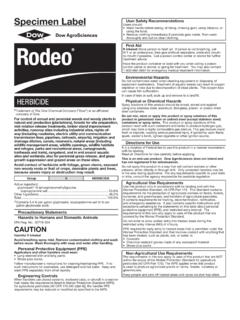
1 Specimen LabelRESTRICTED USE PESTICIDEFor retail sale to and use only by Certified Applicators or persons under their direct supervision and only for those uses covered by the Certified Applicator's certification. Trademark of The Dow Chemical Company ( Dow ) or an affiliated company of Dow For control of listed insects infesting certain field, fruit, nut, and vegetable crops. Group1 BINSECTICIDE Active Ingredient: chlorpyrifos: O,O-diethyl-O-(3,5,6-trichloro-2-pyridin yl) phosphorothioate .. Ingredients .. Contains 4 lb of chlorpyrifos per petroleum distillates. Precautionary Statements Hazard to Humans and Domestic Animals EPA Reg. No. 62719-220 WARNING May Be Fatal If Swallowed Harmful If Absorbed Through Skin Causes Moderate Eye Irritation Avoid contact with skin, eyes or clothing. Personal Protective Equipment (PPE)Materials that are chemical resistant to this product are barrier laminate and viton 14 mils.
2 Mixers and loaders using a mechanical transfer loading system and applicators using aerial application equipment must wear: Long-sleeved shirt and long pants Shoes and socks In addition to the above, mixers and loaders using a mechanical transfer loading system must wear: Chemical-resistant gloves Chemical-resistant apron A NIOSH-approved dust mist filtering respirator with MSHA/NIOSH approval number prefix TC-21C or a NIOSH-approved respirator with any R, P, or HE filter See Engineering Controls for additional requirements. All other mixers, loaders, applicators and handlers must wear: Coveralls over long-sleeved shirt and long pants Chemical-resistant gloves Chemical-resistant apron when mixing or loading or exposed to the concentrate Chemical-resistant footwear plus socks Chemical-resistant headgear for overhead exposure A NIOSH-approved dust mist filtering respirator with MSHA/NIOSH approval number prefix TC-21C or a NIOSH-approved respirator with any R, P, or HE filter.
3 Discard clothing and other absorbent materials that have been drenched or heavily contaminated with this product's concentrate. Do not reuse them. Follow manufacturer's instructions for cleaning/maintaining PPE. If no such instructions for washables exist, use detergent and hot water. Keep and wash PPE separately from other laundry. Engineering ControlsMixers and loaders supporting aerial applications must use a mechanical transfer system that meets the requirements listed in the Worker Protection Standard (WPS) for agricultural pesticides [40 CFR (d)(4)] for dermal protection, and must: Wear the personal protective equipment required above for mixers/loaders Wear protective eyewear if the system operates under pressure, and Be provided and have immediately available for use in an emergency, such as broken package, spill, or equipment breakdown: coveralls, chemical resistant footwear and chemical-resistant headgear if overhead exposure Pilots must use an enclosed cockpit in a manner that meets the requirements listed in the WPS for agricultural pesticides [40 CFR (d)(6).]
4 Use of human flaggers is prohibited. Mechanical flagging equipment must be used. When handlers use closed cab motorized ground application equipment in a manner that meets the requirements listed in the WPS for agricultural pesticides [40 CFR (d)(4-6)], the handler PPE requirements may be reduced or modified as specified in the WPS. User Safety RecommendationsUsers should: Wash hands before eating, drinking, chewing gum, using tobacco, or using the toilet. Remove clothing/PPE immediately if pesticide gets inside. Then wash thoroughly and put on clean clothing. Remove PPE immediately after handling this product. Wash the outside of gloves before removing. As soon as possible, wash thoroughly and change into clean clothing. First AidOrganophosphateIf swallowed: Immediately call a poison control center or doctor. Do not induce vomiting unless told to do so by a poison control center or doctor.
5 Do not give any liquid to the person. Do not give anything by mouth to an unconscious person. If in eyes: Hold eye open and rinse slowly and gently with water for 15-20 minutes. Remove contact lenses, if present, after the first 5 minutes, then continue rinsing eye. Call a poison control center or doctor for treatment advice. If on skin or clothing: Take off contaminated clothing. Rinse skin immediately with plenty of water for 15-20 minutes. Call a poison control center or doctor for treatment to physician: Chlorpyrifos is a cholinesterase inhibitor. Treat symptomatically. If exposed, plasma and red blood cell cholinesterase tests may indicate significance of exposure (baseline data are useful). Atropine, only by injection, is the preferable antidote. Oximes, such as 2-PAM/protopam, may be therapeutic if used early; however, use only in conjunction with atropine.
6 In case of severe acute poisoning, use antidote immediately after establishing an open airway and to physician: Contains petroleum distillate vomiting may cause aspiration pneumonia. Have the product container or Label with you when calling a poison control center or doctor, or going for treatment. You may also contact 1-800-992-5994 for emergency medical treatment information. Environmental Hazards This pesticide is toxic to fish, aquatic invertebrates, small mammals and birds. Do not apply directly to water, or to areas where surface water is present, or to intertidal areas below the mean high water mark. Drift and runoff from treated areas may be hazardous to aquatic organisms in water adjacent to treated areas. Do not contaminate water when disposing of equipment washwaters or rinsate. This product is highly toxic to bees exposed to direct treatment or residues on blooming crops or weeds.
7 Do not apply this product or allow it to drift to blooming crops or weeds if bees are visiting the treatment area. Physical or Chemical HazardsCombustible. Do not use or store near heat or open flame. 2 Specimen Label Revised 06-10-14 Directions for UseRestricted Use Pesticide It is a violation of Federal law to use this product in a manner inconsistent with its all Directions for Use carefully before applying. This product cannot be reformulated or repackaged into other end-use products. Do not apply this product in a way that will contact workers or other persons, either directly or through drift. Only protected handlers may be in the area during application. For any requirements specific to your state or tribe, consult the agency responsible for pesticide regulation. Agricultural Use RequirementsUse this product only in accordance with its labeling and with the Worker Protection Standard, 40 CFR Part 170.
8 This Standard contains requirements for the protection of agricultural workers on farms, forests, nurseries, and greenhouses, and handlers of agricultural pesticides. It contains requirements for training, decontamination, notification, and emergency assistance. It also contains specific instructions and exceptions pertaining to the statements on this Label about personal protective equipment (PPE) and restricted-entry interval. The requirements in this box only apply to uses of this product that are covered by the Worker Protection Standard. Do not enter or allow entry into treated areas during the restricted entry interval (REI). The REI for each crop is listed in the directions for use associated with each Exception: If the product is soil-injected or soil-incorporated, the Worker Protection Standard, under certain circumstances, allows workers to enter the treated area if there will be no contact with anything that has been treated.
9 Certified crop advisors or persons entering under their direct supervision under certain circumstances may be exempt from the early reentry requirements pursuant to 40 CFR Part 170. PPE required for early entry into treated areas that is permitted under the Worker Protection Standard and involves contact with anything that has been treated, such as plants, soil, or water, is: Coveralls over short-sleeved shirt and short pants Chemical-resistant gloves made out of any waterproof material Chemical-resistant footware plus socks Chemical-resistant headgear for overhead exposure Notify workers of the application by warning them orally and by posting warning signs at entrances to treated areas. Storage and DisposalDo not contaminate water, food, or feed by storage and Storage: Store in original container in secured dry storage area.
10 Prevent cross-contamination with other pesticides and fertilizers. Do not store above 100 F for extended periods of time. Storage below 20 F may result in formation of crystals. If product crystallizes, store at 50 to 70 F and agitate to redissolve crystals. If container is damaged or spill occurs, use product immediately or dispose of product and damaged container as indicated Disposal: Wastes resulting from the use of this product must be disposed of on site or at an approved waste disposal facility. Nonrefillable containers 5 gallons or less:Container Handling: Nonrefillable container. Do not reuse or refill this container. Triple rinse or pressure rinse container (or equivalent) promptly after emptying. Triple rinse as follows: Empty the remaining contents into application equipment or a mix tank and drain for 10 seconds after the flow begins to drip.