Transcription of SPOT - sunsmart.com.au
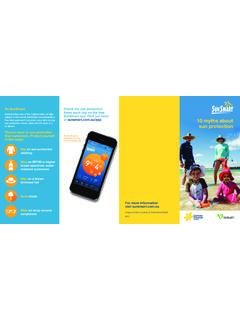
1 May have irregular edges, one half bigger than the other, or an uneven colour. Can appear on skin not normally exposed to the sun. Grows quickly so do not delay seeing a doctor. Raised and even colour ranging from pink or red, to brown or black. Firm, dome-shaped, may bleed and crust. Red, pale or pearly colour that can be a lump or dry, scaly patch. Can ulcerate, bleed and fail to heal. Thickened, red scaly spot that bleeds easily, crusts or ulcerates. More common in people over 50 your skin regularly and see your doctor if you notice a new spot or a spot has changed in size, colour or Nodular melanoma Basal cell carcinoma Squamous cell carcinoma SPOT the differenceCall 13 11 20 or visit SKIN CANCERS CAN BE PREVENTEDD uring sun protection times Download the sunsmart app for sun protection the sunsmart app for sun protection sunsmart SlipSlopSlapSeekSlide Red, flattish scaling dry skin that may sting if scratched.
2 Appears on skin most often exposed to the sun, like hands and face. Larger moles with uneven colour. Harmless spots that are even in shape and colour. The more moles or freckles you have, the higher your risk of skin cancer. Observe moles carefully for changes. Discrete edge that looks like it sits on top of skin. Colour varies from pale brown to orange or skin cancers can be successfully treated if found cancer can appear anywhere on your body, so check all of your skin not just sun-exposed a friend or family member to check the skin you cannot see, such as your scalp and your skin regularly and see your doctor if you notice a new spot, or a spot has changed in size, colour or 2017 Skin cancer images kindly provided by Skin & Cancer Foundation VictoriaWarning signsGet to know your skin to help you spot changes keratoses or sunspotsDysplastic naeviMolesSeborrhoeic keratoses