Transcription of Stainless Steel - GOODWELD
1 Material General Review SUS: The first S stands for Steel , U stands for Special Use, and the last S . represents Stainless . Stainless Steel can resist oxidization because of its surface is covered by a tough film of Chromium Oxide. If the Cr content is less than 12%, its effect is reduced due to lack of Stainless Steel compact protection film. In addition, when the C content increases, the risk of oxidization is augmented because C easily bond with Cr to form Carbonate Chromium precipitation;. which results in lower Cr and hence inferior oxidization resistance. So the typical Stainless Steel , C content is limited under , even under Stainless Steel applications can be categorized according to its usages such as corrosion resistance, elevated temperature strength decreasing resistance, low temperature toughness decreasing resistance, and etc. Going by element contents and metallographic, the common Stainless steels can be divided Material General Review into the following three categories: 13 Cr Stainless Steel , martensite type, represented by model SUS410, SUS420.
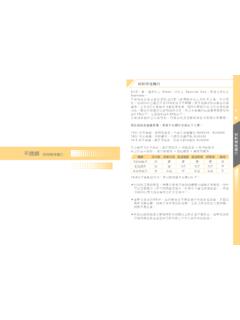
2 18 Cr Stainless Steel , ferrite type, represented by model SUS430. 18-8 Stainless Steel , austenite type, represented by model SUS304. If we examine the oxidization resistance property, austenite Stainless Steel > ferrite Stainless Steel > martensite Stainless Steel . Stainless Steel If we go by its strength level, then martensite Stainless Steel > ferrite Stainless Steel >. austenite Stainless Steel . oxidization elevated low magnetic quenching weld- Category resistance temperature temperature induc- property ability property strength toughness tance austenite none superior superior superior superior none Stainless Steel ferrite none superior inferior inferior inferior yes Stainless Steel martensite yes inferior Good inferior inferior yes Stainless Steel 18-8 series is most popular Stainless Steel . It has excellent corrosion resistance property, because it contains 18% Cr and 8% Ni. The lattice between Ni and Fe is very close and enhance an adhesiveness of Cr oxide film on to the matrix.
3 If the lattice between Ni and Fe is space out, this result in poor adhesiveness of Cr oxide. When the Ni content reaches 8%, the microstructure will become oxidation resisting austenite structure. The reason is that austenite has single phase multi-angular grain structure; thus its grain boundary is impervious to porosity and lead to good oxidation resistance. Austenite structure will form when it is heated to phase transformation temperature or above; however, adding element Ni allows the microstructure to maintain face centered cubic austenite structure in room temperature. C2. The Correlation between Weldability and Microstructure Martensite Stainless Steel Austenite Stainless Steel Stainless Steel Stainless Steel SUS410 or SUS 420 types of Martensite Stainless Steel contains about 11~ Cr, Austenite Stainless Steel contains many beneficial traits such as high corrosion which is similar to Low Carbon Steel with magnetic inductance characteristic.
4 During resistance, machinability, and weldability, which makes it widely popular. 300 series welding process, there is concern of arc blow. It is with higher electrical resistance and dominates the usage (with minor demand for 200 series). This Stainless Steel elemental lower thermal conductivity coefficient than the normal carbon Steel ; The brittle structure content contains about 15~32% of Cr, Ni 8~37%, and dominates the overall Stainless will be formed by quick cooling. Steel demand with over 90% usage. SUS 304 ( 18Cr 8Ni Steel ) is one of the most common type. To prevent HAZ (Heat Affect Zone) to form hard and brittle structure, which means Material General Review Material General Review susceptibility to shrinkage stress and hydrogen inclusion, pre-heating and inter pass Austenite Stainless Steel can retain proper strength and corrosion resistibility regardless temperature must be controlled according to the base metal's carbon content along of low or high temperature with weldment usage in as welded condition.
5 With the consideration of the size of weldment, the restriction level, and the filler metal chemical composition. Austenite Stainless Steel does not suffer from magnetic inductance and arc blow during The average weldment needs the treatment of 200~400 C of preheat and sustain inter- welding process. Series 310, 320 and 330 are full austenite structure which means pass temperature at this level, and 700~800 C of post heat so as to allow a more gradual complete immunity to magnetic inductance; 312 weld metal contains approximately 25%. cooling rate for the weld metal and HAZ which result in less shrinkage stress while ferrite with obvious magnetic inductance; 304 (L), 309 (L), 347 and likes contain low allowing more atomic hydrogen to escape in order to achieve better elongation of weld amount of ferrite which means low but some magnetic inductance. Austenite Stainless metal. Steel with lower alloy content, which suffers from full anneling, such as 304 Steel , could have magnetism from cold working.
6 Compare to the average carbon Steel , low alloy Steel or 400 series Stainless Steel , Ferrite Stainless Steel Austenite Stainless Steel has lower melting point, higher electrical resistance and lower heat conduction coefficient (about 1/3 of average carbon Steel ); which mean high heat SUS 430 Ferrite Stainless Steel contains about 15~18% Cr, which is much more than concentration in the welding zone, but with heat expansion coefficient 50% over average;. Maternsitic Stainless Steel , and its C content is usually limited under If the C thus is more susceptible to deform due to welding heat and hence requires low heat input content exceeds , it is then classified as AISI 431 Matensite Stainless Steel . welding. The positive characters of Ferrite Stainless Steel is its soft texture, good elongation, good machining-ability and corrosion resistance, no hardening occurrence due to processing or It has the best weldability because lack of quenching hardening issue.
7 However if the welding. Besides the similarity with carbon Steel and Martensite Stainless Steel , there are temperature remains between 550 ~ 800 C, the weldment will lose its oxidation resistance concerns of the magnetic inductance and arc blow. due to carbonate chromium precipitation. Choosing low carbon content filler metal when welding in combination of low heat input welding can significantly lower carbonate When HAZ (Heat Affected Zone) is heated to melting point around, that will result in grain chromium precipitation. coarsening which leads to embrittle ; thus, 150 C of preheat is necessary before welding. In addition to the above described three types, there are precipitation hardened type and During the welding process, never stay at the range of embrittlement temperature duplex phases type Stainless Steel . 400~565 C, especially 475 C, and the weldment should not be overheated also. No microstructure transformation for Ferrite Stainless Steel due to its composition, so it * Precipitation hardened type Stainless Steel : Major elements are Cr and Ni (Cr accounted is impossible to process fine grain treatment.)
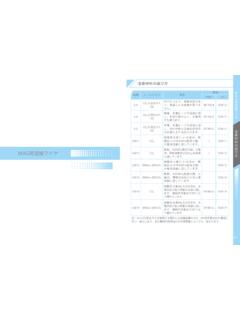
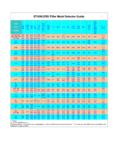
8 When it is heated over 930 C, the ferrite for 17%; Ni is 4%) under the category of 600 series Stainless Steel (like SUS 630). will suffer grain coarsening, and embrittlement because of losing its elongation and Duplex phases type Stainless Steel : Main elemental components are Cr, Ni, and Mo (22%. toughness. of Cr, 9% of Ni, and 3 % of Mo). Since its microstructure contains ferrite and austenite, hence the name duplex phases type Stainless Steel (such as Alloy 2205). Ferrite Stainless Steel has few matching standard welding consumables with emphasis mostly on corrosion resistance property and linear expansion coefficient which means the selection of 309, 310, 312 and other austenite Stainless Steel for welding. C3 C4. Welding Consumables Selection (similar base metal) Welding Consumables Selection (dissimilar base metal). Classification SAW Carbon Covered Flux Cored 317L 409 Steels Base metal (major element MIG / TIG Submerged arc 201 304 309 310 317 321 410.
9 Electrode Wire Base metal 316L 430 and Low composition) % welding wire 202 304L 309S 310S 316 347 420. Stainless Steel Stainless Steel 316Ti 446 Alloy G308 GM308 GMX308L GS308 Steels 304 18Cr-8Ni G308M GT308 GMX308L-O GS308L. 347 308L. 201 347 347 347 318 347 309 LMo 18Cr-8Ni-low G308L GM308L GMX308L 310 316L 347 309 LMo 304L GS308L 202 308L 308L 309 LMo 347 309 LMo 309L. carbon content NT308L GT308L GMX308L-O 309 LMo 347. G309 GM309 GMX309L GS309 347. 309S 23Cr-12Ni 347 347 347 309 LMo 309 LMo G309L GT309 GMX309L-O GS309L 304 347 309 LMo 347. Welding Consumables Selection (dissimilar base metal). Welding Consumables Selection (similar base metal). 310 318 318 309L 309 MoL 309L. 304L 308L 308L 308L. GM310 308L 308L 308L. 310S 25Cr-20Ni G310 309L. GT310. 309 LMo GM312 309 LMo 309L. 312 G312 309 309 LMo 318 347 309 LMo 309 LMo 309 LMo GT312 309L 316L. 309S 309L 316 309 LMo 309L 309L 309L. 310 318. GM316 GMX316L GS316 309L.
10 316 G316. GT316 GMX316L-O GS316L 316L 316L 309 LMo 309 LMo 309 LMo 310 347. 310 318 318 309L 309L 309L. 18Cr-8Ni- 310S 310. GM316L GMX316L 310 310 316L 310 310. 316L G316L GS316L. GT316L GMX316L-O. carbon content 317 318 316L 347 309 LMo 309 LMo 309 LMo 316 316L 318 316L 309L 309L 309L. 18Cr-13Ni- GM317. 317 G317 317L. GT317 316L 347 309 LMo 309 LMo 309 LMo 316L. GM347 318 316L 309L 309L 309L. 347 18Cr-8Ni-Nb G347 316Ti GT347. 321 309 LMo 309 LMo 309 LMo 347. GM347 347 309L 309L 309L. 321 18Cr-8Ni-Ti G347. GT347 409 309 LMo 309L 309 LMo GM410 430 309L. 410 13Cr G410 309 LMo 309L. GT410 446. 410. GM430 410 309 LMo 309 LMo 430 18Cr G430 420 309. GT430 309L. Note : G307 and G307M listed on catalog are mainly used on dissimilar metals between Mn Steel and cast Steel or Steel forging welding, not available for welding on Stainless Steel . C5 C6.