Transcription of Standard Operating Procedures (SOPs)
1 Standard Operating Procedures ( sops ) Standard Operating Procedures are written safety guidelines for work with hazardous substances and equipment. A SOP demonstrates "pre-thinking" and consideration of specific hazards associated with an experiment. sops may stand alone as an individual document or be incorporated into the documentation of a lab notebook. A SOP should include the following safety information: What hazardous materials will be used? What special equipment or precautions are required? What possible emergencies could arise (chemical spill, electrical shock, and fire) and what would be the response? How will hazardous wastes be disposed? Are there ways to reduce exposure by performing a smaller scale experiment, substitution of materials, engineering controls, or personal protective equipment?
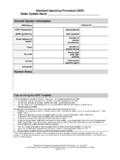
2 The next page has a template that can be used to create sops for individual labs. Any questions about SOP s, feel free to contact EH&S at 683-4495. Standard Operating Procedures ( sops ): Page 2 Sample Standard Operating Procedure template Title of Procedure: One safety SOP can be used for more than one experimental protocol if the material/equipment being used and potential hazards are the same PI: Lab Location: Issue Date: Revision Date: Prepared by: Approval Signature: Regulatory requirements, approvals and permits: List all committee approvals ( Intuitional Biosafety Committee (IBC)) or permitting needed. Definitions: Define key terms Procedural Methods and Materials: In this area describe: Signage & Labeling Access to laboratory Methods to minimize personal exposure Methods to prevent the release of infectious agents Experimental methods Standard microbiological methods Hazard Identification and Risk of Exposure to the Hazards: Describe the risk of the agents being handled in the laboratory.
3 Determine if immunization is needed. Safety Equipment and Personal Protection Equipment (PPE): Describe the equipment present in the facility and operation and maintenance. Include: Biosafety cabinets annual certification Autoclaves Quality Control protocols Centrifuges- record keeping PPE- types available, use and cleaning Procedures Cleaning & Disinfection: Describe Surface decontamination and cleaning Procedures and types disinfection used. Waste Generation and Disposal Methods: Identify the types of waste generated and Procedures for handling biological waste including contaminated, non-contaminated waste and use of sharps containers. Page 3 Spill and Accident Response Procedure: Describe all emergency Procedures including spill clean up.
4 Information needed: Emergency phone numbers Spill kit locations First aid kit location Steps to taken in the event of a: Spill Fire or evacuation Medication Emergency Weather or other Natural Disaster Mechanical/ facility concerns Suspicious person or activities Oral Threat Records: Include any records Notes.