Transcription of Steam Conditioning Applications - Control …
1 VST-SE for Steam Conditioning Applications 2 CCI - The leader in innovative Steam Conditioning solutions for over 70 years. What Is a Steam Conditioning Valve? A Steam Conditioning valve converts Steam from an incoming state (pressure and temperature) to a predetermined required outlet state (pressure and temperature). Pressure reduction is carried out with a pressure reducing trim within the valve body, usually multi stage pressure reduction. The pressure is controlled by an upstream or downstream pressure controller, signaling the valve to modulate to maintain the pressure at the required set point. Temperature is controlled by adding water to the Steam in such away that it will get fully evaporated in the Steam (termed desuperheating). A separate water valve supplies the correct amount of water to the desuperheating Figure 1: In 1929, Kalle-Regulatorer/Eur- Control /BTG (now CCI) invented the first Steam nozzles or desuperheating mechanism within the Steam Conditioning valve.
2 Conditioning valve designed for pulp and paper A downstream temperature transmitter and a controller dictate the amount industry. This led to the installation of turbine bypass valves in the 1950's. of water mixed with the Steam . Combined Pressure Reduction and Desuperheating Ensure Maximum Performance and Reliability The VST range of valves are primarily used in industrial (CHP) and utility power plants for Conditioning of auxiliary and process Steam . Availability of the VST-SE in the turbine bypass application for Steam supply to the process is critical. Reliability and performance are paramount to the operation of the plant. The CCI VST-SE design with its unique features stands alone in the industry for Steam Conditioning Applications . VST-SE for Steam Conditioning Applications Requirements for Steam Conditioning Many industries such as pulp & paper, refineries, sugar and petro-chemical facilities require Steam at a temperature very close to saturation.
3 If the Figure 2: CHP Steam Conditioning system Steam is supplied at a temperature too high, the product or equipment can performance is critical for plant efficiency. be damaged. If the temperature is too low there will be excess water. If the required Control is lost, severe damage to piping and downstream equipment occur, resulting in expensive maintenance cycles and loss of production (refer to figure 2.). VST-SE. CCI's VST-SE Designs Resist Thermal Shock and Fatigue Steam turbine bypass valves are closed for long periods, therefore subjecting the valve and the piping to temperatures approaching saturation. In some cases valves will have to withstand temperature changes (thermal shock). greater than 200 C (393 F) in less than 2 seconds. The CCI VST-SE valves are designed specifically to operate reliably in these conditions (with repeatable tight shutoff and no distortion.) A special two piece seat design provides extra thermal flexibility to ensure reliable shutoff.
4 Figure 3: CHP process application with CCI. desuperheating systems are designed for maximum performance and reliability. 3. CCI's VST-SE design provides high reliability and performance in one Steam condition valve. High Rangeability Designs Maximize Output Steam Conditioning Applications require high turndown of desuperheated Steam flow to maximize system output and provide for higher system reliability. Typically high pressure to process turbine bypass systems require 50 to 1 or greater turndown with respect to desuperheated Steam flow. The CCI VST-SE valves are designed to achieve higher MW and heat generation outputs by minimizing the controllable Steam flow to meet process demand. Immediate improvements in the performance of the plant can be realized. In-built Water Proportional System Manages Flow and Figure 4: CHP in pulp and paper Temperature Transients application using VST-SE Steam Conditioning valve Owing to process demand, there are often system transients.
5 Typically, when there is a sudden change in flow, for example from 100% flow to 50%, then there must be a corresponding change in water flow to maintain downstream temperature. The problem with conventional valves is that the Pressure reducing element of the valve will change the Steam flow, but there will be no change in water flow until the temperature Control system reacts and sends a signal to appropriately adjust the spraywater flow. However in reducing Steam flow there will be overspray resulting in wetting of temperature sensor and causing system instability and water fall out. Likewise, when flow is increasing, there will be overheating of the process Steam until the system responds, by which time the downstream equipment or process causing the system to possibly trip. The solution is to proportion the water with the Steam as the transients occur. VST-SE for Steam Conditioning Applications Modulated Steam Atomization Designs Provide Advanced Figure 5: VST-SE for paper making using Desuperheating Capabilities low pressure Steam for paper making The CCI BTG VST-SE valve injects water with the Steam as the flow transients occur (termed Steam atomization desuperheating).
6 Spraywater for desuperheating is only introduced after final pressure reduction. The final pressure reducing elements are specifically designed to optimize the flow pattern for desuperheating. Modified Linear Trim Characteristics Provide Extra Fine Control at Low Flow Conditions Steam is passed through the center of the valve Steam to Steam atomize the spraywater. At higher flow requirements of above 5% Steam flow (above 15% stroke) the main cage is exposed and the Steam flow modulates normally through the Control section, providing a linear flow characteristic, Figure 6: VST-SE for more reliable and maximizing Steam flow at high flows. efficient operation at petrochemical facilities. For low flow requirements of 0-5% Steam flow (0-15% stroke) the Steam flow is only passed through the Steam atomizing channel in the plug, and is controlled by the position of the main plug, uncovering sequential holes leading to the atomizing channel as the stroke increases.
7 Greater Steam atomization at low flows is realized. 4 CCI's BTG VST-SE design provides high reliability and performance in one Steam condition valve. Pressure Seal Top Entry Design Bonnet In-line repairable for ease of Maintains tightness inspection and maintenance. regardless of thermal transients. Built-in Water Proportioning System Forged Fully Unique design manages Machined Body flow and thermal transients. Handles thermal fatigue critical for reliable service. Low Flow Steam Atomizing Channel Allows for a high The Complete Solution for Pressure and Temperature Control VST-SE. Two-piece Seat turndown with respect to Special two piece seat desuperheated Steam flow resists damage from of greater than 50 to 1. thermal transients. Protected Seat Design Throttling happens across the cage holes in the inlet cage Gasket Minimized plug and therefore the seat is protected from high velocity Gaskets are a leak Steam . source when valve is subject to thermal transients.
8 Steam Atomized Desuperheating Provides superior desuperheating capabilities. Valve Performance Characteristics The VST-SE Control curve is customized for superior performance. 5. Use this checklist to evaluate the benefits of CCI's BTG VST-SE Steam Conditioning valve. Benefits VST-SE Competitors 1 Improves Plant Performance. Turndown: Provides unequalled Control of downstream pressure and temperature. 2 Increases MW Output and Optimizes Plant Flexibility. High turndown maximizes the Steam flow and therefore MW from the Steam turbine. 3 Provides Better Reliability. Valve is designed specifically to handle severe thermal shock conditions normally associated with turbine bypass Applications . 4 Lower Installation Costs. Steam atomization provides quicker evaporation of water allowing closer location of bends and temperature transmitters. 5 Lower Maintenance Costs. Valve designed specifically to provide longer intervals between maintenance and to allow easy access to all components for shortened downtime.
9 6 Reduced System Cost. Each valve is custom engineered for the application, with connections to suit selected piping and ensure the ease of installation. VST-SE for Steam Conditioning Applications 7 Lower Noise. The VST-SE will be custom designed with sufficient pressure reducing stages to meet most noise requirements. 8 Lower Operating Cost. Owing to special plug and seat design: - repeatable and reliable seat tightness is achieved. 9 Extended Seat Tightness Life. No wear on seat while throttling, as it is only active at shutoff. 10 Reliable Smooth Operation. The valve is guided in two areas, with long guiding surfaces and not subject to distortion. 11 Extra Fine Control at Low Flows. All of the Steam flow below 5% flow (15% stroke) is Steam modulated atomized flow, inducing fine flow Control . 12 Very High Actuating Forces Can be Accepted. The actuating force is transferred from the plug to a shoulder on the valve body via the seat, thereby preventing distortion of the valve seat.
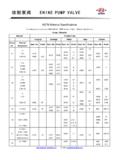
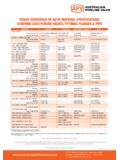
10 6 Technical specification and materials of construction. Table 1: Materials of Construction A. European Material ASTM Material Description Comments B Standard Standard C. Surface D A Stem/Plug X19 CrMoVNbN11-1 ~AISI 616. Hardened Bush E Gland Bush B X20Cr13 ~AISI 420 Surface F / Nut G Hardened H. M Stem C Graphite Graphite Packing I. Water Conn. PG245GH/13 CrMo4- D A105/A182-F12. /Flange 5. J. E Cover Plate PG245GH A105. Spacer &. F Segment X10 CrMoVNb91 A182-F91. K Ring N. Pressure G Graphite Graphite Seal Gasket L. Surface H Bonnet 11 CrMo9-10 A182-F22. Hardened VST-SE Valve for Steam Conditioning PG245GH/13 CrMo4- A105/A182-F12,-F22/. I Valve Body 5/11 CrMo9-11/. A182-F91. X10 CrMoVNb91. 11 CrMo9-10/ Seat HS25. J Seat A182-F22/ A182-F91. VST-SE for Steam Conditioning Applications X10 CrMoVNb91 Hard faced Pressure A106/A335-P12,- K Reduction 10 CrMo910/. P22/A335-P91. Unit X10 CrMoVNb91. Surface L Nozzle X19 CrMoVNbN11-1 ~AISI 616. Hardened PG245GH/13 CrMo4- A105/A182-F12,-F22/.