Transcription of STERILE VANCOMYCIN HYDROCHLORIDE, USP
1 To reduce the development of drug-resistant bacteria and maintain the effectiveness of VANCOMYCIN and other antibacterial drugs, VANCOMYCIN should be used only to treat or prevent infections that are proven or strongly suspected to be caused by bacteria. DESCRIPTIONS terile VANCOMYCIN Hydrochloride, USP is a lyophilized powder, for preparing intravenous (IV) infusions. Each Pharmacy Bulk Package contains VANCOMYCIN hydrochloride equivalent to 5 grams of VANCOMYCIN base. When reconstituted as directed each 10 mL contains 500 mg and each 20 mL contains 1 gram. VANCOMYCIN hydrochloride is an off-white to tan colored lyophilized powder. It may contain hydrochloric acid and/or sodium hydroxide for pH adjustment.
2 When reconstituted with STERILE Water for Injection, USP it forms a clear solution with the pH of the solution between and This product is oxygen Pharmacy Bulk Package is a STERILE preparation for intravenous use that contains many single doses. The contents are intended for use in a pharmacy admixture hydrochloride is prepared as a solution and lyophilized in its final container. lVancomycin is a tricyclic glycopeptide antibiotic derived from Amycolatopsis orientalis (formerly Nocardia orientalis). The molecular formula is CHClNOHCl and the molecular weight is 1, Hydrochloride has the following chemical designation:(S)-(3S,6R,7R,22R,23S,26S,36 R,38aR)-44-[[2-O-(3-Amino- 2,3,6-trideoxy-3-C-methyl-a-L-lyxo-hexop yranosyl)- -D-glucopyranosyl]oxy]-3-(carbamoylmethy l)-10,19-dichloro-a2,3,4,5,6,7,23,24,25, 26,36,37,38,38a-tetradecahydro- 7,22,28,30,32-pentahydroxy-6-[(2R)-4-met hyl-2-(methylamino)]valeramido]-2,5,24,3 8,39-pentaoxo-22H-8,11:18,21-dietheno-23 ,36-(iminomethano)-13,16:31,35-dimetheno -1H,16H-[1,6,9]oxadiazacyclohexadecino[4 ,5-m][10,2,16]benzoxadiazacyclotetracosi ne-26-carboxylic acid, monohydrochloride.
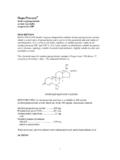
3 Its structural formula is:CLINICAL PHARMACOLOGYV ancomycin is poorly absorbed after oral administration; it is given intravenously for therapy of systemic infections. In subjects with normal kidney function, multiple intravenous dosing of 1 g of VANCOMYCIN (15 mg/kg) infused over 60 minutes produces mean plasma concentrations of approximately 63 mcg/mL immediately after the completion of infusion, mean plasma concentrations of approximately 23 mcg/mL 2 hours after infusion, and mean plasma concentrations of approximately 8 mcg/mL 11 hours after the end of infusion. Multiple dosing of 500 mg infused over 30 minutes produces mean plasma concentrations of about 49 mcg/mL at the completion of infusion, mean plasma concentrations of about 19 mcg/mL 2 hours after infusion, and mean plasma concentrations of about 10 mcg/mL 6 hours after infusion.
4 The plasma concentrations during multiple dosing are similar to those after a single dose. The mean elimination half-life of VANCOMYCIN from plasma is 4 to 6 hours in subjects with normal renal function. In the first 24 hours, about 75% of an administered dose of VANCOMYCIN is excreted in urine by glomerular filtration. Mean plasma clearance is about L/kg/h, and mean renal clearance is about L/kg/h. Renal dysfunction slows excretion of VANCOMYCIN . In anephric patients, the average half-life of elimination is days. The distribution coefficient is from to L/kg. There is no apparent metabolism of the drug. About 60% of an intraperitoneal dose of VANCOMYCIN administered during peritoneal dialysis is absorbed systemically in 6 hours.
5 Serum concentrations of about 10 mcg/mL are achieved by intraperitoneal injection of 30 mg/kg of VANCOMYCIN . However, the safety and efficacy of the intraperitoneal use of VANCOMYCIN has not been established in adequate and well-controlled trials (see PRECAUTIONS).Total systemic and renal clearance of VANCOMYCIN may be reduced in the elderly. VANCOMYCIN is approximately 55% serum protein bound as measured by ultrafiltration at VANCOMYCIN serum concentrations of 10 to 100 mcg/mL. After IV administration of VANCOMYCIN , inhibitory concentrations are present in pleural, pericardial, ascitic, and synovial fluids; in urine; in peritoneal dialysis fluid; and in atrial appendage tissue.
6 VANCOMYCIN does not readily diffuse across normal meninges into the spinal fluid; but, when the meninges are inflamed, penetration into the spinal fluid bactericidal action of VANCOMYCIN results primarily from inhibition of cell-wall biosynthesis. In addition, VANCOMYCIN alters cell membrane permeability and RNA synthesis. There is no cross-resistance between VANCOMYCIN and other antibiotics. VANCOMYCIN is not active in vitro against gram-negative bacilli, mycobacteria, or fungi. SynergyThe combination of VANCOMYCIN and an aminoglycoside acts synergistically in vitro against many strains of Staphylococcus aureus, Streptococcus bovis, enterococci and the viridans group has been shown to be active against most strains of the following microorganisms, both in vitro and in clinical infections as described in the INDICATIONS AND gram-positive microorganismsDiphtheroidsEnterococci ( , Enterococcus faecalis)Staphylococci, including Staphylococcus aureus and Staphylococcus epidermidis (including heterogeneous methicillin-resistant strains)
7 Streptococcus bovisViridans group streptococciThe following in vitro data are available, but their clinical significance is exhibits in vitro MIC's of 1 mcg/mL or less against most ( 90%) strains of streptococci listed below and MIC's of 4 mcg/mL or less against most (90%) strains of other listed microorganisms; however, the safety and effectiveness of VANCOMYCIN in treating clinical infections due to these microorganisms have not been established in adequate and well-controlled clinical gram-positive microorganismsListeria monocytogenesStreptococcus pyogenesStreptococcus pneumoniae (including penicillin-resistant strains)Streptococcus agalactiaeAnaerobic gram-positive microorganismsActinomyces speciesLactobacillus speciesSusceptibility Test MethodsWhen available, the clinical microbiology laboratory should provide the results of in vitro susceptibility test results for antimicrobial drugs used in local hospitals and practice areas to the physician as periodic reports that describe the susceptibility profile of nosocomial and community-acquired pathogens.
8 These reports should aid the physician in selecting the most effective Techniques Quantitative methods are used to determine antimicrobial minimum inhibitory concentrations (MICs). These MICs provide estimates of the susceptibility of bacteria to antimicrobial compounds. The 1,2 MICs should be determined using a standardized procedure. Standardized procedures are based on dilution method(broth, agar or microdilution) or equivalent using standardized inoculum and concentrations of VANCOMYCIN powder. The MIC values should be interpreted according to the criteria in Table Techniques 2,3 Quantitative methods that require measurement of zone diameters also provide reproducible estimates of the susceptibility of bacteria to antimicrobial compounds.
9 One such standardized procedure requires the use of standardized inoculum concentrations. This procedure uses paper disks impregnated with 30 mcg of VANCOMYCIN to test the susceptibility of microorganisms to VANCOMYCIN . Interpretation involves correlation of the diameter obtained in the disk test with the MIC for VANCOMYCIN . Reports from the laboratory providing results of the standard single-disk susceptibility test with a 30 mcg VANCOMYCIN disk should be interpreted according to the following criteria in Table 1. Susceptibility Test Interpretive Criteria for Vancomycina7 A -lactamase test using an inoculum 10 CFU/mL or direct colony growth and a nitrocefin-based substrate should be performed to detect either ampicillin or penicillin resistance due to -lactamase should be held for a full 24 hours and examined using transmitted light.
10 The presence of a haze or any growth within the zone of inhibition indicates resistance. Those enterococci with 1,2 intermediate zones of inhibition should be tested by a standardized procedure based on a dilution method(broth or agar) or equivalent. cThe current absence of resistant isolates precludes defining results other than Susceptible . Isolates yielding results suggestive of Nonsusceptible should be submitted to a reference laboratory for further testing. d1,2 Interpretative criteria applicable only to tests performed by broth microdilution method using cation-adjusted Mueller-Hinton broth with 2 to 5% lysed horse blood. e3 Interpretative criteria applicable only to tests performed by disk diffusion method using Mueller-Hinton agar with 5% defibrinated sheep blood and incubated in 5% report of Susceptible indicates that the pathogen is likely to be inhibited if the antimicrobial compound in the blood reaches the concentrations usually achievable.