Transcription of STUDENT SUPPORT SERVICES HANDBOOK
1 STUDENT SUPPORT SERVICES HANDBOOK NOVEMBER 2018 Melbourne Nov-18 State of Victoria (Department of Education and Training) 2016 The copyright in this document is owned by the State of Victoria (Department of Education and Training), or in the case of some materials, by third parties (third party materials). No part may be reproduced by any process except in accordance with the provisions of the Copyright Act 1968, the National Education Access Licence for Schools (NEALS) (see below) or with permission. An educational institution situated in Australia which is not conducted for profit, or a body responsible for administering such an institution may copy and communicate the materials, other than third party materials, for the educational purposes of the institution. Authorised by the Department of Education and Training, 2 Treasury Place, East Melbourne, Victoria, 3002 Version History Version Date Authorised Update details #1 October 2017 16/10/2017 SSS Project Control Board Initial Version #2 March 2018 22/01/2018 SSS Project Control Board Referrals: inclusion of an optional STUDENT Information Form Section added: Statewide SERVICES Section added: Working in Schools Accessibility compliant versioning #3 September 2018 31/8/2018 SHWW Project Control Board Co-Chairs SSS Key contacts and Team Leaders links added Figure 6 updated Clarified SSS referral process added and figure 8 replaced with revised referral process New guidance on OOHC students added New user SUPPORT options for SOCS added #4 November 2018 12/11/2018 SHWW Project Control Board Co-Chairs Updated guidance on OOHC students to match Department policy.
2 Page 3 CONTENTS INTRODUCTION .. 5 STUDENT SUPPORT SERVICES ALIGNMENT TO AREAS .. 5 Key changes to the SSS Operating Model .. 5 Opportunities for SSS under the New Operating Model .. 5 STRUCTURE OF THIS DOCUMENT .. 6 Status as a Living Document .. 6 HOW WE WORK TOGETHER .. 7 WORKING TOWARDS THE EDUCATION STATE .. 7 Health, Wellbeing and Education State .. 7 Framework for Improving STUDENT Outcomes .. 7 WORKING IN AREA TEAMS .. 8 SSS and Multi-disciplinary Teams .. 9 Multi-Disciplinary Teams in Practice .. 10 Case Studies .. 10 SSS STATEWIDE SERVICE PRIORITIES .. 11 WORKING AS SSS .. 13 Roles and Responsibilities Overview .. 13 Area Executive Directors .. 14 Implementation Manager .. 14 Team Leader .. 15 SSS Local Team .. 16 SSS Key 16 Professional Practice Leaders .. 16 SSS Principal Advisory Group .. 16 Professional Supervision .. 17 WORKING IN PORTFOLIOS .. 18 Concept of Portfolios .. 18 Portfolios and Place Based Approaches .. 18 Determining Portfolios.
3 19 Portfolio Functions .. 19 Portfolio 20 Portfolio Composition .. 20 OVERVIEW OF SSS SERVICE DELIVERY .. 21 STUDENT WELLBEING PLANNING FRAMEWORKS .. 21 CRITICAL INCIDENT 22 NEEDS BASED SERVICE PROVISION .. 22 Accessing SSS SUPPORT .. 23 Meetings between the SSS Key Contact and School Contact .. 23 Pre-Referral .. 24 Referral to SSS .. 25 Consent for STUDENT SUPPORT SERVICES .. 26 Mature-Minor Principle .. 26 Intake .. 26 Service Delivery .. 27 Page 4 Personalised learning and SUPPORT planning .. 27 Service Review .. 28 SSS REFERENCE GUIDE .. 30 DISABILITY DISCRIMINATION ACT .. 30 DUTY OF CARE/REPORTING CHILD ABUSE .. 30 EMERGENCY MANAGEMENT .. 31 FILE MANAGEMENT FOR SSS .. 31 Management of DCS STUDENT files .. 31 Definitions .. 31 Confidentiality and unauthorised access .. 32 File storage, security and confidentiality .. 32 Establishment and registration of new DCS files .. 32 Maintenance of files .. 33 Tracking of DCS files .. 33 Transfer of files.
4 33 Archival and disposal procedures .. 34 PRIVACY AND INFORMATION-SHARING .. 35 Sharing STUDENT Information .. 35 SSS Consent Form and sharing STUDENT information .. 35 Sharing Information: Duty of Care .. 35 Sharing Information: Anti-Discrimination Law .. 36 PROFESSIONAL PRACTICE GUIDELINES .. 37 STATEWIDE EDUCATION FACILITIES .. 38 Roles and responsibilities .. 38 Referrals .. 38 students IN OUT-OF-HOME CARE .. 38 WORKING IN SCHOOLS .. 39 STUDENT ONLINE CASE SYSTEM (SOCS) .. 40 Overview .. 40 What is SOCS? .. 40 Benefits of SOCS .. 40 Who should use SOCS?.. 40 Consent .. 41 SOCS Workflow .. 41 Case notes in SOCS .. 43 Information Security .. 43 Shared file management .. 44 User SUPPORT .. 45 SOCS Change Advisory Group .. 45 STUDENT SUPPORT SERVICES RESOURCES .. 46 Policy Documents .. 46 SOCS user manual .. 46 SSS Forms .. 46 Professional Associations and Regulatory Bodies .. 46 Page 5 INTRODUCTION This document is a HANDBOOK that describes an operating model for STUDENT SUPPORT SERVICES (SSS) following its alignment with DET Areas.
5 Regional SERVICES Group will update and expand this living document as the integration of SSS with Areas develops. STUDENT SUPPORT SERVICES ALIGNMENT TO AREAS SSS do vital work in supporting students health and wellbeing particularly our most vulnerable students and SSS are critical to building an excellent education system that reduces the impact of disadvantage. As part of its commitment to making Victoria the Education State, the Government has implemented a new regional operating model, Learning Places in March 2016, which created 17 Areas within the Department s four regions. The realignment of more than 600 SSS into Area teams has greatly enhanced the ability of Areas to provide multi-disciplinary SUPPORT and create an integrated SERVICES platform. Key changes to the SSS Operating Model SSS maintains its core function and focus. SSS is the first responders to critical incidents, and highly regarded in its ability to manage complex cases and provide guidance on intervention, however there are some significant changes to the SSS operating model.
6 Key changes to the SSS operating model include: SSS as part of an Area team, Region and wider DET SSS provide SERVICES as part of organised multi-disciplinary teams with health and wellbeing professionals, and other DET specialist SERVICES SSS workforce is governed differently, and two new roles SUPPORT the new governance structure Implementation Managers, responsible for a SSS Area team, and Team Leaders, responsible for managing a smaller local SSS teams within an Area (see Working as SSS) SSS work to Area plans and priorities (see Working in Areas) SSS work to four statewide priorities (see Working in Areas) SSS work within Portfolios (see Portfolio section). Opportunities for SSS under the New Operating Model SSS place-based expertise will be captured and used within the broader Area team greater capacity to work with a group of staff committed to a geographic area to identify opportunities and challenges for different cohorts building close working local relationships with community organisations and other SERVICES to develop innovative approaches to meet demand Portfolios will embed the shift from individual intervention to primary prevention, enabling a focus on evidence-based longer-term solutions SSS can harness existing DET professional expertise in an organised team.
7 Page 6 STRUCTURE OF THIS DOCUMENT This document describes the SSS operating model, reflecting the alignment of SSS with Areas. It is structured into three major sections: 1. WORKING TOGETHER: This section provides an overview of how SSS work: towards the Education State, in Area teams, as SSS and in portfolios. It is intended to summarise and describe the SSS interim operating model. 2. SSS SERVICE DELIVERY: This section collates existing material about how SSS provide SERVICES . 3. SSS REFERENCE GUIDE: This section provides an alphabetised listing of areas of policy or guidance for SSS to follow. Status as a Living Document This document will develop and be added to over time, in particular: as more practical examples of how SSS can work effectively in Areas become available; as a consequence of policy / strategy and other reform work. Page 7 HOW WE WORK TOGETHER This section provides an overview of how SSS work as part of the broader DET system.
8 It begins by providing an overview of the contribution that SSS make towards Education State. It then describes how SSS work: in Area teams, as a SSS workforce and in portfolios. A diagrammatic section of this section is shown in the Figure below. FIGURE 1: HOW WE WORK TOGETHER WORKING TOWARDS THE EDUCATION STATE Health, Wellbeing and Education State STUDENT health, wellbeing and engagement are not only important in their own right, but also have a positive impact on learning outcomes, and as such underpin several of the Education State Initiatives. Education State target areas that directly relate to SSS and school-based health and wellbeing workforces include: increasing STUDENT safety and wellbeing ensuring that additional resources and expertise are available to students who need them most a stronger focus on identification and early intervention to address issues of disengagement before they become exacerbated and/or entrenched, with a preference for school as the first choice of education setting increasing flexibility to address the varying barriers to engagement, with a focus on case management and empowering young people to build on their interests and skills building the capability of educators and other professionals to adopt evidence based and innovative solutions to address disengagement.
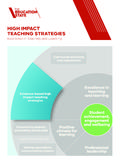
9 Framework for Improving STUDENT Outcomes The Framework for Improving STUDENT Outcomes (FISO) is a key education state initiative and provides a common language for school improvement across the Victorian government school system. It is structured around four state-wide priorities that are proven to have a strong bearing on the effectiveness of school: Working as SSSW orking in PortfoliosWorking in AreasEducation State Page 8 excellence in teaching and learning professional leadership positive climate for learning community engagement in learning FIGURE 2: FISO IMPROVEMENT MODEL The new regional operating model is designed to SUPPORT and drive the implementation of FISO, particularly via collaborative exchange between schools and Area teams, to deliver better STUDENT outcomes at the local level. SSS have an important role to play in supporting schools to achieve these priorities by building the capability of teachers and school leaders and providing SUPPORT to students .
10 WORKING IN AREA TEAMS This section describes how SSS work as part of Area teams. There is a balance between statewide consistency in SSS practice and flexibility to allow Areas to take a place based approach, sensitive to their local needs, which is the defining feature of DET s regional operating model, Learning Places. A consistent approach to service delivery across the state will be maintained through: retaining statewide priorities of critical incidents, acute issues / complex cases, prevention and capability issues and short to medium term intervention. use of statewide guidelines including the state-wide professional practice guidelines for the Department s health and wellbeing workforces the statewide SSS Implementation Manager reference group, supported by professional practice leaders to establish specific SSS guidelines and procedures to be used by all Areas aligning SERVICES with the Framework for Improving STUDENT Outcomes Page 9 standardised approaches to intake for all Areas implementing the Professional Supervision Framework use of STUDENT Online Case System (SOCS).