Transcription of SUMMER 2017 - OCPInfo.com
1 SUMMER 2017 VOLUME 24 NUMBER 3 THE OFFICIAL PUBLICATION OF THE ONTARIO COLLEGE OF PHARMACISTSALSO IN THIS ISSUE: Building an Opioid Action Plan for Pharmacy 14 Strengthening the Protection of Patients in Ontario 34In the News: Updates on Mifegymiso, MAiD and more 8 ENHANCING MEDICATION SAFETY:College Launches Continuous Quality Assurance Program for Medication Safety 10 PAGE 2 ~ SUMMER 2017 ~ PHARMACY CONNECTIONO ntario College of Pharmacists 483 Huron Street, Toronto, ON M5R 2R4 T 416-962-4861 F 416-847-8200 CONTACTS Office of the CEO & Registrar ext. 2241 Office of the President ext. 2243 OCP 2243 Pharmacy Practice 2285 Registration Programs 2250 Member Applications & 3400 Pharmacy Applications & 3600 COUNCIL MEMBERSE lected Council Members are listed below according to District.
2 PM indicates a public member appointed by the Lieutenant-Governor-in-Council. U of T indicates the Dean of the Leslie Dan Faculty of Pharmacy, University of Toronto. U of W indicates the Hallman Director, School of Pharmacy, University of Christine Donaldson (Vice-President)H R gis Vaillancourt (President)K Esmail MeraniK Tracey PhillipsL Billy Cheung L James MorrisonL Sony PouloseM Fayez Kosa M Don Organ M Laura WeylandN Gerry Cook N Christopher LeungN Karen Riley P Jon MacDonaldP Douglas StewartT VacantTH Goran Petrovic PM Kathy Al-Zand PM Linda BrackenPM Christine Henderson PM Robert HindmanPM Javaid Khan PM James MacLagganPM Elnora MagbooPM Sylvia MoustacalisPM Joan A PajunenPM Shahid RashdiPM Joy SommerfreundPM Dan StapletonPM Ravil VeliPM Wes VickersU of T Heather BoonU of W David EdwardsStatutory Committees Accreditation Discipline Executive Fitness to Practise Inquiries Complaints & Reports Patient Relations Quality Assurance Registration Standing Committees Drug Preparation Premises Elections Finance & Audit Professional PracticeLead the advancement of pharmacy to optimize health
3 And ellness through patient-centred ccountabilityCore ProgramsFulfillment of MandateOptimize Practice ithin Scope Patients FirstEffective CommunicationsContinuous Quality ImprovementThe Ontario College of Pharmacists regulates pharmacy to ensure that the public receives quality services and care. VisionValuesStrategicPrioritiesStrategic InitiativesMissionStrategic Framework2015 - 2018 ExcellenceInter & IntraProfessionalCollaborationPUBLISHED BY THE COMMUNICATIONS The objectives of Pharmacy Connection are to communicate information about College activities and policies as well as provincial and federal initiatives affecting the profession; to encourage dialogue and discuss issues of interest to pharmacists, pharmacy technicians and applicants; to promote interprofessional collaboration of members with other allied health care professionals; and to communicate our role to members and stakeholders as regulator of the profession in the public publish four times a year, in the Fall, Winter, Spring and SUMMER .
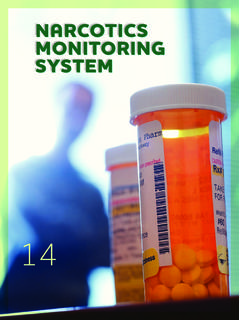
4 We also invite you to share your comments, suggestions or criticisms by letter to the Editor. Letters considered for reprinting must include the author s name, address and telephone number. The opinions expressed in this publication do not necessarily represent the views or official position of the Ontario College of 1198-354X 2017 Ontario College of PharmacistsCanada Post Agreement #40069798 Undelivered copies should be returned to theOntario College of Pharmacists. Not to be reproduced in whole or in part without the permission of the and Registrar s Message ..4 Council Report ..5In the News ..8 College Approves Implementation of a Continuous Quality Assurance Program..10 Building an Opioid Action Plan ..14 ISMP Canada Safety Bulletin..16 Oral Anti-Cancer Drugs..22 Inter- and Intraprofessional Collaboration.
5 26 New Professional Misconduct Regulations ..28 Reporting Adverse Reactions ..32 Protecting Patients Act ..34 Prescriptions from Other Healthcare Professionals..37 Close-Up on Complaints ..38 Scope of Practice Strategy ..40 What We Heard From You..44 Discipline Decisions ..46 Focus on Error Prevention..66 FOLLOW US ON SOCIAL MEDIA! ontario-college-of-pharmacistsSUMMER 2017 VOLUME 24 NUMBER 3 PAGE 4 ~ SUMMER 2017 ~ PHARMACY CONNECTIONAs trusted pharmacy professionals, you all play an important role in patient safety. This means doing what you can to protect patients from harm and to work with patients as partners in their care along with other members of a collaborative care team. For the College, an important part of our role as a regulator that has served the public for nearly 130 years is to develop the standards to help the entire profession achieve this goal consistently and to continue to promote high quality pharmacy practice.
6 Together, we have a collective responsibility to keep patients at the centre of everything we do. In this issue of Pharmacy Connection, we re pleased to provide important updates on a number of initiatives designed to help us all fulfill our shared responsibilities to put patients first and promote safe and high quality, patient-centred practice within a constantly evolving health system. For example, you ll learn more about the work behind the development of the College s Opioid Strategy as we prepare to bring a draft framework to Council this fall. We believe that pharmacy can play a vitally important role in helping to curb this public health crisis and it is our hope that this strategy will define what that role will be and shape the work that we all can do to reduce the real and tragic impact this crisis has had on our communities to date.
7 You ll learn about our Scope of Practice Strategy which we believe will help support all pharmacy professionals to practice to their full scope and thereby influence better patient outcomes and access to timely pharmacy care. Our health system continues to transform and patients will continue to rely on pharmacy professionals who are well positioned to play an increasingly active role in their health and well being. And you ll learn more about our Continuous Quality Assurance (CQA) Program for Medication Safety and the next steps in development of this important patient safety initiative. As many of you now know, our CQA program will require pharmacy professionals to anonymously report medication incidents to a third party. This will help us through the analysis of aggregate and de-identified data to recognize trends in practice and learn from each other to address system issues before they occur.
8 While this may seem like a big step for some, we all share that same objective: to promote a safety culture within pharmacy that focuses on quality improvement and the sharing of learnings to help reduce the risk of medication incidents and prevent errors that can sometimes result in tragic consequences for patients and their families. As we begin to roll out the first phase of the CQA program starting this fall, we ll be looking for community pharmacies interested in getting a head start by volunteering to be among the first 100 pharmacies in the province to adopt the program. Those who volunteer will not only benefit from an earlier implementation of this patient-safety program into their operations, but they will also help inform, shape and influence the success of the program as we move forward with full implementation in late 2018.
9 Patients are partners, and their perspectives matterThe CQA program is an excellent example of how we brought together professional, public and patient perspectives into the development of a framework for what will become Ontario s first medication safety program for community pharmacies once fully implemented. The patient perspective in particular was key to grounding our discussions and reminding us all why we need to do better. After all, at the end of every prescription is a regulations related to the Protecting Patients Act (2017) are developed, and as our health system continues to evolve and transform, we anticipate increasing opportunities that we as a College and you as professionals can and should embrace to invite patients to participate in and inform our work. It is in fact fast becoming a perfect convergence of opportunity and desire that is compelling all of us to make every effort possible to explore how we can more firmly bring the patient voice into our world.
10 With that voice comes a better understanding of how our programs, standards and Code of Ethics have an impact on health outcomes. As a regulator, we re looking forward to welcoming more public and patient input into what we do, including working closely with our Patient Relations Committee as we strengthen our commitment to supporting patients. We re also looking forward to collaborating with our regulatory colleagues in benefiting from the contributions of a Citizen Advisory Group. This group will help us learn from important perspectives and insights of people from all walks of life who, like all Ontarians, have a rightful stake in quality and safe patient care. Perhaps most importantly, we re looking forward to exploring with pharmacy professionals throughout the province how we can all further promote patient safety and quality care by encouraging meaningful and appropriate opportunities to engage, learn from, listen to and participate with patients in the delivery of quality pharmacy practice.