Transcription of Supplier Request for Engineering Approval …
1 A JSJ Business Supplier Request for Engineering Approval process SREA Self paced training module Rev:D Revision Date 8/5/14 2 Describe what the SREA process is and is NOT Define when an SREA form is required Identify the Pre-Work required to be done PRIOR to preparing the Request Describe the process flow with responsibilities (GHSP or Supplier ) from start to finish Review Strategies for gaining first time SREA Approval Provide Master Good Examples Training Objectives 3 An SREA is a process to identify, PLAN, and communicate a Request to implement a PERMANENT product and/or process change that falls underneath the scope of AIAG PPAP.
2 The results of the planning process are identified on the SREA form along with a timing plan and validation plan (if validation testing applies) The SREA is not applicable to temporary changes The Supplier Deviation process applies What Is and Is Not an SREA ? 4 What is the Purpose? The SREA process is to demonstrate that you, as a Supplier , proactively communicate the desire to make a change and that it shows the work plan to execute the expectations of the Production Part Approval process (PPAP)*. The objective is to gain Approval to proceed with the plan to change.
3 Failure to follow this process has the potential of creating a recall event (worst case) and creates chaos for GHSP and our customers. * Refer to Section 3 Customer Notification and Submission Requirements. AIAG PPAP Manual 4th Edition 5 WHEN is SREA Started? After a decision to change has been made by Supplier Before a change has been started Before a change has been implemented or completed When the change falls under the scope of AIAG PPAP (latest edition) or GHSP Supplier Manual publications post 4/1/2014 found on 6 GHSP Supplier SREA process Flow PLAN DO CHECK ACT 7 General Situations when a SREA is Required (not all inclusive) Change in manufacturing location from one address to another.
4 Changing the manufacturing process sequence. Changing the control plan, such as frequency, evaluation technique or reaction plan. Correction of a discrepancy on a previously submitted part. Change to design records, specifications OR materials. The above situations includes Sub-Tier N as well. DON T Assume SREA is not needed. Verify If in doubt, call a GHSP SDE or SQE 8 A tool change (correction) that is not part of the approved PM plan. Replacement tooling (non-perishable). Request to make any change that would need to be documented on the design record.
5 Regardless of which party is design responsible. These include :Material, Tolerance, Specifications, Special Characteristics Any permanent change to the manufacturing process that would be documented on any element of PPAP. This includes work instructions and job set ups that were referenced on the control plan at time of PPAP Approval . Changes to work or job set up instructions that are a referred to as a control method/or reaction plan on the production control plan Any VA/VE idea SREA applicable changes include but are not limited to: Continued General Situations when a SREA is Required (not all inclusive) 9 How long will this change take to implement?
6 What resources are needed to implement the tasks on the work plan? How will we validate the product performance continues to meet requirements? How many parts do we need to make as a bank build if the tool or equipment has to go out for more corrections? What if the change results are not right the first time, contingency plan? How have we considered the impact to the whole system for this change? Gages, Training, Error Proofing, First time Do my outside suppliers (tool shops, gage shops, metrology, test labs, raw material, sub-tier) have capacity to support the work inside the timeframe?
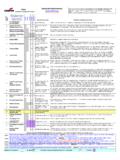
7 PREPARING & PLANNING Before preparing an SREA Form to GHSP, work thru: 10 A detailed timeline of tasks including action/owner/due dates. A summary of data that demonstrates the need. This could be a process Study, Capacity Analysis Study or Verification of Corrective Action data from a PTR. Include tasks that need to be executed by GHSP team members. A detailed validation plan for Reliability and/or durability tests. PREPARING & PLANNING, continued Before preparing an SREA Form to GHSP, create: 11 Filling out the SREA Form See either or contact a GHSP supply chain representative for the SREA form.
8 1 2 Supplier Name & address as shown on the Purchase Order. Who is the primary contact for the overall management of the change? in ALL the GHSP part numbers as shown on your current approved PSW that are affected by the change. 3 4 5 6 7 8 10 9 11 12 13 14 12 Filling out the SREA Form, continued 4 5 6 7 8 10 9 11 12 13 14 Drawing Number and Drawing Revision Level in the title block of the drawing. the design record (s) require a change? Select Yes or No the change specific to a special characteristic on the design record?
9 Select Yes or No Special Characteristics are defined as : Stars, PTC Flags, Inverted deltas and Supplier specific as shown on control plan. 13 Filling out the SREA Form all conditions that apply to change. If Other is selected, be sure to expand with detail in description. the Reason for the change. Fit is related to size, cost reduction can be VA/VE idea, PTR is a proposed change to resolve an existing quality issue? in the PTR number that this SREA is linked to (think of SREA as Request for Permanent Corrective Action) 7 8 10 9 11 12 13 14 14 Filling out the SREA Form 10.
10 Describe the change in a way that reads like a story. Describe the problem that we are trying to fix and the specific solution. Explain how we know the change will prevent the issues. Explain how it was missed in APQP. We will ask this later if you don t explain it now yes or no if tool change, including correction is required. yes or no to tell us if the piece cost is expected to change. 10 11 12 13 14 15 Filling out the SREA Form in the amount the piece cost is expected to go up or down. (USD currency) yes or no telling us if an inventory bank is needed.