Transcription of Team Assessment Report - Table Group
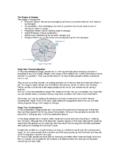
1 TeamAssessmentReportBASED ON THE MODEL IN THE BEST-SELLING BOOK,THE five DYSFUNCTIONS OF A TEAMA SAMPLE TEAMA SAMPLE COMPANYJULY 27, 2015the source for organizational health | primary purpose of this Report is to provide your team with a sense of its strengths and areas forimprovement. While the Assessment itself is certainly quantitative and data-driven, its mostimportant aspect is the qualitative perspective it provides for your team and the discussion that itprovokes around specific issues. If you have not yet read the book, The five Dysfunctions of a team , the following pages areincluded to give you a summary of the teamwork model that this Assessment is based upon. Thiswill help you interpret your team 's results. If you are familiar with the dysfunctions model, you can skip ahead to page 4, and investigate theinterpretations of your | Copyright 2015 The Table Group , MODELLike it or not, all teams are potentially dysfunctional.
2 This is inevitable because they are made up offallible, imperfect human beings. From the basketball court to the executive suite, politics andconfusion are more the rule than the exception. But the power of teamwork is great. The founder of a billion dollar company best expressed thatpower when he once said, "If you could get all the people in an organization rowing in the samedirection, you could dominate any industry, in any market, against any competition, at any time." Whenever a Group of leaders hears this adage, they immediately nod their heads, but in a desperatesort of way. They seem to grasp the truth of it while simultaneously surrendering to the impossibilityof actually making it happen. Fortunately, the causes of dysfunction are both identifiable and curable.
3 However, they don't dieeasily. Making a team functional and cohesive requires extraordinary levels of courage anddiscipline. The following section provides an overview of the five behavioral challenges all teams mustcontinuously work to avoid. The five Dysfunctions Dysfunction #1: Absence of Trust This occurs when team members are reluctant to be vulnerable with one another, and are thusunwilling to admit their mistakes, acknowledge their weaknesses or ask for help. Without a certaincomfort level among team members, a foundation of trust is impossible. Dysfunction #2: Fear of Conflict Trust is critical because without it, teams are unlikely to engage in unfiltered, passionate debateabout key issues. This creates two problems.
4 First, stifling conflict actually increases the likelihoodof destructive, back channel sniping. Second, it leads to sub-optimal decision-making because theteam is not benefiting from the true ideas and perspectives of its members. Dysfunction #3: Lack of Commitment Without conflict, it is extremely difficult for team members to truly commit to decisions because theydon't feel that they are part of the decision. This often creates an environment of ambiguity andconfusion in an organization, leading to frustration among employees, especially top performers. | Copyright 2015 The Table Group , #4: Avoidance of Accountability When teams don't commit to a clear plan of action, peer-to-peer accountability suffers greatly. Even the most focused and driven individuals will hesitate to call their peers on counterproductiveactions and behaviors if they believe those actions and behaviors were never agreed upon in thefirst place.
5 Dysfunction #5: Inattention to Results When team members are not holding one another accountable, they increase the likelihood thatindividual ego and recognition will become more important than collective team results. When thisoccurs, the business suffers and the team starts to unravel. The Rewards Striving to create a functional, cohesive team is one of the few remaining competitive advantagesavailable to any organization looking for a powerful point of differentiation. Functional teams get more accomplished in less time than other teams because they avoid wastingtime on the wrong issues and revisiting the same topics again and again. They also make higherquality decisions and stick to those decisions by eliminating politics and confusion amongthemselves and the people they lead.
6 Finally, functional teams keep their best employees longerbecause "A" players rarely leave organizations where they are part of, or being led by, a | Copyright 2015 The Table Group , SUMMARYHIGH ( AND ABOVE)MEDIUM ( TO )LOW (LESS THAN )(high)(low)(high)(low)(medium)Your Assessment scores indicate that results and commitment are likely areas of strength for yourteam, while trust is potentially an area for improvement, and accountability and conflict are areas oflikely | Copyright 2015 The Table Group , five : Your score in this area was medium, which indicates that your team may need to get morecomfortable being vulnerable and open with one another about individual strengths, weaknesses,mistakes and needs for : Your score in this area was low, which indicates that your team is not comfortableengaging in unfiltered discussion around important : Your score in this area was high, which indicates that your team is able to buy-in toclear decisions leaving little room for ambiguity and : Your score in this area was low, which indicates that your team hesitates to confrontone another about performance and behavioral : Your score in this area was high, which indicates that your team values collectiveoutcomes more than individual recognition and attainment of | Copyright 2015 The Table Group , STRONGEST AREASThe questions listed below represent the top 6 areas where your team scored highest relative toother questions.
7 Understanding and continuing to leverage your team 's strengths is as important asidentifying and correcting its weaknesses. Please note that questions with an average score above are areas where your team scored particularly team has a reputation for high team is aligned around common members support Group decisions even if theyinitially team consistently achieves its members willingly make sacrifices in their areasfor the good of the team is clear about its direction and | Copyright 2015 The Table Group , WEAKEST AREASThe questions listed below represent the bottom 6 areas where your team scored lowest relative toother questions. To improve the cohesiveness of your team , it is critical that you understand andaddress these areas.
8 Please note that questions with an average score below a are areaswhere your team scored particularly members communicate unpopular opinions to members point out one another's members voice their opinions even at the risk ofcausing members acknowledge their weaknesses to members are quick to confront peers aboutproblems in their respective areas of team ensures that poor performers feel pressure andthe expectation to | Copyright 2015 The Table Group , OF KEY DIFFERENCESThe questions listed below represent the areas where your team member's scores differed fromeach other in a significant manner. Each question indicates an area that needs to be betterunderstood across the team . The numbers, below each question, identify the distribution ofresponses within the team .
9 If there are no questions listed below, each member of your teamanswered members of the team are held to the same of team members in each conflict occurs, the team confronts and deals withthe issue before moving to another of team members in each team ensures that poor performers feel pressure andthe expectation to of team members in each | Copyright 2015 The Table Group , OF KEY DIFFERENCES (continued)FUNDAMENTALAVG. members willingly apologize to one of team members in each members are quick to confront peers aboutproblems in their respective areas of of team members in each | Copyright 2015 The Table Group , members admit their members acknowledge their weaknesses to one members ask for help without members ask one another for input regarding their areas of members acknowledge and tap into one another's skills and members willingly apologize to one members are unguarded and genuine with one members can comfortably discuss their personal lives with one team 's Average Score.
10 Your team scored medium in trust, it is recommended that youconsider using many of the suggestions in the 'Tips & Exercises'section of this Report . Please note that by increasing your trust score,your team will have more success in overcoming the | Copyright 2015 The Table Group , members are passionate and unguarded in their discussion of meetings are interesting and compelling (not boring). team meetings, the most important-and difficult-issues are members voice their opinions even at the risk of causing discussions, team members challenge one another about how they arrived at theirconclusions and members solicit one another's opinions during members communicate unpopular opinions to the conflict occurs, the team confronts and deals with the issue before moving toanother team 's Average Score.