Transcription of The 4-Day Training Week By Ben Wisbey
1 The 4-Day Training week By Ben Wisbey You have all probably heard of the saying 'less is more', but is this really true? Well there are many cases when reducing the amount of running you are doing can lead to improvements in running performance. Reduced running volume will lead to higher quality sessions and thus more productive Training . When elite runners do 8-12 runs per week , generally only 3-4 of these sessions are quality sessions, and the others constitute easy aerobic work or recovery runs. So rather than spending all that extra time building your Training volume, why not focus on quality sessions and getting the most from your time spend running? The 4 day Training week can be very rewarding for many runners. So who is eligible for this type of program? Well obviously those people who are relatively new to running, but also people Training for shorter distance events right up to 10km.
2 There are also the runners who have restricted Training time, or those who have physically demanding jobs. If you are Training for events that are relatively short, such as a 3km, 5km or even 10km, then quality speed sessions are really the focus. There is a certain point for every individual where increasing weekly Training volume is going to cause a reduced Training quality; and it is this point at which volume needs to be cut back a level and the focus switched to quality. However, despite the promise of improved performance on a 4 day per week program for shorter events, this will only happen with correct Training session selection and planning. Let's face it- 4 easy runs per week is not going to get you running a 5km PB. The four key sessions that need to be included into your program each week are; a long run; a tempo session; VO2 max intervals; and a recovery run with strides. Each of these sessions has a different focus, and is important to your overall running performance.
3 Cutting out one of these key sessions may leave you lacking in that particular aspect of your running, and thus performance will suffer. The 4 Key Sessions 1/ Long Run The long run is an extremely important session even for those runners focusing on a 5km event. The session is aimed at improving aerobic endurance, so it does not need to be of a high intensity. This run is best done over undulating terrain so that you get some strength development as well as aerobic adaptations. The long run should start with 10 minutes of easy jogging, and some drills to allow for an adequate warm-up. The intensity should then be lifted to the pace suggested in the accompanying pacing chart. This period should feel of moderate intensity only- not hard but not too easy. It should be moderate and sustainable. The run should finish with an easy 10 minute cool down. The duration of the session should be build up to 60-90 minutes total (including warm-up and cool down).
4 The total duration that you need to build to is related to your starting level and Training background. There is no point running for too long and detracting from your quality sessions mid- week because of fatigue. The rate at which you build the duration of your long run depends on your starting point; this may occur quickly or over many months. For runners who do not usually run for an hour, start your first long run at the length of your longest run during the previous 4 week period, and then build by 10-15% each week . 2/ Tempo session The tempo session is the key session in improving anaerobic threshold, running economy, and strength, as well as aiding in the improvement of aerobic endurance. This session should be run at approximately your anaerobic threshold, which, for an experienced runner, is an intensity that could be held for about 60 minutes. This pace is approximately 20 seconds slower per km that 5km race pace (see the pacing chart).
5 The desired intensity for the tempo efforts is something that is uncomfortable and difficult, but not hard. This run is best done on a flat to slightly undulating course, and on grass or dirt where possible. The session should start with the usual 10 minute warm-up and finish with a good 10 minute cool down as for the long run. The main portion of the session should include numerous efforts ranging in duration from 5-10 minutes, with a work to rest ratio of 2:1. For beginner runners, your first tempo session should be made up of 2x5 minute tempo efforts, and gradually built up to 2x8 minute efforts or 3x5 minute efforts. For the more experienced runner, this session can start with 2x5 minute tempo efforts and build up rather quickly to 2x10minute efforts. When trying a new session, it is always best to make your first session of this type a little easier than you think you can handle. After you have this initial experience, you are able to build relatively quickly provided you have a solid Training background.
6 Example: i) 10 minute warm-up, 3x6 minute tempo efforts with a 3 minute recovery jog, 10 minute cool down ii) 10 minute warm-up, 2x8 minute tempo efforts with a 4 minute recovery jog, 10 minute cool down 3/ VO2 intervals As the name suggests, VO2 intervals aim to improve VO2 Max- the maximal amount of oxygen that the body can use while running. If this can be boosted then there will be more energy produced aerobically, and thus more work (running faster) can be produced at high intensities. This session also produces anaerobic adaptations that are important for shorter distance events such as 3-5km, and neuromuscular adaptations that are critical in maintaining relatively high speeds over distances such as 3-5km. The efforts conducted in these sessions should be done at 5km race pace. They should feel very hard and be difficult to maintain. As with all the above sessions, this one should start with an adequate 10 minute warm-up; and this time include some 50-100m strides to prepare your body for the high intensity efforts ahead.
7 The session should be concluded with the usual 10 minute easy jog as a cool down. The main part of this session consists of 3-5 efforts of 600-1000m at the recommended pace. If you 5km PB is less than 20min then use 600's, 800's and 1000m efforts. If your 5km PB is above 20 minutes, then use only 600's and 800's in your session, as this duration effort will be enough to elicit optimum VO2 max response. Between each effort a 90 second to 2 minute recovery should be taken, and this period should consist of an easy jog. When completing this session for the first time complete only 3 efforts of your chosen distance, ensuring they are of high quality. You can then build the quantity and/or distance over time. These example sessions include an easier session and a harder session: i) 3x600m with a 90sec recovery ii) 5x1000m with a 2 minute recovery The number of VO2 intervals you are able to complete in one session depends on your running background, but as a good rule of thumb, when the quality of the effort drops, stop the session then and there.
8 This means that if you are unable to maintain the desired pace you are better off finishing the session as the desired adaptations will not occur. 4/ Recovery run with strides This sessions is slightly easier then those above, but is still important. The aim of the session is to provide some active aerobic recovery Training so that you can freshen up while still getting some light aerobic conditioning. The key to this session is to make it easy. If you go too quickly, then you defeat the purpose of the session. There is no need to warm-up for this session as the pace/intensity of the entire session is approximately that of your usual warm-up. The recovery run period of the session should last between 20 and 25 minutes. Once you finish this period, complete 2-4 x 50-80m strides on a flat grass surface. The strides are included to keep you sharp and provide some light speed work without being fatiguing.
9 These strides are not a sprint, but more a pace you could hold for about 1km. However, due to their brief nature you should not find them tough as you are finished within 10-20 seconds. The strides are not included to try and get any form of energy system (aerobic/anaerobic) adaptation, and therefore you should have an easy walk back recovery between each stride. You should finish the strides feeling better than you started, so don't push them hard. After the strides, it is important to allow for an easy 5-10 minutes of light jogging to cool down. Example: i) 20 minute recovery jog, followed by 3x60m strides with a walk back recovery, and finishing with an 8 minute cool down ii) 25 minute recovery jog, followed by 4x80m strides with a walk back recovery, and finishing with a 10 minute cool down Training Pace So now that we have established the crucial sessions for each week and detailed why we are doing them, it is time to get a bit of an idea of the sort of paces these sessions should be run at.
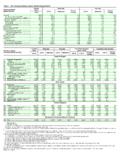
10 There is often a fine line between the correct pace and the incorrect pace when aiming for a specific Training adaptation, especially during the higher speed sessions. The chart shown below gives an indication of appropriate Training paces for our 4 key Training sessions, based on your most recent 5km performance. However, remember that these Training paces are just a guide and the information provided above in the Training session details should enable you to make any minor adjustments to your Training pace that is required. This will largely depend on a runner's aerobic endurance, anaerobic threshold and speed development. The runner who is better equipped aerobically may find the long run speed a little easy for their given level; while the athlete with more speed may find the VO2 speeds a little slow. In these situations, paces can be adjusted, but as mentioned, a slight adjustment in pace can make a big difference, so make small adjustments only.