Transcription of The Great Okie Migration - American Experience
1 The Great Okie Migration The impact of the Great Depression and the Dust Bowl on rural Americans was substantial. The damaging environmental effects of the dust storms had not only dried up the land, but it had also dried up jobs and the economy. The drought caused a cessation of agricultural production, leading to less income for farmers, and consequently less food on the table for their families. The increased mechanization of farming began to consolidate smaller farms into large farms. Many farmers lost their land in bank foreclosures. Poverty became rampant. In his fictionalized autobiography, American folk singer Woody Guthrie commented on the dire straits: They was hundreds and hundreds and hundreds and hundreds of thousands of families of people living around under railroad bridges, down along the river bottoms, and in old cardboard houses, and in old, rusty beat-up houses that they d made up out of tote sacks and old dirty rags and corrugated iron that they got out of the dumps and old tin cans flattened out, and old orange crates.
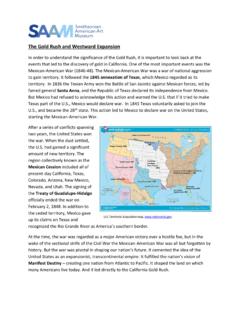
2 The survival of their families at stake, these Okies faced a difficult decision stay on their land in the hopes that the drought would end, or leave in search of more fertile land with plentiful job opportunities. Tens of thousands of displaced and destitute people, dubbed Dust Bowl refugees by the press, journeyed west to California in search of farm labor jobs, in an event nicknamed the Okie Migration . These migrants came from a broad swath of southern plains states including Oklahoma, Missouri, Arkansas, and Texas. The two artworks featured here, Dust Bowl and Valley Farms, represent the journey migrants took from the Dust Bowl states to the fertile farmland of California.
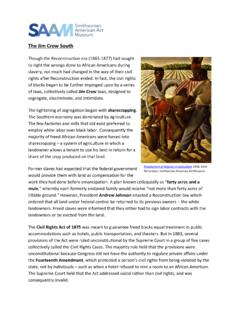
3 Migrant Life in California Since the days of the Gold Rush in the mid-nineteenth century, California had earned a reputation as a land where fortunes were made and opportunities were abundant. A favorable They went out there for one reason, and absolutely one reason, and that was because they thought that they could get some work out there. Woody Guthrie Migrant agricultural worker's family, 1936, Dorothea Lange, Library of Congress climate, plentiful resources, and a visually arresting landscape were all compelling attractions for many Americans. This idyllic setting in captured in Ross Dickinson s Valley Farms.
4 Dickinson was a young artist employed by the Public Works of Art Project (PWAP) when he created this scenic image of California s farm country. Water, green grass, and swelling earth conjure the promised land described in John Steinbeck s classic novel The grapes of Wrath. Like the Joad family in Steinbeck s novel, nearly 40 percent of migrants wound up in California s San Joaquin Valley picking cotton and grapes . Popular songs and stories extolled the virtues of California, exaggerating its plentiful attributes and depicting the state as a veritable promised land. Famed folk singer Woody Guthrie believed that it was the tales of California sunshine and plentiful employment which drew people to the Golden State.
5 In his 1943 autobiography, Guthrie wrote: Most of the people in the Dust Bowl talked about California. The reason they talked about California was that they d seen all the pretty pictures about California and they d heard all the pretty songs about California, and they had read all the handbills about coming to California and picking fruit. And these people naturally said, Well, if this dust keeps on blowing the way it is, we re gonna have to go somewhere. And most of em, I ll dare say seventy-five percent of em, was in favor of going to California because they had heard about the climate there.
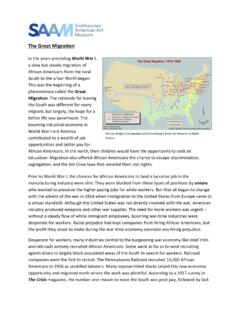
6 You could sleep outdoors at night, and any kind of seed that you put down in the ground, why, it s grow back out again. Additionally, America s major east to west thoroughfare, Highway 66 (more commonly known as Route 66 ) assisted the westward Migration . A trip that spanned half the width of the country was not undertaken lightly in the days before interstate highways. But Route 66 provided migrants with a direct route from the Dust Bowl region to California s Central Valley. The mass of migrants that arrived in California did not receive a warm welcome from the state of California, which was already overwhelmed by the amount on people on the state s relief roll.
7 They were met at the state border by patrolmen who told them to turn back that there was not enough work for them in California. Additionally, the established population of California was hostile towards the migrants due to differences in regional culture. They viewed the Okies as culturally and socially inferior, backward and uneducated a view echoed in Steinbeck s grapes of Wrath. The term Okie originally had the derogatory connotation of "They were hungry, and they were fierce. And they had hoped to find a home, and they found only hatred." The grapes of Wrath poor, white trash.
8 As the character of Tom Joad stated in The grapes of Wrath, Okie means you re scum. Steinbeck s classic novel The grapes of Wrath was informed by his travels through California s Central Valley when he was hired by the San Francisco News to write a series of articles about the Migration called The Harvest Gypsies. Steinbeck traveled for two weeks exploring both the farms and the migrant labor camps in which the migrants lived in poverty. The grapes of Wrath is Steinbeck s attempt to expose the suffering of the migrants and the corrupt agricultural system which exploited human beings for a profit.
9 Steinbeck s observations formed the basis of his argument that the migrants should be given a fair chance at becoming productive members of the California farming industry: If, as has been stated by a large grower, our agriculture requires the creation and maintenance of a peon class, then .. California agriculture is economically unsound under a democracy. The new migrants to California from the dust bowl are here to stay. They are of the best American stock, intelligent, resourceful; and, if given a chance, socially responsible. To attempt to force them into a peonage of starvation and intimidated despair will be unsuccessful.
10 They can be citizens of the highest type, or they can be an army driven by suffering and hatred to take what they need. On their future treatment will depend which course they will be forced to take. Hostile treatment from the established population and limited economic opportunities was not the idyllic life migrants had imagined. The fact remained that there was simply not enough work for the approximately million people that migrated from the Dust Bowl region during this time period. Many people lived in squalor in roadside encampments and migrant campsites in tents and in the backs of cars or trucks.