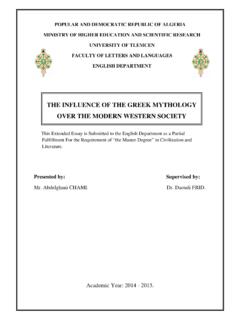
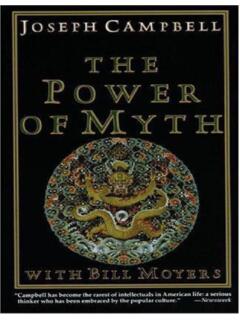
Transcription of The Iliad, The Odyssey,
1 The Iliad, The Odyssey, andThe AeneidNEWYORK TORONTO LONDON AUCKLAND SYDNEYMEXICO CITY NEW DELHI HONG KONG BUENOS AIRESby Gwen BowerS Read-Aloud Plays: The Iliad, The Odyssey, and The Aeneid Gwen Bowers, Published by Scholastic Teaching ResourcesTo my dad for always expecting my best,and to the St. Charles class of 2005 for bringing these characters to life,and to Bernard and Dorothy Evslin and Ned Hoopes for breathing life into my childhood with their inspired stories of heroes and would like to thank Shanna Streich and Jenn Durrant for their advice, support, and friend-ship.
2 I would also like to thank my editor, Sarah Longhi, and everyone who had a hand inmaking this book, for their faith and encouragement. Thanks to Lucy Hughes for help at theBritish Museum Library Reading Room. Thanks and gratitude to Professor BarbaraMacLachlan for her scholarship and classes in ancient epic. And a super-special thanks toRenato, Patrick W., Alex, Adam, Patrick D., Richard G., Peter, Mikey, and Derrick (my firstAchilles) for their unbounded enthusiasm for the ancient world!Scholastic Inc. grants teachers permission to photocopy the reproducible pages from this book for class-room use.
3 No other part of this publication may be reproduced in whole or in part, or stored in aretrieval system, or transmitted in any form or by any means, electronic, mechanical, photocopying,recording, or otherwise, without permission of the publisher. For information regarding permission, writeto Permissions Department, Scholastic Inc., 557 Broadway, New York, NY design by Jason RobinsonInterior design by Melinda BelterCover Illustrations by Jeff CarinoInterior illustrations by George UlrichISBN-13 978-0439-62918-8 ISBN-10 0-439-62918-7 Copyright 2006 by Gwen Bowers.
4 All rights reserved. Printed in the 2 3 4 5 6 7 8 9 104013 12 11 10 09 08 07 Read-Aloud Plays: The Iliad, The Odyssey, and The Aeneid Gwen Bowers, Published by Scholastic Teaching ResourcesIntroductionIs It Possible to Teach Classical Literature to Middle School Students? Yes! .. 4If You Choose to Produce the Plays: Some Don t Sweat It Basics .. 6 Activities for Building BackgroundPronunciation Is a Key to Success .. 8 Introducing greek and Roman Gods and Goddesses .. 10 Fascinating Facts.
5 13 Activities for Extending LearningMap Adventure Through Ancient Lands .. 14 Using Art to Convey Meaning: greek Vases .. 19 The PlaysAn Introduction toThe Iliad.. 22 The Iliad (a read-aloud play) .. 25 Story Summary 1 .. 33 Story Summary 2 .. 35 Themes for Reflection .. 37 Test .. 38An Introduction toThe Odyssey..39 The Odyssey (a read-aloud play)..41 Story Summary 1 .. 56 Story Summary 2 .. 58 Themes for Reflection .. 60 Test .. 61An Introduction toThe Aeneid..62 The Aeneid(a read-aloud play) ..64 StorySummary 1.
6 74 Story Summary 2 .. 76 Themes for Reflection .. 78 Test .. 79 Answer Key .. 80 Resources .. 81 CONTENTSRead-Aloud Plays: The Iliad, The Odyssey, and The Aeneid Gwen Bowers, Published by Scholastic Teaching ResourcesIs It Possible to Teach Classical Literature to Middle School Students? YES! There is no better time to address universal issueslike friendship, suffering, and betrayal than in thepreteen and teen years, and there are no better exam-ples to use than these incredible stories The Iliad, The Odyssey, and The Aeneid which worktheir way into so many aspects of our culture your class to discuss Aeneas s position as animmigrant displaced by war, and see if students canmake the connection to current events.
7 Let that student who can t sit still choose his favorite part toread..and watch him take on the role of a greathero orpetulant Olympian. I have written these classics-inspired plays andactivities for my own middle school readers, whoneed highly motivating material to learn newinformation and to build reading skills. Each year,these plays captivate all types of learners from themost challenging to the most conscientious and self-motivated. Students gain insights into the cul-ture of ancient Greeks and Romans, and theybecome invested in the characters who drive theaction in these famous stories.
8 At the same time, thedialogue format helps them use expression andphrasing, and repeated rehearsals build fluency resource provides you with everything youneed to teach the classic stories in an exciting andfun-filled way: nshort, engaging plays that represent theentire plot of each classic story nbackground and history that describe the talenactivities that help you teach the content andassess students learningAbout the PlaysHow do the three epic tales retold in these playsrelate to each other? The Iliad, astory about the bitter war between the Greeks and Trojans over thecapture of the Spartan queen Helen by Trojan prince Paris, is a prequel toThe Odyssey and Odysseytells of the greek warriorOdysseus s adventurous journey home after theTrojan War.
9 The Aeneid is the story of the refugeeTrojan prince Aeneas and his long journey to find a new homeland. Studying these classics together helps studentsto better understand relationships among a family ofcharacters and deities that were at the cultural heartof the ancient Greco-Roman world. Yet, it s alsoimportant to recognize and point out to studentsthat The Iliadand The Odysseyhave a very differenthistorical and cultural context than The blind greek poet, Homer, is thought to havecommitted to memory the first two epic poems inthe mid-800s Recent linguistic research suggeststhat the rhythm and rhyme of the poems and therepetition of character epithets assisted Homer andthose who came afterward in recalling the story foraudiences.
10 A standard text of both The Iliadand The Odysseywas written down by scholars at theGreat Library at Alexandria in about 600 , which means the tale, having been retold manytimes over, likely changed quite a bit from Homer soriginal Plays: The Iliad, The Odyssey, and The Aeneid Gwen Bowers, Published by Scholastic Teaching ResourcesThe Aeneidhas a more certain stamp ofauthenticity. It was conceived in the form of a writ-ten document by Virgil, a well-educated writer infirst-century Rome, who counted among hisfriends some of the most famous Roman citizens ofhis time, including the Emperor Augustus.