Transcription of The Southern African Development Community: …
1 12 14 November 2017 The Southern African Development community : Solid Achievements and Future Challenges Wilson Bell Research Assistant Indian Ocean Research Programme Summary The Southern African Development community (SADC) acts as a forum for the countries of Southern Africa to overcome the economic and political challenges that they face as a region. The SADC membership encapsulates a varying range of economic strengths, which can prove to be a challenge as the member states work together to increase trade and raise living standards.
2 Even as the SADC vows to promote peace and democracy while reducing the potential for political instability, the potential for turmoil in a number of its member countries may pose significant future challenges to the organisation. Despite those concerns, the SADC has significantly increased trade among its members. Key Points The Southern African Development community (SADC) acts as a forum in which member countries can discuss and resolve economic and political challenges. A major achievement of the SADC is its regional Free Trade Agreement, which was inaugurated in 2012.
3 The organisation faces many future challenges, however, including overlapping national memberships and, in a number of its member states, poor human rights records and the potential for instability. Page 2 of 7 Analysis Evolving out of the Southern African Development Co-ordination Conference (SADCC) that was formed in 1980 as a nine-country grouping comprising Angola, Botswana, Lesotho, Malawi, Mozambique, Swaziland, Tanzania, Zambia and Zimbabwe that had the primary aim of co-ordinating Development projects in an attempt to the economic dependence of those countries on apartheid South Africa.
4 Since then, it has grown to become a trade-focused intergovernmental organisation with the goals of developing the Southern African region through the alleviation of poverty, ending human rights violations and encouraging economic growth through the reduction of trade barriers, to ultimately improve living standards across the region. The Declaration Towards the Southern African Development community that was adopted by the Heads of State of the SADCC countries in 1992, called upon the people of Southern Africa to develop a vision of a shared future, a future within a regional community and created the SADC.
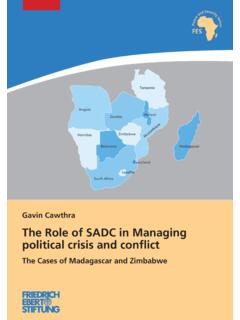
5 Since expanded, the SADC now consists of sixteen member states: Angola, Botswana, Comoros, Democratic Republic of Congo, Lesotho, Madagascar, Malawi, Mauritius, Mozambique, Namibia, Seychelles, South Africa, Swaziland, Tanzania, Zambia and Zimbabwe. Page 3 of 7 Having added seven more member states since 1980, the SADC has increasing the regional market from an initial population of 60 million to just under 281 million in 2011.
6 According to the SADC Major Achievements and Challenges Handbook, published in 2005, the region has made considerable efforts to maintain continued political stability to attract cross-border and foreign direct investment . Foreign direct investment has increased, with official statistics stating that inflows were at US$ billion ($ billion) in 2011, the most recent available year, and a significant increase in only five years, having grown from US$ billion ($ billion) in 2006. One of the most effective of the SADC s achievements to date was the creation of a Free Trade Area in August 2008.
7 In removing the barriers to trade between the signatory countries, the SADC Free Trade Area has resulted in a significant increase in intra-SADC trade. Between 2000 and 2009, intra-SADC trade grew from about US$ billion ($ billion) to US$34 billion ($ billion), an increase of 155 per cent. Maximum tariff liberalisation was achieved in January 2012. Despite that progress, the SADC does face a number of significant future challenges, in particular to the goal of economic regional integration. The organisation has a record of setting overly ambitious targets, including the SADC Trade Protocol in 2000, which aimed to liberalise 85 per cent of intra-state trade by 2008.
8 That was missed by eight months and had a trickle-down effect on other goals. The ambition of establishing a customs union was postponed from the original target date of 2010 to 2013, due to capacity constraints within the SADC Secretariat at the implementation of the Regional Indicative Strategic Development Plan . As of today, an SADC customs union has still not been established. The goal of creating a common market has also been postponed, due to the complications caused by the delay in the customs union.
9 The original projected date for this milestone was 2015, but has since been considered a long-term goal . The establishment of a monetary union and single currency have also both been delayed, due to the complications caused by the postponement of the common market. One of the biggest challenges to the creation of a customs union is the overlapping membership of SADC member states in other intergovernmental networks. Namibia and Swaziland are both members of the Southern African Customs Union (SACU), as well as the Common Market for Eastern and Southern Africa (COMESA), and both participate in the Regional Integration Facilitation Forum (RIFF).
10 The majority of SADC states are also COMESA members. A customs union cannot be established as long as countries are members of two or more regional economic communities (RECs) at once. Furthermore, overlapping membership can be costly, as governments must negotiate in a number of different forums, possibly agreeing to the implementation of potentially conflicting policies. The simultaneous membership of more than one REC can also force states to accept measures that may not necessarily be in their best interests.