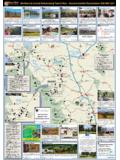
Transcription of Tourist Guide - Ostia Antica
1 Ostia Antica Tourist Guide This Guide is provided for free by the Internet Group Ostia . We will not be held responsible for any errors or outdated information. For more information: Feedback can be sent to: April 2015 (version ) - 2 - General information Visiting Ostia is like visiting Tivoli and Hadrian's villa: a relaxing trip that takes you away from the noise and incessant police-sirens of Rome. Reserve a whole day for your visit - not just to relax, but also because Ostia deserves it. The site is quite big, so don t spend too much time visiting the first buildings you encounter.
2 What to wear Dress "onion-skin" style, that is using layers that can be removed. Ostia Antica is fairly close to the sea, but it can also be quite hot in the ruins even on a cloudy day. Fine hot weather is generally guaranteed from mid-May to late September. Extra-comfortable shoes! And a sun hat! How to get there The best way to reach Ostia is by using the metro. Trains leave at station Piramide. Get off the regular metro at Piramide, go up the escalator, turn immediately left and down the steps into the Roma-Lido station.
3 A normal metro ticket will suffice for the entire journey. Get out at the stop Ostia Antica . Next cross the highway using the pedestrian bridge. To reach the site from the pedestrian bridge, keep walking straight ahead, cross a busy road (please be careful!) and after 100 metres turn left to get to the entrance (two minutes). If you arrive by car, you can use a parking lot in front of the entrance of the excavations. Food and drink, money Outside the station is a small bar. There is a restaurant with warm food on the site (not cheap and sometimes quite busy; free WIFI), but it may be a good idea to get some food and drink in the modern village Ostia Antica , only two minutes away.
4 To get there, turn right towards the mediaeval fortress after crossing the pedestrian bridge. In the village you will find a good alimentari. You can have a bread roll filled with something (ham etcetera) prepared for you there. They also have soft drinks and mineral water sold from cold cabinets. Nearby you will find ATM machines. A bookshop with souvenirs is opposite the restaurant, near the museum. Entrance fee Various discounts are given to EU residents, but you will have to take the initiative. In order to get a discount you must show your passport.
5 Full price ticket: euro. Half price ticket: EU citizens between the ages of 18 and 25, and EU teachers. Free ticket: EU citizens below the age of 18. Tickets are valid for the entire day, so you can leave the site and return if you wish (inform the guards at the entrance that you will be returning!). Opening hours Open daily except Monday to The Ticket Office closes at The site is closed on Mondays, December 25 and May 1. Visit the official website of the Soprintendenza for the latest information and special opening hours: Address Via dei Romagnoli, 717, Rome RM, Lazio, Italy.
6 - 3 - A short history of Ostia The ancient Roman city of Ostia was in antiquity situated at the mouth of the river Tiber, some 30 kilometres to the west of Rome. The shoreline moved seawards, due to silting, from the Middle Ages until the 19th century. Therefore Ostia is today still lying next to the Tiber, but at a distance of some three kilometres from the beach. Ostia is Latin for "mouth", the mouth of the Tiber. The river was used as harbour, but in the Imperial period two harbour basins were added to the north, near Leonardo da Vinci airport.
7 That harbour district was called Portus, Latin for "harbour". Early Ostia To the east of Ostia were salt-pans, where salt was probably already extracted in the Middle and Late Bronze Age (1400-1000 BC). According to ancient tradition Ostia was founded by the fourth king of Rome, Ancus Marcius, who was thought to have ruled in the late seventh century BC. This settlement was probably on a narrow dune belt and built when a meander of the Tiber reached the location of Ostia for the first time, c. 700 BC. The oldest ruins that have been found in Ostia are those of the so-called Castrum.
8 It was a rectangular, military fortress (194 x metres), with walls of large tuff blocks. Remains of the walls have been found around the later Forum. The Castrum seems to have been built in the early third century BC. In the second century BC Ostia gradually changed to a commercial harbour. The population of the city of Rome was growing after military successes. Grain was imported from Sicily and Sardinia, later also from Africa, that became a province in 146 BC. Little is known about the settlement in this period, because Ostia was almost entirely rebuilt in the second century AD.
9 There must have been many shops, where food and beverages were sold, necessary for the voyage from Ostia to other harbours. The early Imperial period Under Domitian (81-96 AD) the level of Ostia was raised about one metre whenever new buildings were erected, probably to protect them from Tiber floods. In this period Ostia was ruled by a small number of "aristocratic" merchant families. They lived in houses near the centre of town. Few remains of these houses have been found, because they were razed to the ground in the first half of the second century AD, when the city was largely rebuilt.
10 Many officials, such as the governors of provinces, now departed from and arrived in Ostia . In 2 AD Lucius Caesar, grandson of Augustus, died in Massilia (Marseille). The body arrived in Ostia , and was carried through the city, accompanied by officials carrying torches. Ostia was essential for the supplying of Rome, and therefore for the Emperor. Imperial slaves and freedmen worked in the harbour. Eventually Ostia would became the main harbour of Rome, but this took some time. The reason for this was, that the shore-line near Ostia did not offer natural protection to ships.