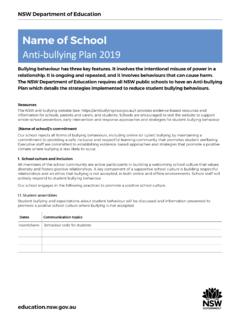
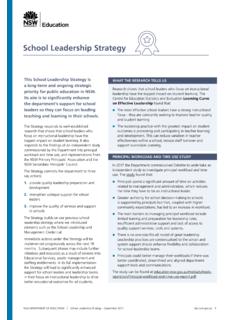
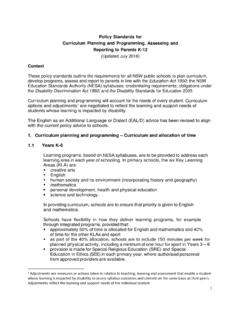
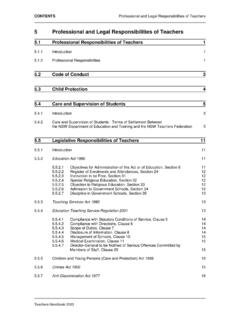
Transcription of TRANSITION TO SCHOOL STATEMENT
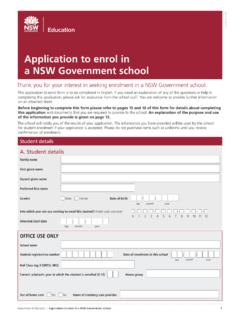
1 Of 61 < strong >TRANSITIONstrong > TO SCHOOLIs this child Aboriginal and/or Torres Strait Islander?Is this child supported by another service or specialist program relating to their learning or development? If yes, please attach it to this formDoes this child < strong >havestrong > an NDIS plan? If yes, please attach it to this sYe sYe sNoNoNoBothThe < strong >TRANSITIONstrong > to < strong >SCHOOLstrong > < strong >STATEMENTstrong > gives a snapshot of this child s strengths, perspectives, and helps link the Early Years Learning Framework to the Early Stage 1 Syllabus in kindergarten so that teachers can better understand each child s learning, development, and help shape your responses, or to interpret the information provided by ECE services, go to our T2S TO < strong >SCHOOLstrong > STATEMENTThis < strong >STATEMENTstrong > tells you a bit about me and how I learn, so that I can < strong >havestrong > a strong start to name:The name of my early childhood service: The < strong >SCHOOLstrong > I ll be going to next year:of 621.
2 My early education details2. How I feel about schoolName of early educator completing this StatementChild and early childhood educator complete this section togetherEducator s promptsIs there anything you d like to know about your new < strong >SCHOOLstrong > ?Would you like me to tell your new < strong >SCHOOLstrong > teacher anything about you? < strong >havestrong > you visited your new < strong >SCHOOLstrong > ? Who did you go with?Preschool/service namePhone contact Email contact Date form completedEnrolled days per fortnight Does this child receive additional support, here or at another service, relating to their learning or development?This could include speech therapy, physiotherapy, occupational therapy, or other attach additional reports or information if s period of enrolment at service Preschool/service address day/month/year day/month/year Child s responsesYe sNoCommentsTRANSITION TO SCHOOL3 of 63.
3 My early learning and developmentEarly childhood teacher or educator completes this 1: Sense of identityAlwaysUsuallySometimesNeeds supportParticipates in learning and playShares and negotiates resources with othersResponds when distressed or upsetOutcome 2: Connection with and contribution to the worldAlwaysUsuallySometimesNeeds supportParticipates in small and large groupsShows awareness of the needs of othersShares knowledge and experience in play and learningBuilds and maintains relationships with othersPDHPEPDHPES cienceScienceEnglishEnglishCreative ArtsMathematicsHSIETRANSITION TO SCHOOLLINKS TO ES1 LINKS TO ES1 Intentional teaching strategies used or recommendations related to this < strong >outcomestrong > :Intentional teaching strategies used or recommendations related to this < strong >outcomestrong > :4 of 6 < strong >TRANSITIONstrong > TO SCHOOLO utcome 3: Child s wellbeingAlwaysUsuallySometimesNeeds supportSelf-regulates emotionsDemonstrates physical skill and abilityManages personal hygiene and self-careOutcome 4: Child is a confident and involved learnerAlwaysUsuallySometimesNeeds supportShows interest in learningFocuses attention and concentrates when challengedShows wonder and curiosity about the worldPDHPELINKS TO ES1 Creative ArtsScienceEnglishCreative ArtsMathematicsHSIELINKS TO ES1 Intentional teaching strategies used or recommendations related to this < strong >outcomestrong > :Intentional teaching strategies used or recommendations related to this < strong >outcomestrong > :of 654.
4 My drawing and its storyThe child is encouraged to draw a picture and to talk about what it depicts. The educator notes the child s narrative about their drawing, as well as relevant skills such as pencil child is encouraged to draw a picture on the next page and talk about what it depicts. The educator notes the child s narrative about their TO SCHOOLO utcome 5: Child communicates effectivelyAlwaysUsuallySometimesNeeds supportTalks and listens in large and small groupsRepresents thinking and ideas in creative waysShows awareness of printed letters as well as soundsWorks with mathematical concepts like numbers, patterns, and shapesLINKS TO ES1 ScienceEnglishCreative ArtsMathematicsHSIEI ntentional teaching strategies used or recommendations related to this < strong >outcomestrong > :6 of 6 < strong >TRANSITIONstrong > TO SCHOOL4. My drawing