Transcription of Tribal Leadership
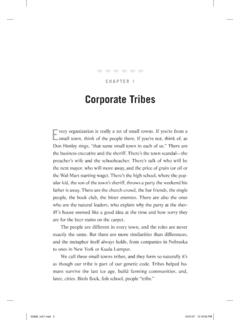
1 Tribal Leadership by Dave Logan, John King and Halee Fischer-Wright Every company is a tribe, or a network of tribes groups of 20 to 150 people in which everyone knows everyone else, or at least knows of them. It s a fact of life: birds flock, fish school, and people tribe. Tribes are more powerful than teams, companies, or even superstar CEOs, and yet their key leverage points have not been mapped until now. Great leaders know they can t instantly change the culture of 100,000 people, or even 50 people, with gimmicks or trendy initiatives. Successful executives focus on developing their culture one tribe at a time. The heart of Leadership development is helping leaders to upgrade the effectiveness of their tribes, taking these groups from adequate to outstanding. Tribal Leaders focus on building the tribe or upgrading the Tribal culture. If they succeed, the tribe recognizes them as the leader, giving them discretionary effort, cult-like loyalty, and a track record of success.
2 Divisions and companies run by Tribal Leaders set the standard of performance in their industries, from productivity and profitability, to employee retention. They are talent magnets, with people so eager to work with the leader that they will take a pay cut. Their efforts seem effortless, leaving many people puzzled by how they do it. Now you can better own your role as a Tribal leader, and develop other leaders. Five Stages of Tribal Culture Tribes come in five flavors, marked by differences in talk and behavior. Tribal Leader-ship starts with recognizing which stage you have, and doesn t stop until you reach Stage 5. Stage 1 runs the show in criminal clusters, like gangs and prisons, where the theme is life stinks, and people act out in despairingly hostile ways. This stage shows up in 2 percent of corporate tribes, but leaders need to be on guard, as this is the zone of criminal behavior and workplace violence.
3 The best way for a leader to intervene is to get individual members out of the group and into another. Stage 2, the dominant culture in 25 percent of workplace tribes, says, in effect, my life stinks, and the mood is a cluster of apathetic victims. People in this stage are passively antagonistic, crossing their arms in judgment yet never getting interested enough to spark any passion. Their laughter is quietly sarcastic, resigned. Tribal leaders intervene in Stage 2 by finding those individuals who want things to be different, and mentor them one at a time. Tell them that you think they have potential. Over time, some will start to talk the Stage 3 language. At that point, invite them to mentor another member of the tribe. In Stage 3, the dominant culture in half of workplace tribes, the theme is I m great or, more fully, I m great, and you re not. In this culture, knowledge is power, and so people hoard it, from client contacts to gossip People at this stage have to win, and winning is personal.
4 They ll out-work, think, and maneuver their competitors. The mood that results is a collection of lone warriors, wanting help and support and being disappointed that others don t have their ambition or skill. What holds people at Stage 3 is the hit they get from winning, besting others, being the smartest and most successful. Tribal leaders intervene in Stage 3 by identifying people s individual values and then seeing which cut across the tribe. Point out the values that unite people, and then construct initiatives that bring these values to life. Stage 4 represents 22 percent of Tribal cultures, where the theme is we re great, and another group isn t. Stage four is the zone of Tribal Leadership where the leader upgrades the tribe as the tribe embraces the leader. The leader transforms tribes of individuals into Stage 4 groups, and the Tribal leaders in these groups focus people on their aspirations, and define measurable ways to make a worldwide impact.
5 As the Tribal attention shifts from we re better to we can make a global impact, their culture shifts to Stage 5. Stage 5 is the culture of 2 percent of the workforce tribes, where the theme is life is great and focuses on realizing potential by making history. Teams at Stage 5 have produced miraculous innovations. The team that produced the first Macintosh was Stage 5, and we ve seen this mood at Amgen. This stage is pure Leadership , vision, and inspiration. Identify which of these five cultures dominates your tribe, and start bumping your tribe to the next stage by noticing the social groups that exist in your company. These are your tribes. Then listen to the way they talk. Is it life stinks (Stage 1), my life stinks (Stage 2), I m great (Stage 3), we re great (Stage 4) or life is great (Stage 5)? Move your tribes to the next stage, until reaching Stage 5. These steps will help you move from adequate to outstanding, and produce tribes that want to change the world.
6 LE Dave Logan, John King and Halee Fischer-Wright are coauthors of Tribal Leadership (HarperCollins) and partners of the management consulting firm CultureSync. Visit