Transcription of Understanding and Utilizing the ASAM Placement …
1 Understanding and Utilizing the ASAM Placement Criteria David Mee-Lee, The Change Companies 1 Understanding and Utilizing the ASAM Placement Criteria David Mee-Lee, Davis, CA (530) 753-4300; Voice Mail (916) 715-5856 March 14, 2012 NCADD Webinar A. Generations of Clinical Care (a) Complications-driven treatment No diagnosis of Substance Use Disorder treatment of complications of addiction with no continuing care Relapse triggers treatment of complications only No diagnosis treatment of complications No continuing care Relapse (b) Diagnosis, Program-driven treatment Diagnosis determines treatment treatment is the primary program and aftercare Relapse triggers a repeat of the program Diagnosis Program Aftercare Relapse (c) Individualized, Clinically-driven treatment PATIENT/PARTICIPANT ASSESSMENT Data from all BIOPSYCHOSOCIAL Dimensions PROGRESS PROBLEMS/PRIORITIES Response to treatment BIOPSYCHOSOCIAL Severity (SI) BIOPSYCHOSOCIAL Severity (SI) and Level of Functioning (LOF) and Level of Functioning (LOF) PLAN BIOPSYCHOSOCIAL treatment Intensity of Service (IS)
2 - Modalities and Levels of Service Understanding and Utilizing the ASAM Placement Criteria David Mee-Lee, The Change Companies 2 (d) Client-Directed, Outcome-Informed treatment PARTICIPANT ASSESSMENT Data from all BIOPSYCHOSOCIAL Dimensions PROGRESS PROBLEMS or PRIORITIES treatment Response: Build engagement and alliance working Clinical functioning,psychological, with multidimensional obstacles inhibiting social/interpersonal LOF the client from getting what they want. Proximal Outcomes , Session What will client do? Rating Scale; Outcome Rating Scale PLAN BIOPSYCHOSOCIAL treatment Intensity of Service (IS) - Modalities and Levels of Service B. Underlying Concepts 1. Assessment of Biopsychosocial Severity and Function (ASAM PPC-2R, pp 5-7) The common language of six PPC dimensions determine needs/strengths in behavioral health services: 1.
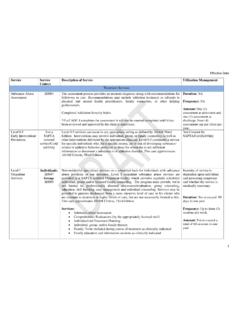
3 Acute intoxication and/or withdrawal potential 2. Biomedical conditions and complications 3. Emotional/behavioral/cognitive conditions and complications 4. Readiness to Change 5. Relapse/Continued Use/Continued Problem potential 6. Recovery environment Assessment Dimensions Assessment and treatment Planning Focus 1. Acute Intoxication and/or Withdrawal Potential Assessment for intoxication and/or withdrawal management. Detoxification in a variety of levels of care and preparation for continued addiction services 2. Biomedical Conditions and Complications Assess and treat co-occurring physical health conditions or complications. treatment provided within the level of care or through coordination of physical health services 3. Emotional, Behavioral or Cognitive Conditions and Complications Assess and treat co-occurring diagnostic or sub-diagnostic mental health conditions or complications. treatment provided within the level of care or through coordination of mental health services 4.
4 Readiness to Change Assess stage of readiness to change. If not ready to commit to full recovery, engage into treatment using motivational enhancement strategies. If ready for recovery, consolidate and expand action for change 5. Relapse, Continued Use or Continued Problem Potential Assess readiness for relapse prevention services and teach where appropriate. If still at early stages of change, focus on raising consciousness of consequences of continued use or problems with motivational strategies. 6. Recovery Environment Assess need for specific individualized family or significant other, housing, financial, vocational, educational, legal, transportation, childcare services Understanding and Utilizing the ASAM Placement Criteria David Mee-Lee, The Change Companies 3 2. Biopsychosocial treatment - Overview: 5 M s * Motivate - Dimension 4 issues; engagement and alliance building * Manage - the family, significant others, work/school, legal * Medication - detox; HIV/AIDS; anti-craving anti-addiction meds; disulfiram, methadone; buprenorphine, naltrexone, acamprosate, psychotropic medication * Meetings - AA, NA, Al-Anon; Smart Recovery, Dual Recovery Anonymous, etc.
5 * Monitor - continuity of care; relapse prevention; family and significant others 3. treatment Levels of Service (ASAM PPC-2R, pp 2-4) I Outpatient Services II Intensive Outpatient/Partial Hospitalization Services III residential /Inpatient Services IV Medically-Managed Intensive Inpatient Services Levels of Care and Service in ASAM PPC-2R: (ASAM PPC-2R, pp 2-4) Level : Early Intervention Services (ASAM PPC-2R, pp 41-44; pp 205-208) - Criteria for assessment and education services for individuals with problems or risk factors related to substance use, but for whom an immediate Substance Related Disorder cannot be confirmed. Further assessment is warranted to rule in or out addiction. Opioid Maintenance Therapy (OMT) (ASAM PPC-2R, pp 137-143) - Criteria for Level I outpatient treatment modality. Detoxification Services for Dimension 1 (Adult Criteria only) (ASAM PPC-2R pp 145-146) I-D - Ambulatory Detoxification without Extended On-site Monitoring II-D - Ambulatory Detoxification with Extended On-site Monitoring - Clinically-Managed residential Detoxification Services (Social Detoxification) - Medically-Monitored Inpatient Detoxification Services IV-D - Medically-Managed Inpatient Detoxification Services Level I Outpatient Services (ASAM PPC-2R, pp 45-56; pp 209-219) I - Outpatient treatment (<9 hours/week for Adults; <6 hours/week for Adolescents) Level II Intensive Outpatient/Partial Hospitalization Services (ASAM PPC-2R, pp 55-69; pp 217-233) - Intensive Outpatient treatment (9 hours/week for Adults; 6 hours/week for Adolescents) - Partial Hospitalization treatment Level III residential /Inpatient Services (ASAM PPC-2R, pp 71-126.)
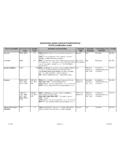
6 Pp 235-269) - Clinically-Managed, Low Intensity residential treatment (Halfway House; Support. Living Envir.) - Clinically-Managed, Medium Intensity residential treatment (Therapeutic Rehabilitation Facility) (This level is not in the Adolescent Criteria continuum of care) Understanding and Utilizing the ASAM Placement Criteria David Mee-Lee, The Change Companies 4 - Clinically-Managed, Medium/High Intensity residential treatment (Therapeutic Community, residential treatment Center) - Medically-Monitored Intensive Inpatient treatment (Inpatient treatment Center) Level IV Medically-Managed Intensive Inpatient Services (ASAM PPC-2R, pp 127-135; pp 271-278) IV - Medically-Managed Intensive Inpatient treatment ASAM PPC-2R Level of Detoxification Service for Adults Level Note: There are no separate Detoxification Services for Adolescents Ambulatory Detoxification without Extended On-Site Monitoring I-D Mild withdrawal with daily or less than daily outpatient supervision.
7 Likely to complete detox. and to continue treatment or recovery Ambulatory Detoxification with Extended On-Site Monitoring II-D Moderate withdrawal with all day detox. support and supervision; at night, has supportive family or living situation; likely to complete detox. Clinically-Managed residential Detoxification Moderate withdrawal, but needs 24-hour support to complete detox. and increase likelihood of continuing treatment or recovery Medically-Monitored Inpatient Detoxification Severe withdrawal and needs 24-hour nursing care and physician visits as necessary; unlikely to complete detox. without medical, nursing monitoring Medically-Managed Inpatient Detoxification IV-D Severe, unstable withdrawal and needs 24-hour nursing care and daily physician visits to modify detox. regimen and manage medical instability ASAM PPC-2R Levels of Care Level Same Levels of Care for Adolescents except Level Early Intervention Assessment and education for at risk individuals who do not meet diagnostic criteria for Substance-Related Disorder Outpatient Services I Less than 9 hours of service/week (adults); less than 6 hours/week (adolesecents) for recovery or motivational enhancement therapies/ strategies Intensive Outpatient 9 or more hours of service/week (adults); 6 or more hours/week (adolesecents) to treat multidimensional instability Partial Hospitalization 20 or more hours of service/week for multidimensional instabilty not requiring 24 hour care Clinically-Managed Low-Intensity residential 24 hour structure with available trained personnel.
8 At least 5 hours of clinical service/week Clinically-Managed Med-Intensity residential 24 hour care with trained counselors to stablize multidimensional imminent danger. Less intense milieu and group treatment for those with cognitive or other impairments unable to use full active milieu or therapeutic community Clinically-Managed High-Intensity residential 24 hour care with trained counselors to stablize multidimensional imminent danger and preapre for outpatient treatment . Able to tolerate and use full active milieu or therapeutic community Medically-Monitored Intensive Inpatient 24 hour nursing care with physician availablity for significant problems in Dimensions 1, 2 or 3. Sixteen hour/day counselor ability Medically-Managed Intensive Inpatient IV 24 hour nursing care and daily physician care for severe, unstable problems in Dimensions 1, 2 or 3. Counseling available to engage patient in treatment Understanding and Utilizing the ASAM Placement Criteria David Mee-Lee, The Change Companies 5 C.
9 How to Organize Assessment Data to Focus treatment What Does the Client Want? Why Now? Does client have immediate needs due to imminent risk in any of the six assessment dimensions? Conduct multidimensional assessment What are the multiaxial DSM IV diagnoses? Multidimensional Severity /LOF Profile Identify which assessment dimensions are currently most important to determine Tx priorities Choose a specific focus and target for each priority dimension What specific services are needed for each dimension? What dose or intensity of these services is needed for each dimension? Where can these services be provided, in the least intensive, but safe level of care or site of care? What is the progress of the treatment plan and Placement decision; outcomes measurement? Understanding and Utilizing the ASAM Placement Criteria David Mee-Lee, The Change Companies 6 D How and When to Use the Criteria 1.
10 Continued Service and Discharge Criteria (PPC-2R, pp. 7, 35-40; pp 199-204) After the admission criteria for a given level of care have been met, the criteria for continued service, discharge or transfer from that level of care are as follows: Continued Service Criteria: It is appropriate to retain the patient at the present level of care if: 1. The patient is making progress, but has not yet achieved the goals articulated in the individualized treatment plan. Continued treatment at the present level of care is assessed as necessary to permit the patient to continue to work toward his or her treatment goals; or 2. The patient is not yet making progress but has the capacity to resolve his or her problems. He or she is actively working on the goals articulated in the individualized treatment plan. Continued treatment at the present level of care is assessed as necessary to permit the patient to continue to work toward his or her treatment goals; and/or 3.