Transcription of Update in Anaesthesia - e-SAFE
1 Management of bronchospasm during general Anaesthesia Alex LooseleyCorrespondence email: during general Anaesthesia can present in isolation or as a component of a more serious underlying pathology such as anaphylaxis. It is characterised by prolonged expiration, wheeze and increased peak airway pressures during Intermittent Positive Pressure Ventilation (IPPV). Untreated it can cause hypoxia, hypotension and increased morbidity and mortality. Suspected bronchospasm during Anaesthesia should be assessed and treated promptly. Ongoing management should address the underlying cause. BRONCHOSPASM Bronchospasm and wheeze are common features of reactive airways disease. Patients with bronchial asthma and some with chronic obstructive pulmonary disease (COPD) show hyperreactive airway responses to mechanical and chemical irritants.
2 In these groups there is a combination of constriction of bronchial smooth muscle, mucosal oedema and mucous hypersecretion with plugging. Perioperative bronchospasm in patients with reactive airways disease is however relatively uncommon. In patients with well-controlled asthma and COPD the incidence is approximately 2%. The overall incidence of bronchospasm during general Anaesthesia is approximately to tobacco smoke, history of atopy and viral upper respiratory tract infection (URTI) all increase the risk of bronchospasm during Anaesthesia . In many patients with bronchospasm during Anaesthesia there is no history of reactive airways disease. RECOGNITION OF BRONCHOSPASMB ronchospasm during Anaesthesia usually manifests as prolonged expiration.
3 An associated expiratory wheeze may be auscultated in the chest or heard in the breathing circuit. Wheezing requires movement of gas through narrowed airways and so in severe bronchospasm wheeze may be quiet or absent. Similarly, breath sounds may be reduced or absent. With IPPV, peak airway pressures are increased, tidal volumes reduced, or both. Bronchospasm is not the only cause of wheeze or increased peak airway AnaesthesiaUpdate inSummaryBronchospasm is a relatively common event during general Anaesthesia . Management begins with switching to 100% oxygen and calling for help early. Stop all potential precipitants and deepen Anaesthesia . Exclude mechanical obstruction or occlusion of the breathing circuit.
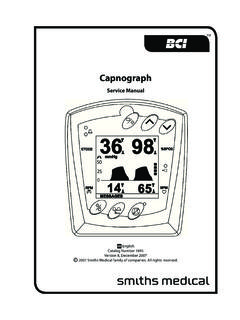
4 Aim to prevent/correct hypoxaemia and reverse bronchoconstriction. Consider a wide range of differential diagnoses including anaphylaxis, aspiration or acute pulmonary oedema. Alex LooseleyCore TraineeDepartment of AnaesthesiaRoyal Devon and Exeter NHS Foundation TrustBarrack RoadExeter EX5 1 JTUKC linical Overview Articlespressures during Anaesthesia (Boxes 1 and 2). With capnography, narrowed airways and prolonged expiration result in a delayed rise in end-tidal carbon dioxide, producing a characteristic shark-fin appearance (Figure 1). However, this is not diagnostic, representing an obstruction at some stage in the expiratory pathway. With limitation in air flow, a prolonged period of exhalation is needed for alveolar pressure to normalise.
5 Positive pressure ventilation delivered before exhalation is complete can result in breath-stacking and the development of an intrinsic (or auto) positive end-expiratory pressure (iPEEP or autoPEEP). Intrinsic PEEP can increase intrathoracic pressure, decrease venous return and impair cardiac 17 Update in Anaesthesia | 1. Causes of wheeze during general Anaesthesia Partial obstruction of tracheal tube (including ETT abutting the carina or endobronchial intubation)BronchospasmPulmonary oedemaAspiration of gastric contentsPulmonary embolism Tension pneumothoraxForeign body in the tracheobronchial treeBox 2. Causes of increased peak airway pressure during IPPVA naesthetic equipment Excessive tidal volume High inspiratory flow ratesAirway device Small diameter tracheal tube Endobronchial intubation Tube kinked or blockedPatient Obesity Head down position Pneumoperitoneum Tension pneumothorax BronchospasmFigure 1.
6 The characteristic shark-fin capnograph suggestive of airway obstructionDIFFERENTIAL DIAGNOSIS Bronchospasm occurs most commonly and approximately equally during the induction and maintenance stages of Anaesthesia and is less often encountered in the emergence and recovery Bronchospasm during the induction stage is most commonly caused by airway irritation, often related to intubation. During the maintenance stage of Anaesthesia , bronchospasm may result from an anaphylactic or serious allergic reaction. Drugs (antibiotics, neuromuscular blockers), blood products (red blood cells, fresh frozen plasma) and other allergens (latex) are the agents commonly responsible. Other features of allergic or anaphylactic reaction include cutaneous signs (rash, urticaria, angioedema) and cardiovascular signs (tachy/bradycardia, hypotension, circulatory collapse).
7 When assessing bronchospasm there are other important differential diagnoses and contributing factors to consider: Mechanical obstructionA kinked (see case report in this edition), blocked (mucous plug, cuff herniation) or misplaced (endobronchial, oesophageal) tracheal tube or occlusion in the breathing circuit can mimic severe bronchospasm. Unless rapidly recognised and corrected this can have disastrous consequences. A recent death in the UK (initially treated as severe bronchospasm) was found to be due to blockage of the breathing circuit with the protective cap from an IV giving set. The subsequent Department of Health report Protecting the Breathing Circuit in Anaesthesia (2004) reiterated the importance of checking the breathing circuit prior to each patient and ensuring the availability of another means of ventilation ( a self-inflating bag).
8 4 LaryngospasmThis should be considered and excluded. In non-intubated patients acute laryngospasm can produce upper airway noise (usually inspiratory), reduced breath sounds and difficulty in ventilation. Laryngospasm can present with signs of airway obstruction including increased respiratory effort, tracheal tug and paradoxical movement of the chest and abdomen ( see-saw respiration). Bronchial hyperreactivityIf the patient is known to be at increased risk of bronchial hyperreactivity the suspicion of bronchospasm is increased. The main patient groups are those with reactive airways disease, especially poorly controlled asthma and COPD. Bronchial hyperreactivity is also associated with preoperative exposure to tobacco smoke, upper respiratory tract infection (URTI) and a history of atopy.
9 Many of these factors also predispose to laryngospasm. Inadequate depth of anaesthesiaManipulation of the airway or surgical stimulation under light Anaesthesia increases the risk of bronchospasm. Certain surgical procedures have highly stimulating stages that can trigger bronchospasm (and laryngospasm). Examples of these include anal or cervical dilatation, stripping of the long saphenous vein during varicose vein surgery and traction on the peritoneum. These are often predictable and can be prevented or countered by an intravenous bolus of opioid and/or anaesthetic agent such as volatile anaesthetic agents (isoflurane, desflurane) if introduced quickly can trigger bronchospasm. IV agents including beta-blockers, prostaglandin inhibitors (NSAIDs) and cholinesterase inhibitors (neostigmine) are implicated.
10 Histamine release (thiopentone, atracurium, mivacurium, morphine, d-tubocurarine) can also precipitate bronchospasm; care should be taken with these drugs in higher risk patients. Airway soilingUnexplained bronchospasm, especially in patients without increased risk of airway hyperreactivity, should prompt consideration of airway soiling due to secretions, regurgitation or aspiration. This is particularly true with the use of the laryngeal mask airway (LMA) but may also occur with an uncuffed endotracheal tube (ETT) or an inadequately inflated/punctured cuff. A history of gastro-oesophageal reflux or sudden coughing in a patient breathing spontaneously with an LMA should increase the suspicion of airway soiling. PREVENTION OF BRONCHOSPASMP atients with asthma and COPD should be thoroughly assessed and care taken to ensure they are optimised for surgery.