Transcription of USING SERIES TO SOLVE DIFFERENTIAL EQUATIONS
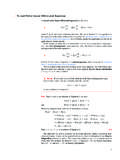
1 USING SERIES TO SOLVE DIFFERENTIAL EQUATIONSMany DIFFERENTIAL EQUATIONS can t be solved explicitly in terms of finite combinations ofsimple familiar functions. This is true even for a simple-looking equation likeBut it is important to be able to SOLVE EQUATIONS such as Equation 1 because they arise fromphysical problems and, in particular, in connection with the Schr dinger equation in quan-tum mechanics. In such a case we use the method of power SERIES ; that is, we look for asolution of the formThe method is to substitute this expression into the DIFFERENTIAL equation and determine thevalues of the coefficients Before USING power SERIES to SOLVE Equation 1, we illustrate the method on the simplerequation in Example 1 Use power SERIES to SOLVE the equation.
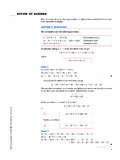
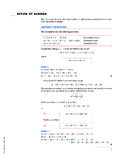
2 SOLUTIONWe assume there is a solution of the formWe can differentiate power SERIES term by term, soIn order to compare the expressions for and more easily, we rewrite as follows:Substituting the expressions in EQUATIONS 2 and 4 into the DIFFERENTIAL equation, weobtainorIf two power SERIES are equal, then the corresponding coefficients must be equal. There-fore, the coefficients of in Equation 5 must be 0: n 2 n 1 cn 2 cn 0xn n 0 n 2 n 1 cn 2 cn xn 05 n 0 n 2 n 1 cn 2xn n 0 cnxn 0y n 0 n 2 n 1 cn 2xn4y y y y 2c2 2 3c3x n 2 n n 1 cnxn 23 y c1 2c2x 3c3x2 n 1 ncnxn 1y c0 c1x c2x2 c3x3 n 0 cnxn2y y 0y y 0c0, c1, c2.
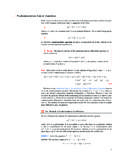
3 Y f x n 0 cnxn c0 c1x c2x2 c3x3 y 2xy y 011 By writing out the first few terms of (4), youcan see that it is the same as (3). To obtain (4)we replaced by and began the sum-mation at 0 instead of 2nThomson Brooks-Cole copyright 2007 Equation 6 is called a recursion and are known, this equation allows us to determine the remaining coefficients recursively by putting in now we see the pattern:Putting these values back into Equation 2, we write the solution asNotice that there are two arbitrary constants,and NOTE 1 We recognize the SERIES obtained in Example 1 as being the Maclaurin seriestion asBut we are not usually able to express power SERIES solutions of DIFFERENTIAL EQUATIONS interms of known x c0cos x c1sin c0 n 0 1 n x2n 2n !
4 C1 n 0 1 n x2n 1 2n 1 ! c1 x x33! x55! x77! 1 n x2n 1 2n 1 ! c0 1 x22! x44! x66! 1 n x2n 2n ! y c0 c1x c2x2 c3x3 c4x4 c5x5 For the odd coefficients,c2n 1 1 n c1 2n 1 ! For the even coefficients,c2n 1 n c0 2n ! Put n 5: c7 c56 7 c15! 6 7 c17! Put n 4: c6 c45 6 c04! 5 6 c06! Put n 3: c5 c34 5 c12 3 4 5 c15! Put n 2: c4 c23 4 c01 2 3 4 c04! Put n 1: c3 c12 3 Put n 0: c2 c01 2n 0, 1, 2, 3, ..c1c0n 0, 1, 2, 3, ..cn 2 cn n 1 n 2 62 USING SERIES TO SOLVE DIFFERENTIAL EQUATIONSfor cos xand sin x. (See EQUATIONS and ) Therefore,we could write the solu-Thomson Brooks-Cole copyright 2007 USING SERIES TO SOLVE DIFFERENTIAL EQUATIONS 3 EXAMPLE 2 SOLVE .
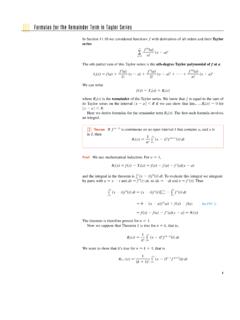
5 SOLUTIONWe assume there is a solution of the formThenandas in Example 1. Substituting in the DIFFERENTIAL equation, we getThis equation is true if the coefficient of is 0:We SOLVE this recursion relation by putting successively in Equation 7: Put n 7: c9 138 9 c7 1 5 9 139! c1 Put n 6: c8 117 8 c6 3 7 118! c0 Put n 5: c7 96 7 c5 1 5 95! 6 7 c1 1 5 97! c1 Put n 4: c6 75 6 c4 3 74! 5 6 c0 3 76! c0 Put n 3: c5 54 5 c3 1 52 3 4 5 c1 1 55! c1 Put n 2: c4 33 4 c2 31 2 3 4 c0 34! c0 Put n 1: c3 12 3 c1 Put n 0: c2 11 2 c0n 0, 1, 2, 3, ..n 0, 1, 2, 3, ..cn 2 2n 1 n 1 n 2 cn7 n 2 n 1 cn 2 2n 1 cn 0xn n 0 n 2 n 1 cn 2 2n 1 cn xn 0 n 0 n 2 n 1 cn 2xn n 1 2ncnxn n 0 cnxn 0 n 0 n 2 n 1 cn 2xn 2x n 1 ncnxn 1 n 0 cnxn 0 y n 2 n n 1 cnxn 2 n 0 n 2 n 1 cn 2xn y n 1 ncnxn 1 y n 0 cnxny 2xy y 0 n 1 2ncnxn n 0 2ncnxnThomson Brooks-Cole copyright 20074 USING SERIES TO SOLVE DIFFERENTIAL EQUATIONSIn general, the even coefficients are given byand the odd coefficients are given byThe solution isorNOTE 2 In Example 2 we had to assume that the DIFFERENTIAL equation had a SERIES solu-tion.
6 But now we could verify directly that the function given by Equation 8 is indeed 3 Unlike the situation of Example 1, the power SERIES that arise in the solution ofExample 2 do not define elementary functions. The functionsandare perfectly good functions but they can t be expressed in terms of familiar functions. Wecan use these power SERIES expressions for and to compute approximate values of thefunctions and even to graph them. Figure 1 shows the first few partial sums (Taylor polynomials) for , and we see how they converge to . In this way we cangraph both and in Figure 4 If we were asked to SOLVE the initial-value problemwe would observe thatThis would simplify the calculations in Example 2, since all of the even coefficients wouldbe 0.
7 The solution to the initial-value problem isy x x n 1 1 5 9 4n 3 2n 1 ! x2n 1c1 y 0 1c0 y 0 0 y 0 1y 0 0y 2xy y 0y2y1y1y1 x T0, T2, T4, ..y2y1 y2 x x n 1 1 5 9 4n 3 2n 1 ! x2n 1 y1 x 1 12! x2 n 2 3 7 4n 5 2n ! x2n c1 x n 1 1 5 9 4n 3 2n 1 ! x2n 1 y c0 1 12! x2 n 2 3 7 4n 5 2n ! x2n 8 c1 x 13! x3 1 55! x5 1 5 97! x7 1 5 9 139! x9 c0 1 12! x2 34! x4 3 76! x6 3 7 118! x8 y c0 c1x c2x2 c3x3 c4x4 c2n 1 1 5 9 4n 3 2n 1 ! c1c2n 3 7 11 4n 5 2n ! fiFIGURE 12_8_22T T FIGURE 2 Thomson Brooks-Cole copyright 2007 USING SERIES TO SOLVE DIFFERENTIAL EQUATIONS 5 EXERCISES1 11 Use power SERIES to SOLVE the DIFFERENTIAL equation.
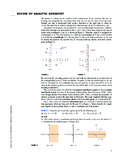
8 ,,y 0 0y 0 1y xy y 0y xy x2 1 y xy y 0y yy xy y 0 x 3 y 2y 0y x2yy xyy y 010.,,11.,, solution of the initial-value problemis called a Bessel function of order 0.(a) SOLVE the initial-value problem to find a power seriesexpansion for the Bessel function.;(b) Graph several Taylor polynomials until you reach one thatlooks like a good approximation to the Bessel function onthe interval . 5, 5 y 0 0y 0 1x2y xy x2y 0y 0 1y 0 0y x2y xy 0y 0 0y 0 1y x2y 0 Click here for here for Brooks-Cole copyright 20076 USING SERIES TO SOLVE DIFFERENTIAL n 1 1 n2252 3n 1 2 3n 1 !
9 X3n 1 n 0 x2n2nn! ex2 2c0 c1x c0 x22 c0 n 2 1 n 1 2n 3 !22n 2n! n 2 ! x2nc0 n 0 1 n2nn! x2n c1 n 0 2 nn! 2n 1 ! x2n 1c0 n 0 x3n3nn! c0ex3 3c0 n 0 xnn! c0exClick here for Brooks-Cole copyright 2007 USING SERIES TO SOLVE DIFFERENTIAL EQUATIONS (x)= Sn= (x)= Sn=1ncnxn 1and the given equation,y0 y=0, becomes Sn=1ncnxn 1 Sn=0cnxn=0. Replacingnbyn+1in thefirst sum gives Sn=0(n+1)cn+1xn Sn=0cnxn=0,so Sn=0[(n+1)cn+1 cn]xn= gives(n+1)cn+1 cn=0, so the recursion relation iscn+1=cnn+1,n=0,1,2,..Thenc1=c0,c2=12c1 =c02,c3=13c2=13 12c0=c03!,c4=14c3=c04!,andin general,cn=c0n!
10 Thus, the solution isy(x)= Sn=0cnxn= Sn=0c0n!xn=c0 Sn=0xnn!= (x)= Sn=0cnxn,wehavey0(x)= Sn=1ncnxn 1= Sn=0(n+1)cn+1xnand x2y= Sn=0cnxn+2= Sn=2cn 2xn. Hence, the equationy0=x2ybecomes Sn=0(n+1)cn+1xn Sn=2cn 2xn=0orc1+2c2x+ Sn=2[(n+1)cn+1 cn 2]xn= +1=cn 2n+1forn=2,3,..Butc1=0,soc4=0andc7=0and in generalc3n+1=0. Similarlyc2=0soc3n+2=0. Finallyc3=c03,c6=c36=c06 3=c032 2!,c9=c69=c09 6 3=c033 3!,..,andc3n=c03n n!. Thus, the solution isy(x)= Sn=0cnxn= Sn=0c3nx3n= Sn=0c03n n!x3n=c0 Sn=0x3n3nn!=c0 Sn=0 x3/3 nn!=c0ex3 (x)= Sn=0cnxn y0(x)= Sn=1ncnxn 1andy00(x)= Sn=0(n+2)(n+1)cn+2xn.