Transcription of USP Standards for Quality Vaccines
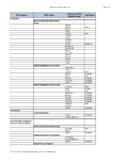
1 EA848F_2020-06 USP Standards for Quality united states pharmacopeia National Formulary (USP-NF) contains general chapters that provide requirements and best practices for manufacturers, regulators and laboratories that are developing, manufacturing, testing and releasing drug substances and products. Learn more about some of the key Standards that apply to Quality vaccine development USP NF Online To access details about the Standards below and other relevant information, you must be signed in to USP NF Online. If you are a scientist, developer or manufacturer working on COVID-19 Vaccines or treatments, and would like to request free access, complete this online request. Standard nameBrief description<1> Injections and Implanted Drug Products Product Quality Tests This chapter is divided into three main sections: (1) universal product Quality tests that are applicable to parenteral dosage forms; (2) specific product Quality tests, which are tests that should be considered in addition to universal tests.
2 And (3) product Quality tests for specific dosage forms, which list applicable tests (universal and specific) for the specific dosage some pharmacopeial definitions for sterile preparations for parenteral use may not apply to some biologics because of their special nature and licensing requirements, some biological finished drug products, such as Vaccines , must meet the requirements of general chapter <1>.Intended to convey requirements enforceable by regulatory agencies.<71> Sterility Tests This chapter demonstrates process control and is a general indicator of the microbiological Quality of a product. It is important to note that pharmacopeial procedures are not by themselves designed to ensure that a product or batch is sterile or has been sterilized.
3 This is accomplished primarily by validation of the sterilization process or of the aseptic processing to convey requirements enforceable by regulatory agencies.<85> Bacterial Endotoxins Test This is a test used to detect or quantify bacterial endotoxins that may be present in a substance. Endotoxins are bacterial structural components that are released when such a cell is lysed, or broken down. These components are toxic to humans and animals, causing a pyrogenic response, which includes a rise in body temperature and other harmful to convey requirements enforceable by regulatory agencies.<151> Pyrogen Test A pyrogen is any chemical substance that will cause a fever if present at high enough levels within the body.
4 The pyrogen test, or the rabbit pyrogen test, is an in vivo test for the presence of pyrogens and is designed to limit the amount of pyrogens with an injectable to convey requirements enforceable by regulatory agencies.<1044> Cryopreservation of Cells This chapter presents best practices for cryopreservation, maintenance and use of a wide range of cells, cell therapy products and cell banks derived from a variety of sources, including human, animal and microbial cultures. Cryopreserved cells provide a ready source of viable cells that can be used, either directly or indirectly, for the purposes of diagnostic tests, therapy, manufacture of drug substances and Vaccines , and bioassays used to evaluate the potency of therapeutic drugs and intended to convey requirements enforceable by regulatory agencies.
5 <1048> Quality of Biotechnological Products: Analysis of the Expression Construct in Cells Used for Production of r-DNA Derived Protein Products This chapter presents guidance regarding the characterization of the expression construct used for the production of recombinant DNA (r-DNA) protein products. The chapter describes the types of information that are considered valuable in assessing the structure of the expression construct used to produce r-DNA-derived proteins. Not intended to convey requirements enforceable by regulatory agencies.<1049> Quality of Biotechnological Products Stability Testing of Biotechnological/Biological Products The purpose of this chapter is to offer guidance regarding the type of stability studies that should be provided in support of development of and marketing applications for biologic products.
6 It is understood that, during the review and evaluation process of a biological product, continuing updates of initial stability data may occur. Not intended to convey requirements enforceable by regulatory Vaccine Development and ManufacturingEmpowering a healthy tomorrowEmpowering a healthy nameBrief description<1050> Viral Safety Evaluation of Biotechnology Products Derived From Cell Lines of Human or Animal Origin This chapter focuses on testing and evaluation of the viral safety of biotechnology products derived from characterized cell lines of human or animal origin ( , mammalian, avian, insect), and outlines data that should be submitted in the marketing application/registration purpose of this chapter is to describe a general framework for virus testing, experiments for the assessment of viral clearance, and a recommended approach for the design of viral tests and viral clearance intended to convey requirements enforceable by regulatory agencies.
7 <1074> Excipient Biological Safety Evaluation Guidelines This informational chapter presents a scientifically based approach for the safety assessment of new pharmaceutical excipients ( , those excipients that have not been previously used or permitted for use in a pharmaceutical preparation). The guidelines presented herein provide a protocol for developing an adequate database on which to establish conditions for the safe use of a new excipient intended for use in products administered by various routes of intended to convey requirements enforceable by regulatory agencies.<1116> Microbiological Control and Monitoring of Aseptic Processing Environments This general information chapter provides information and recommendations for environments where the risk of microbial contamination is controlled through aseptic processing.
8 Products manufactured in such environments include pharmaceutical sterile products, bulk sterile drug substances, sterile intermediates, excipients and, in certain cases, medical guidance provided in this chapter and the monitoring parameters given for microbiological evaluation should be applied only to clean rooms, restricted-access barrier systems and isolators used for aseptic processing. Not intended to convey requirements enforceable by regulatory agencies.<1132> Residual Host Cell Protein Measurement in Biopharmaceuticals Many medicinal products are produced through recombinant technology via a host cell ( , bacteria; yeast; mammalian, insect or plant cell lines). During the manufacture of such products, some amount of non-product, host cell-derived material will inevitably be introduced into the process stream.
9 This process results in a mixture of the desired product and host cell-derived impurities, (process impurities), including host cell proteins (HCPs). This chapter focuses on HCP immunoassays for recombinant therapeutic products. It does not address products such as Vaccines or gene-, cell- or tissue-based therapies, although the general principles discussed may apply to the measurement of HCPs in these products as intended to convey requirements enforceable by regulatory agencies.< > Sterilizing Filtration of Liquids Sterilization processes are divided broadly into two categories: destruction of microorganisms or their physical removal from the material to be sterilized. Multiple factors contribute to the effectiveness of any sterilizing filtration process.
10 These factors, as well as the type and number of microorganisms, the properties of the liquid, the filter design and membrane polymer, and the filtration process parameters, are discussed in this intended to convey requirements enforceable by regulatory agencies.<1234> Vaccines for Human Use Polysaccharide and Glycoconjugate Vaccines This chapter describes best practices for production, conjugation and characterization of polysaccharide and glycoconjugate Vaccines . It describes key Quality attributes at each step of the process and suggests best methods to assess these attributes. The scope of this chapter includes Vaccines consisting of one or more purified polysaccharides (such as pneumococcal, meningococcal and Typhoid Vi Vaccines ) and components involved in their production, and Vaccines consisting of one or more glycoconjugate immunogens in which a polysaccharide has been covalently attached to a suitable carrier intended to convey requirements enforceable by regulatory agencies.