Transcription of verbs - Basby
1 1 The verbs The verbs decline only according to tense, not according to person. The tenses are: Nutid ( now-time = present), datid ( then-time = past), f rnutid ( before-now- time = present perfect) and f rdatid ( before-then-time = past perfect). In the dictionary, the verbs are listed in infinitive, usually followed by the past tense ending: spise, -te: to eat. The major differences to English are: No continuous Danish verbs do not have a continuous form. I am running and I run will both be simple present: Jeg l ber in Danish.
2 And likewise in the past: I was running and I ran will both be simple past: Jeg l b. In expressions as I like running you use infinitive with the infinitive mark at (= to - pronounced like o in hot): Jeg kan lide at l be. No future In Danish you usually express future with simple present: Jeg kommer i morgen. (I will come tomorrow). modal verbs are only used if you want to express modality: plan, intention, possibility etc. modal verbs In English you cannot have a modal verb following a modal verb , but in Danish we love it: I will be able to translates into jeg vil kunne in Danish.
3 Another thing is that modal verbs tend to be false friends, please don t think that the English word shall, always will be skal in Danish. Passive Passive is formed with blive (to become) and not with v re (to be): I was hit by a car translates into jeg blev ramt af en bil. Danish has got another passive form as well: the ending s. Br det bages ved 200 grader. (Bake the bread at 200 C) The s passive is used for instructions, rules etc. Present and infinitive is always spelled differently 2 In English you spell eat in I eat and in I will eat in the same way.
4 This does not mean that there is no difference in English, which you may see from he eats vs. he will eat. In Danish infinitive and present are always spelled differently: the regular present ending is r and the infinitive ending: -e. Perfect tenses two different auxiliaries Past and perfect are in principle formed as in English. But for a small group of verbs you will have to use at v re (to be) as auxiliary in stead of at have (to have) when the verb describes transport or other transitions. See present/past perfect below.
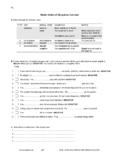
5 Tree families of verbs look at the past ending The regular Danish verb fall into two groups: 1. verbs with ede in past and et in perfect. 2. verbs with te in past and t in perfect. And then there is like in English a group of frequently used, irregular verbs . Declination of the verbs Infinitive Navnem de Present Nutid Past Datid Pr. perfect F rnutid Pa. perfect F rdatid Imperative Bydem de 1) at ringe (to call) ringer (call) ringede (called) har ringet (have called) havde ringet (had called) ring!
6 (call!) 2) at h re (to hear) h rer (hear) h rte (heard) har h rt (have heard) havde h rt (had heard) h r! (hear!) irr. at v re (to be) er (am/are/is) var (was/were) har v ret (have been) havde v ret (had been) v r! (be!) Please notice that verbs do not decline according to person. Am, is and are in English will all be er in Danish. 3 The use of the tenses Infinitive Like in English infinitive without at (to) - is used after modal verbs : Jeg vil gerne smage din kaffe (I would like to taste your coffee) Jeg skal arbejde p s ndag (I am going to work next Sunday) Jeg kan sv mme (I can swim) Jeg m g (I must/have to go) Du beh ver ikke skifte sko (You don t have to change your shoes) Modalverbs: Kunne (can, be able to, may); ville (will, shall); skulle (shall, will, have to), m tte (have to, may).
7 Burde (ought to/should), turde (dare); gide, (will, bother to); beh ve (have to, need to) . Infinitive without at is also used in object + infinitive constructions after verbs describing sensations and the verbs at lade (to let) and at bede (to ask somebody to do something): Jeg s ham l be i parken. (I saw him running in the park) Jeg h rte ham r be p hj lp. (I heard him shout for help) Jeg lod tyven g . (I let the thief go). Jeg bad ham pisse af. (I asked him to piss off.) After other verbs infinitive is use with at (to): Jeg har pr vet at l re grammatikken.
8 (I have tried to learn the grammar) Han nskede at blive prins. (He wanted to become a prince) Jeg elsker at spille golf (I love playing golf) Han gik uden at sige farvel (He left without saying good bye) As you see from the last two examples there is no general Danish equivalent to the use of the ing form describing actions. Only in verbs describing motion in connection with the verb komme, you ll see something a bit like the present continuous: 4 Han kom flyvende/sejlende/ (He came running/sailing/ ) And when describing a remaining in a position: Han blev siddende/liggende/st ende/boende (He remained sitting/lying/standing/living) Present Present describes scenes/situations now, always/never or in the future.
9 Jeg betaler ved kassen. (I pay at the checkout) Mens jeg betaler, ringer min telefon. (While I am paying, my phone rings) Jeg betaler altid for min k reste. (I always pay for my boy friend) Jeg betaler i morgen. (I will pay tomorrow) Again: No continuous! I am paying and I pay are both: Jeg betaler. Like in English you may use historical present to underline crucial points in a past tense narrative: Det var midnat. Pludselig h rer jeg et skud. (It was midnight, suddenly I hear a shot) Present perfect The present perfect is basically a kind of present: it describes results or experiences that are relevant now, although they took place or started in the past.
10 This is very much like in English, but very different from German, French, Italian and Spanish, where present perfect serve as past. The phrase: Jeg har spist. (I have eaten.) does not describe a situation it only tells that right now I am not hungry. If you want to describe your dinner at the restaurant, you will have to switch to past: Jeg spiste p en japansk restaurant i centrum i g r, det var dyrt men dejligt. (I ate at a japanese restaurant in central Copenhagen yesterday. It was expensive, but wondeful.)