Transcription of What is Public Water System?
1 What is a Public Water system ? A Public Water system is defined as a system that provides Water for human consumption1 to 15 or more connections or regularly serves 25 or more people daily for at least 60 days out of the year. What types of Public Water Systems are there? Many people think of Public Water systems as large city or regional Water suppliers, but they also include small housing communities, businesses and even schools and restaurants that provide Water . A Public Water system is not necessarily a Public entity, and most Public Water systems are privately owned.
2 There are three legal distinctions between the types of Public Water systems: community, non-transient non-community, and transient. The type of Water system is based on how often people consume the Water . Drinking Water regulations impose the most stringent monitoring requirements on community and non-transient non- community Water systems because the people they serve obtain all or much of their Water from that system each day. Community Water Systems are city, county, regulated utilities, regional Water systems and even small Water companies and districts where people live.
3 Non-community non-transient Water systems are places like schools and businesses that provide their own Water . The same people have a regular opportunity to consume the Water , but they do not reside there. Transient Water systems include entities like rural gas stations, restaurants and State and National parks that provide their own potable Water source. Most people that consume the Water neither reside nor regularly spend time there. What does it take to be a Public Water system ? Being a Public Water system means providing affordable, safe drinking Water to your customers 24 hours a day, 7 days a week, 365 day a year.
4 This includes the associated legal, fiscal, and operational responsibilities, and future planning. Public Water systems typically are run more efficiently when costs can be spread out over a large group of people to obtain good economies of scale. Small Public Water systems without a very high level of managerial, technical and financial capacity tend to be unsustainable. Public Water systems are required to have domestic Water supply permits. The first step of the process to obtain a permit for a new Public Water system is to complete a preliminary technical report.
5 The report involves contacting other existing Public Water systems to see if the service area of the proposed system could, instead, be served by an existing system . It also evaluates the long-term costs of creating a new Public Water system . The preliminary technical report must be submitted at least 6-months prior to any Water related construction. A copy of the preliminary technical report template and the subsequent permit application materials can be obtained by contacting the State Water Resources Control Board, Division of Drinking Water s District Office.
6 A map with District Offices can be found at the following website: 1 Human consumption means the use of Water for drinking, bathing or showering, hand washing, oral hygiene, or cooking, including but not limited to, preparing food and washing dishes per Section 116275(e) of the Health and Safety Code. What are the requirements to create and maintain a Public Water system ? A new Water system applicant should consider all requirements for a Public Water system that are listed below and on the following page. Typically, a Public Water system will incur costs associated with most or all of the required elements.
7 Other requirements may also be applicable, depending on whether the system is a Public or private entity, such as requirements imposed by other programs with the State Water Board, such as Division of Water Rights, and other regulatory agencies, such as Local Area Formation Commissions, Public Utilities Commission, city and county governments. The section from the California Code of Regulations (CCR) Title 22, discussing the specific requirements or the section of the California Health and Safety Code (CHSC) is identified in parentheses.
8 If the requirement comes from another regulatory section, the location is noted. Note that this is a partial list of regulatory requirements. Permitting engineering and technical reports ( 64552), including pump tests ( 64554), at least two Water supply well sources for communities ( 64554c and 64561), a 50-foot radius source protection zone around all new wells ( 64560), a minimum of a 50-foot annular seal on new wells ( 64560), a well flow meter ( 64561) and initial monitoring Construction, including elevated storage or backup electricity for pumps to maintain 40 pounds per square inch (psi) minimum pressure at all times ( 64602)
9 , proper construction of distribution systems ( 64570- 64580), adequate storage capacity ( 64554 and 64585) and fire capacity (contact local fire official) As-built maps ( 64604) Annual Water -treatment chemicals ( 64590) and equipment for distribution monitoring of any added chemical treatment (dependent on the type of needed treatment) Ongoing raw Water chemical monitoring sampling and analysis ( ) Ongoing raw Water bacteriological monitoring sampling and analysis ( 64430) Ongoing treated Water bacteriological monitoring sampling and analysis ( 64421-64430) Maintenance of bacteriological plans ( 64422) and emergency notification plans for Water quality emergencies ( 64463-64466) Ongoing lead and copper monitoring including sampling and analysis and maintenance of a lead and copper plan ( ) Ongoing disinfection byproducts monitoring and maintenance of an associated plan( ) Maintaining a customer Water quality complaint program ( 64470) Main flushing ( 64575)
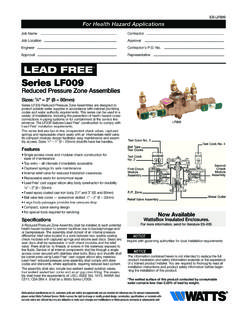
10 , valve and meter maintenance ( 64600), and maintaining system maps ( 64604) cross connection program and annual back-flow device testing (from Title 17, 7583-7605) Licensed Water treatment operator and distribution staff ( ) Written procedures for system maintenance, for example pipeline break procedures, etc.(64580, 64582, & 64583) Source capacity planning studies and permit amendments for any additional growth ( 64558 and 64556) Annual Consumer Confidence Report preparation and distribution ( 64480-64483) Requirements continue on next 2 of 4 Page 3 of 4 Is there any flexibility on these requirements?