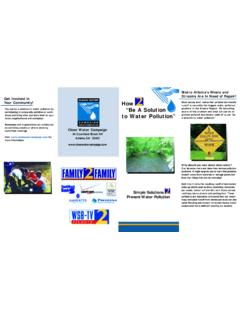
Transcription of What is Sediment Pollution? Brochure
1 Help keep excess Sediment out of our creeks, streams and riversWhat is a Watershed?A watershed is an area of land that drains to a common point, such as a nearby creek, stream, river or lake. Every small watershed drains to a larger watershed that eventually flows to the support a wide variety of plants and wildlife and provide many outdoor recreation opportunities. Protecting the health of our watersheds preserves and enhances the quality of life for Kansas City area residents. What is Stormwater Runoff? Stormwater is water from rain or melting snow. It flows from rooftops, over paved streets, sidewalks and parking lots, across bare soil, and through lawns and storm drains.
2 As it flows, runoff collects and transports soil, pet waste, salt, pesticides, fertilizer, oil and grease, litter and other pollutants. This water drains directly into nearby creeks, streams and rivers, without receiving treatment at sewage plants. Polluted stormwater contaminates local waterways. It can harm plants, fish and wildlife, while degrading the quality of Watershed TipFor more information, visit or call 816 typical watershed systemPrinted on 30% Recycled MaterialMid-America Regional Council600 Broadway, Suite 300 Kansas City, Missouri 64105}}What is Sediment Pollution? Clean is Sediment ?What can you do? Sediment entering stormwater degrades the quality of water for drinking, wildlife and the land surrounding streams in the following ways.
3 Sediment fills up storm drains and catch basins to carry water away from roads and homes, which increases the potential for polluted with Sediment becomes cloudy, preventing animals from seeing water prevents natural vegetation from growing in in stream beds disrupts the natural food chain by destroying the habitat where the smallest stream organisms live and causing massive declines in fish increases the cost of treating drinking water and can result in odor and taste can clog fish gills, reducing resistence to disease, lowering growth rates, and affecting fish egg and larvae transported by Sediment can activate blue-green algae that release toxins and can make swimmers deposits in rivers can alter the flow of water and reduce water depth, which makes navigation and recreational use more is the loose sand, clay, silt and other soil particles that settle at the bottom of a body of water.
4 Sediment can come from soil erosion or from the decomposition of plants and animals. Wind, water and ice help carry these particles to rivers, lakes and about SedimentThe Environmental Protection Agency lists Sediment as the most common pollutant in rivers, streams, lakes and natural erosion produces nearly 30 percent of the total Sediment in the United States, accelerated erosion from human use of land accounts for the remaining 70 percent. The most concentrated Sediment releases come from construction activities, including relatively minor home-building projects such as room additions and swimming pools. Sediment pollution causes $16 billion in environmental damage s the problem?
5 Sweep sidewalks and driveways instead of hosing them off. Washing these areas results in Sediment and other pollutants running off into streams, rivers and weed-free mulch when reseeding bare spots on your lawn, and use a straw erosion control blanket if restarting or tilling a local government officials when you see Sediment entering streets or streams near a construction compost or weed-free mulch on your garden to help keep soil from washing mowing within 10 to 25 feet from the edge of a stream or creek. This will create a safe buffer zone that will help minimize erosion and naturally filter stormwater runoff that may contain Sediment . Either wash your car at a commercial car wash or on a surface that absorbs water, such as grass or more information about erosion and Sediment control, visit or call 816 Life.