Transcription of Why a Healthy Environment is Essential to Reducing …
1 Why a Healthy Environment is Essential to ReducingPoverty The opinions expressed and arguments employed herein are the sole responsibility of the authors and do not necessarily reflect the official views of the Organisation or of the governments of its member countries. 11. When so many live in poverty, why should developing countries worry about the Environment ? The Environment actually means soil - to grow food; water - to drink, wash and irrigate crops; air - to breathe; and a host of food and medicinal products ( fruit, fish, wood, edible roots). Preserving the Environment therefore means safeguarding food production, protecting air and water from contamination, sustaining livelihoods, and preserving health. A degraded Environment in countries that rely heavily on natural resources for their economic prosperity ( most developing countries) actually exacerbates poverty conditions.
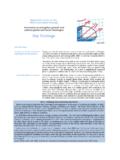
2 FACT 1: World Bank studies also suggest that over 1 billion people world-wide depend, to varying degrees, on forest-based assets for their livelihoods. (P. Vedeld, A. Angelsen, E. Sjaasrad and G. Berg, Counting on the Environment : Forest Income and the Rural Poor, Environmental Economics Series No. 98, World Bank, 2004) FACT 2: 15 of 24 Essential services provided by ecosystems (ranging from food production, water quality and availability to disease management and climate regulation) are currently being eroded. (Millennium Ecosystem Assessment) Adapted from Living Beyond Our Means: Natural Assets and Human Well-being (Statement of the MA Board), Millennium Ecosystem Assessment Supporting Services: Nutrient cycling, soil formation. Provisioning services: food, water, wood, fuel Regulating services: climate, flood, water purification Security: from disasters, secure resource access, personal safety Basic material for good life: shelter, access to goods Health: access to clean water and air CONSTITUENTS OF WELL-BEING ECOSYSTEM SERVICES ILLUSTRATION OF LINKAGES BETWEEN ECOSYSTEM SERVICES AND HUMAN WELL-BEING 22.
3 Who actually suffers from environmental degradation? By and large, the poorest people and the poorest countries are the most affected by environmental degradation. They have to eke a living from marginal lands, forests, coastal waters or the peripheries of urban centres. The urban poor are the most exposed to severe air and water pollution and cannot escape the negative impacts of urbanization. Women and children, who are often responsible for tasks related to water and fuel collection, are disproportionately affected. This problem is well-recognised by donors. The DAC Guidelines on Poverty Reduction asks bilateral agencies to work to reduce poverty by integrating sustainable development, including environmental concerns, into strategic frameworks for Reducing poverty. FACT 3: In developing countries, 20 per cent of the total loss of life expectancy is attributable to environmental causes.
4 In OECD countries, it is around 4 percent. (Sustaining the Environment to Fight Poverty, UNDP et. al, 2005) FACT 4: Unsafe water, due to poor access to water supply, sanitation facilities and hygiene, is responsible for % of all deaths worldwide. Over 99 % of this burden occurs in developing countries. (The World Health Report 2002, WHO) FACT 5: In the world s cities, outdoor air pollution results in approximately deaths annually, due to cardiopulmonary disease, lung cancer and acute respiratory infections. This is the equivalent of million years of life lost to premature mortality. The greatest burden of disease caused by outdoor air pollution occurs in cities of developing countries in the Western Pacific Region (44 % of all deaths), which includes China, and in the South East Asian Region (17 % of all deaths), which includes India.
5 (Urban air pollution, WHO, 2004) FACT 6: Indoor air pollution, caused by smoke from stoves and fires, causes around million death s per year in developing countries (WHO/UNDP Statement on Indoor Air Pollution, 2004) 33. Does this mean that the Environment is more important for poor than for rich countries? In many cases yes. Environmental assets make a far larger relative contribution to national wealth in developing countries than in high income countries. In many poor countries, environmental resources provide a safety net which can prove to be vital during crises. At the same time, much economic activity in the developed countries also depends on a Healthy Environment . FACT 7: Environment -based wealth accounts for 25% of the total wealth in low-income countries, 13% in middle-income countries, and only 3% in OECD countries.
6 (Ensuring Environmental Sustainability: Measuring Progress. World Bank, 2005) Shares of Wealth by Income Group, 2000 A study of the Mt. Elgon National Park in Uganda shows that environmental resources have played a safety net function during periods of natural and social disaster. Environmental income constitutes 19% for peasants living near the park, and poor households depend more on environmental incomes than wealthier households. (Sustainable livelihoods and environmental income dependence around Mt. Elgon National Park, Uganda, SIU, 2002) 44. So better environmental management mostly benefits the very poorest? Not quite. The very poorest do suffer the most from bad environmental management. But the Environment (and the related productivity of natural resources) also affect the pace and pattern of overall economic growth. In many developing countries, natural resources provide a stepping stone for moving to more sophisticated, higher-valued, industries.
7 Sound forest management, for example, can open the door to a range of industries linked to wood processing, which can generate considerable employment opportunities, including for skilled and semi-skilled labour. Similarly, many countries with rich fisheries resources move from fishing to canning, and more advanced agro-processing industries. Reversing land degradation implies moving toward advanced cropping techniques, improved seeds, and making full use of available information technologies to anticipate climatic and market-related shifts. Ecotourism, which depends on sound environmental management, is often a profitable activity which employs skills workers. Improving environmental management thus goes hand in hand with economic modernization and diversification of income opportunities. This, in turn, goes in tandem with improved literacy and education, better access to communications and enhanced participation in global markets.
8 In Madagascar, a shrimp processing company established in a remote part of the Island created 1200 permanent jobs for rural people, many of whom had never had a wage-paying job. The company s long term prosperity is clearly dependent on continuing shrimp supply. The interests of the company and its workers and the sustainability of shrimp harvesting are therefore clearly linked. (World Resources Institute, 2005). A study for the Kruger National Part in South Africa suggests that, thanks to ecotourism, wildlife conservation is 18 times more profitable than options such as using the land for livestock and crops. Reasons for this include the poor potential of this particular area for agriculture. While ecotourism remains a niche market, it can pay off handsomely in suitable circumstances.
9 (Sustaining the Environment to Fight Poverty, UNDP et. al, 2005) In Nam Pheng, Laos, villagers got together in 1996 to expand the market for edible bitter bamboo and cardamom - two high-value traditional products. Through sustainable management of the resources and improved harvest technology, they were able to increase sales and obtain higher prices. By 2002, a day s harvest of bitter bamboo brought ten times the wages of slash-and-burn cultivation, which had previously been the villagers main livelihood activity. (World Resources: The Wealth of the Poor, WRI, 2005) 55. So environmental management and development are actually linked? Yes. Poverty reduction, economic growth, and the maintenance of life-supporting environmental resources are closely linked. This is why reversing environmental degradation is one of the Millennium Development Goals . Most of these goals have strong links with the Environment .
10 Environment linkages to the Millennium Development Goals 1: Eradicate extreme poverty and hunger: Livelihood strategies and food security of the poor often depend directly on Healthy ecosystems and the diversity of goods and ecological services they provide. 2: Achieve universal primary education: Time spent by children, especially girls, who walk long distances collecting scarce water and fuel-wood, can reduce time in school. 3: Promote gender equality and empower women: Poor women are especially exposed to indoor air pollution and the burden of collecting water and fuel-wood. They also have unequal access to land and other natural resources. 4. Reduce child mortality: Water-related diseases such as diarrhea and cholera kill an estimated 3 million people a year in developing countries, the majority of which are children under the age of five.