Transcription of Worksite Wellness Workbook - HAP
1 Worksite Wellness Workbook A step-by-step guide and resources for developing a Worksite Wellness program for your organization. Table of Contents Overview and Objectives .. i How to Use This Book .. ii Phase 1: Assess .. 1 Organizational Assessment .. 1 Employee Interest Survey .. 1 Health Risk Assessment (HRA) .. 1 Biometric 1 Wellness Dashboard .. 1 Phase 2: Plan .. 2 Gain Leadership Support .. 2 Establish a Wellness Committee .. 3 Set Goals and 4 Develop a Budget.
2 6 Determine Specific Wellness Interventions & Program Components .. 9 Create an Implementation 14 Phase 3: Implement .. 16 Communicate your program .. 16 Brand your 17 Motivate and Maintain Momentum .. 18 Consider Incentives .. 19 Phase 4: Evaluate .. 23 Determine what you will Evaluate .. 24 Communicate Outcomes .. 25 27 A Sample Employee Interest Survey .. 27 B Sample Organizational Assessment .. 32 C Sample Program Dashboard .. 39 D Implementation Timeline Template .. 41 E Web-based Resources.
3 43 F Frequently Cited Concerns .. 46 i Workbook Overview and Objectives Worksite Wellness programs are increasing in popularity for a variety of reasons. Health care costs are on the rise and so are chronic conditions among the working population in the United States. A Worksite Wellness program can not only teach employees about healthy behaviors, but also help to shift the culture of your organization to one that embraces and encourages healthy lifestyles. According to Wellness in the Workplace 2012: An Optum Research Update, Health and Wellness programs are rapidly transcending their long-established status as cornerstones of the employee benefits portfolio.
4 As human resource professionals and senior managers experience their impact on health care costs, productivity, talent retention, and recruiting success, health and Wellness programs are becoming strategic differentiators for the country s most innovative and successful organizations. Using this Workbook will take you step-by-step through the assessment, planning, implementation, and evaluation phases of developing a Worksite Wellness program. And since no two worksites are the same, following the steps in this Workbook will allow you to create a customized Wellness program, designed specifically for the employees at your organization. ii How to Use this Workbook This Workbook is divided into four distinct phases, each with recommended action steps to create and sustain a Worksite Wellness program: Assess, Plan, Implement and Evaluate.
5 Follow the action steps and map out a strategy for an effective Worksite Wellness program for your company. Assess- Identify employee health risks and interests and the organization s strengths and areas in need of improvement. Use biometric screening, health risk assessment (HRA) and other data to identify priorities for your Worksite Wellness program. Plan- Define what the Worksite Wellness program will accomplish. Determine the specific components of your program, gain leadership support, develop a budget and form a Wellness committee. You will find a budget-planning template in this section of the Workbook . Implement- Put the individual Wellness program components in place.
6 Implement communication strategies to ensure all employees know about the program and why a Worksite Wellness program is being offered. Keep the momentum going and maintain an effective program over time. Consider the use of incentives in your program. Evaluate- Define how you will evaluate your program. Communicate the results. You will find general information and specific steps, tools, and resources for evaluating and communicating program outcomes to your audience. We hope this Workbook will help you learn more about Worksite Wellness program development and give you the tools you need to take action. Let us know what you do with this Workbook from talking about Worksite Wellness , to obtaining leadership and employee support, to sustaining a long-term program.
7 Please direct your comments or questions to 1 Phase 1: Assess It is important to understand your organization s culture, health risks and the wants and needs of the employees before implementing a new Worksite Wellness program. An organizational assessment and employee interest survey, along with biometric screening data and health risk appraisal (HRA) data will give you a picture of how to shape your Wellness program. HAP recommends that you follow these steps and use the tools available in this Workbook : Step 1: Complete an Organizational Assessment Used to gather information about the organization overall: the employee population, leadership support, policies that support Wellness and information about past Wellness initiatives.
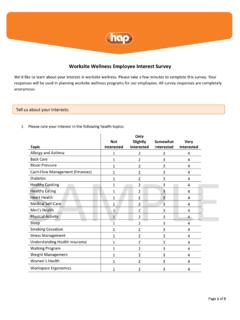
8 Find a sample assessment on page 33 of this Workbook . Step 2: Administer an Employee Interest Survey Designed to determine the topics that employees are most interested in, the time of day they prefer to participate in Wellness activities, their preferred method of communication, and other information to allow you to tailor the Wellness program to meet their needs and interests. Find the employee interest survey on page 28 of this Workbook . Step 3: Obtain aggregate Health Risk Assessment (HRA) data HRAs are questionnaires completed by the employee that gather information about weight, exercise and eating habits, smoking status, cholesterol levels, blood pressure and other health indicators.
9 Employees receive a report with a snapshot of their health risks at that moment in time. HRAs are valuable for employees and employers alike. An aggregate health risk report is generally available to the employer group (minimum participation may be required) from the HRA vendor. HAP has an HRA available to our members located on our website and provides a HIPAA-compliant, annual aggregate report of employee data when at least 100 employees complete the HRA. (A minimum participation of 100 employees is required to maintain HIPAA compliance). Employers do not have access to individual employee HRA data at any time. Step 4: Conduct an on-site Biometric Screening Biometric screenings can be held at your Worksite and can screen for blood pressure, body mass index (BMI), cholesterol and glucose levels.
10 Screenings can help identify prevalent health risks within your population. Employers do not have access to individual employee screening data. Aggregate reports may be available from the screening vendor (minimum participation may be required). Step 5: Complete a Wellness Dashboard Record and track key data in one place for easy access and use. Use the dashboard template on page 40 to quickly reference key data, identify trends, and track progress over time. 2 Phase 2: Plan A Wellness program should have an integrated, strategic approach to address the specific needs, goals and culture of your organization. This section will focus on the steps needed to develop a plan for your Worksite Wellness program.