Transcription of You and Your Doc REVISED - sci-health.org
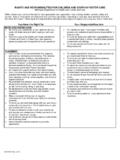
1 What Are Your rights ?Becauseyou may see many different doctors and therapistsafter your spinal cord injury (SCI), it s important that you feelcomfortable with your healthcare team and know your rightsas a have the right to: See your doctor in a fully accessible environment. Two-way communication with your doctor aboutneeds related to your injury as well as to other healthconcerns. Any information about your injury and possiblecomplications. Refuse a medical treatment you re not comfortablewith. A second opinion. Fully understand what costs you are being Power of ChoiceYou have a right to considerate, respectful, and non-discriminatory care from your health care providers. Whileyou may not have the same doctor for all of your needs, yourprimary doctor should have a background in SCI and relatedconditions. Finding someone who fits your needs can betough, so it s important to remember that you can change yourdoctor at any time.
2 Before you decide on a doctor, make a listof what your wants and needs are. Use this list when you be-gin researching with your health plan provider. Once youhave a few possible doctors lined up, contact their offices andask questions to see if they meet your Short Guide To Your rights And ResponsibilitiesYou and Your Doctor:2008 For more details on choosing a doctorcheck out the Craig Hospital s guideto changing or choosing a doctor at: DoctorIt s important to feel you can trust and be comfortable withyour doctor. It is unethical for doctors to pressure you intomaking a decision about medical treatment or place theirinterests over yours (AMA, 2001). Make sure your doctorhelps you to understand all the risks and benefits of anytreatment or procedure before making a decision. That is yourright! A good doctor will take the time to answer all QuestionsDoctors are required to help you understand, so never beafraid to ask questions.
3 When it comes to your health, thereare no dumb questions. It s not uncommon for people to feelintimidated when they visit a doctor. You have a right toknow and understand what is going on. To make the most ofyour visit, write down all your questions ahead of time. Youhave the right to know the risks for any procedures ortreatments your doctor recommends. You should always ex-press your concerns, doubts, and fears. Remember, your doc-tor is there to help, not to judge or punish ResponsibilityIt is your responsibility to share information about yourmedical history and medications with your doctor. It is alsoyour job to share with your doctor everything you know aboutyour injury and any complications. If you keep things fromyour doctor, then your treatment may not work or have dan-gerous consequences (AMA, 2001).
4 It is also a good idea tocall the facility ahead of time to make sure they have whatyou example: Do they have a wheelchair accessible weight scale? Do they have a height adjustable exam table? Do they have a wheelchair accessible bathroom? Are there accessible parking spaces near the office?CommunicateYou and your doctor are a team and no matter how troublingsomething might seem or how embarrassed you might feel,it s important you communicate fully about your healthconcerns. Your doc will help you find answers. If there issomething you do not understand, just ask for you have a question following your visit, you can alwayscall and ask your doctor later. If you feel uncomfortable withsomething your doctor or his or her staff has said or done, behonest and speak up. If you have a long-standing relationshipwith your doctor, working out a problem or misunderstandingmay be better than looking for a new tips on accessible healthcarefacilities visit the Center forDisability Issues and the HealthProfessions website: the doctor isNEVERa good idea!
5 If you have more than one specialist, then it s a good idea tomake sure they talk to each other. This helps to avoidcontradictions in information and are also responsible for any medical related expenses. Ifyou cannot afford to take a certain medication or pay for acertain treatment plan, discuss the issue with your can work with you to find an alternative or moreaffordable form of Responsibilities: Selecting a doctor and/or healthcare facility that fitsyour needs; To share your symptoms and concerns with yourdoctor; Understanding in detail what your condition is andwhat treatment options are available to you; Following your doctor s directions, taking medicationand following any treatment plans appropriately; Show up to scheduled appointments on-time; Encourage your doctors to communicate if you havemore than one specialist or ConsentBefore a certain medical/surgical procedure, treatment orresearch study, you may be asked to give or sign your informed consent.
6 You are required to know and fullyunderstand the risks and benefits of a certain treatment orprocedure. An informed consent provides you with all theimportant information. Be sure to read any documentationcarefully and ask questions if you don t understand. Informedconsent can also involve getting a second opinion. In somecases, your insurance provider may even require a any healthcare provider setting, you have the right includes your name and personalinformation, how your medical records are handled, and howyour information is shared with others. You have the right andresponsibility to make informed decisions about your would like someone close to you to have access to yourmedical information and/or the ability to make decisionsabout your care, it is important to put this in writing and haveyour doctor include it in your more info on being an activehealthcare consumer read theresource guide MakingPreventative Healthcare Work forYou at.
7 Health Insurance Portability andAccountability Act (HIPAA)The Health Insurance Portability and Accountability Act of1996 (HIPAA) is another document you may be asked to is important for two reasons, first it protects healthinsurance coverage for workers and their families when theychange or lose their , it protects the privacy ofyour health information by making sure that your doctors andhealth care facilities do not share your health informationwithout your Privacy RuleThe privacy rule is a federal regulation that controls policiesand procedures to protect your personal and private health in-formation. Under this regulation all healthcare providers,doctors, and insurance companies must follow strict ruleswhen it comes to sharing your information. This can beespecially important in situations where you are working withmore than one doctor.
8 You may be asked for your writtenpermission to share information. Because your insuranceprovider plays a major role in paying for treatment, yourdoctor may share information about your condition with themas well. It s also important to note that you are entitled to acopy of your medical record(s). You may have to pay a smallfee for requesting the DirectivesAn advance directive is a legal document that lets youdescribe what services you want to receive if an illness orcondition leaves you unable to make decisions regarding yourcare. This can also mean appointing someone to act on yourbehalf. Laws about advance directives vary from state-to -state. Work with a lawyer, paralegal, or advocate to write youradvance directive. Once this is done, make sure all of yourhealthcare providers are aware and receive that part of your healthcare team, it s also important that youunderstand your doctor s rights and Doc Has the To ask you questions and know about your life-style; To information about your health; To communicate with your insurance or managed careprovider(s); To stop treating you if he/she feels that there is anethical or personal conflict between the two of Find Out More About HIPAA visit the Dept.
9 Of Health &Human Services website: Doc Has The To provide an accessible environment in which youcan be examined; To discuss diagnoses, tests, and treatments with you ina non-technical way; To recommend reasonable, alternative treatments ormedications; To notify you of non-office hour coverage; To keep good patient records; To inform you of services not covered by insurance; To recognize when his or her knowledge is limited andto ask for a second opinion; To develop a partnership with you in your quest American Medical Association (AMA) encouragesdoctors to examine their practices to eliminate any type ofmedical care discrimination. The AMA also encouragesconsumers to understand and advocate for their rights inhealthcare settings. You can find a detailed list of physicianmedical ethics principles on the AMA website: can also find out more about patient advocacy and manyother healthcare related issues at the AMA That: You have a right to accessible, non-discriminatory andconsiderate healthcare You and your doctor(s) are a healthcare TEAM Don t hesitate to discuss sensitive subjects with yourdoctor, chances are good he/she has seen it before If you feel the doctor doesn t take your concernsseriously, address it quickly to see if you can resolvethe issue, otherwise it might be time to think aboutchanging doctors The HIPAA Privacy Rule protects the way yourpersonal health information is shared in a healthcaresetting You have the right to seek a second opinion in mattersof treatment or surgeryTake HomeTipsResources.
10 American Medical Association (AMA), 2001. The Patient-Physician Relationship," adopted June 2001. [Accessed July 16,2007]. AMA, 1998. Frequently Asked Questions in Ethics [Accessed July 20, 2007]. #phone_calls AMA. 2001 Fundamental Elements of the Patient-Physician Relationship [Accessed July 16, 2007]. Maurer, Janet .Building a New Dream: A Family Guide to Coping with Chronic IllnessbyReading, Mass: Addison-Wesley Publishing Company, 1989. Kievman, Beverly with Blackmun, Better or For Worse: A Couples Guide to Dealing with Chronic : Contemporary Books, 1989. Kailes, June Isaacson. Making Preventive Health Care Work for You A Resource Guide for People with Physical Disabilities,2006. The Center for Disability Issues and the Health Professions, Western University of Health Sciences. [Accessed Aug. 17,2007].