Transcription of Your guide to accessibility - vlstatic.com
1 Transport for LondonGetting around LondonYour guide to accessibilityContentsIntroduction page 1 Safety and Securitypage 2 Busespage 3 Tubepage 8 Assisted Public Transportpage 13 Taxis and private hirepage 16 Journey Plannerpage 18 Interactive Journey Mappage 20 Freedom Passpage 21 Coachespage 25 Tramlinkpage 27 Riverboatspage 30 Docklands Light Railpage 37 Trains including Overgroundpage 43 Information for disabled drivers, includingpage 45exemption from the Congestion ChargeGuides for people with learning difficulties page 46 Key to symbolsAccess withoutescalators or stepsAccess via lift(s)Access via ramp(please be aware thatsome ramps are steep)More than 15 stepsPlatform to Tube trainstep height:= level to 100mm= 100mm to 200mmToilets in stations,suitable for wheelchair usersToilets in stationsInterchange withUndergroundInterchange with DLRBus station at this locationInterchange withNational Rail trainsInterchange withRiverboat servicesTaxi rankABThe key to symbols above explains the symbols that we haveused to convey accessibility information for DLR stations andRiverboat piers on the Thames.
2 The accessibility informationitself is given within the sections of this guide devoted to theDLR and River is fast becoming one of the most accessiblecities in the world, and we hope that this guide helpsyou to make the most of the transport options availableto you, including assisted public transportThe guide explains how to use each mode of publictransport, one by one. For buses and London Underground we have providedyou with the necessary information you will need to planand make your journey, depending on your specificrequirements, including the range of products availablefor different access the Docklands Light Railway, we have providedalphabetical lists of all stations, complete with conciseinformation on accessibility , changing between othermeans of transport and station facilities. For riverboat services, we have provided a list of alloperational piers on the River Thames in London that are served by riverboats, complete with information onaccessibility, changing between other means oftransport, and pier facilities.
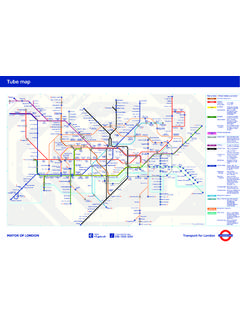
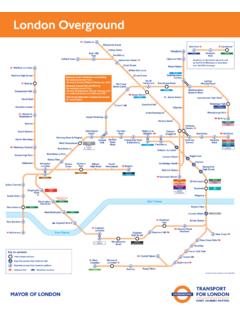
3 The guide includes information on Freedom Pass, ascheme that allows free travel around London forpeople over 60 and eligible disabled included are full explanations of Journey Plannerand the Interactive Journey Map. These two facilities onthe Transport for London website allow you to planjourneys and check station information with your ownaccess requirements in have included the following maps for ease ofreference: Freedom Pass network Key bus routes in central London Tramlink map River map Tube map, including Docklands Light Railway Victoria Coach Station of these maps are correct as of July 2009. Please beaware that as transport services change, these maps willalso need to change. You can always request the mostup-to-date edition of all maps produced by TfL via our24 hour travel information helpline: 020 7222 and SecurityAs passenger numbers on the Capital s public transportnetwork are increasing and the rate of crime on thenetwork continues to fall, TfL is working in partnershipwith the British Transport Police (BTP), the City ofLondon Police (CoLP) and the Metropolitan PoliceService (MPS) to oversee the safety and security ofpassengers and staff on the is fully committed to making people feel safer andmore secure while travelling and reducing anti-socialbehaviour and to TfL s significant investment in keeping public transport a low-crime environment, the chance of you experiencing any form of crime on your journey is very low.
4 In fact, there are over 2,500 officers dedicated topatrolling the transport system in the Capital whoprovide a visible reassurance, 700 of these can be foundon the Tube. Additionally, there are over 600 RevenueInspectors with thousands of other members of staff onthe network to help you if you need assistance. CCTV is now fitted to all buses on the London BusNetwork, improving customer and staff safety andproviding evidence in the event of an incident. Over13,000 CCTV cameras are also available across LondonUnderground stations, covering ticket hall areas,walkways, platforms and trains with more being fitted aspart of our investment and refurbishment Tube, bus and Overground stations have Help Points which you can use to communicate withstation staff or the Police, and most have inductionloops for customers who use hearing the Tube, every carriage is fitted with passengeremergency alarms.
5 These when used will let the driverknow assistance is needed. If any part of the train is in astation when you pull it, the train will stop; otherwise itwill continue until it reaches the next station to makesure that you can be given the help you London buses CentreComm is the emergencycommand and control centre. Working side by side withthe Metropolitan Police control centre (MetroComm),CentreComm operates 24 hours a day, seven days aweek to respond to issues on the bus network . In an emergency, drivers can immediately contact thecontrol centre who would then liaise with the emergency , the transport network incorporates designelements to prevent and reduce crime and the fear of crime. Increasing safety and security on public transport is amajor priority for TfL, so be assured we will keepworking to keep our transport network a low crimeenvironment and reducing crime figures year on year.
6 3 BusesBuses are a highly accessible way to travel aroundLondon. All of London s 8,000 buses on normal routesare now low-floor, wheelchair accessible vehicles. The ramps on all buses must be in full working order at all times. Any bus with a defective ramp is taken outof service, so you are assured of full accessibility at all s buses are now fitted with iBus, the on-board next stop announcements. The system meanspassengers know exactly where their bus is and what the next stop and final destination will users are entitled to free travel on buses, as are Freedom Pass holders (see pages 21 to 23 for fulldetails). Children and young people under the age of 18in full-time education are also entitled to free travel by bus and/or other forms of transport can be planned on-line using Journey Planner on the TfLwebsite: (see pages 18 to 19 for fullinformation). Journey Planner enables you to planjourneys that do not involve the use of stairs, lifts you do not have access to the internet, up-to-dateinformation about bus routes, timetables and fares isavailable by calling the 24 hour travel informationhelpline 020 7222 Buses4 London BusesLondon BusesBus spider mapsIf you have access to the internet, you can view bus spider maps on the Transport for London These diagrammatic maps illustrate the fullrange of bus routes that serve areas throughout busesAll buses are low-floor vehicles (excluding Heritagebuses covering parts of routes 9 and 15), which meansthat the doorways are close to pavement level when thebus stops and the doors open.
7 This enables allcustomers, including people using wheelchairs, peoplewith buggies, people with assistance dogs, and peoplewith other mobility impairments, to get on and off buseseasily*.Every bus also has a retractable ramp, which connectsthe floor of the bus directly with the pavement, makingaccess possible for wheelchair users. If you re unable toboard a bus because of a broken ramp, please wait forthe next one, and tell Customer Services as soon aspossible on 0845 300 7000.* The wheelchair space on buses cannot take a wheelchairbigger than 70cm in width and 120cm in RoadEbury Bridge RoadRoyal Hospital RoadLower Sloane Streetational Army Museumal Road Flood Streetnt Albert Bridgeaufort Streetea Bridgester RoadSloane StreetHospital RoadEburyStreetEatonSquareSloaneSquareRo adSquare/CollegeadeetSloane StreetSloane SquareLupus StreetWestmoreland TerraceLupus StreetWinchester StreetLupus StreetPimlico SchoolPimlicoGrosvenor RoadGrosvenor PlaceHarrodsBrompton RoadBrompton SquarenyumsAlbertBelgrave RoadChurton StreetSloane StreetKnightsbridgeEbury BridgeSutherland StreetSunderland RowLupus StreetAlderney Street(not C10)
8 Ebury Bridge RoadChelsea Bridge RoadLister HospitalatterseaCrescentChelsea BridgeQueenstown RoadSopwith WaySloane StreetPont Streetng s Roadke of YorkSquare24 CAMDENCAMDENTOWNTOWNCITYCITYPIMLICOPIMLI COPIMLICOCHELSEACHELSEAKILBURNKILBURNKEN SINGTONKENSINGTONR iver ThamesOXFORDOXFORDSTREETSTREETPICCADILLY PICCADILLYWATERLOOWATERLOOELEPHANTELEPHA NT& CASTLE& CASTLEVAUXHALLVAUXHALLBATTERSEABATTERSEA BATTERSEAFINCHLEYFINCHLEYThe yellow tinted area includes everybus stop up to one-and-a-half milesfrom Victoria Main stops are (arrivals)VictoriaCoach Station(departures)London TravelInformation Centre Local CoachesTravel InformationCentreWestminsterCathedralUKP assportOfficeFountainSquareDepartmentof TransportBus Station baysABCD5 London BusesPassengers using wheelchairsOn all buses, there is room for one person using awheelchair. Wheelchairs can be accommodated upto a size of 70cm wide by 120cm long with amaximum weight of most buses you ll be boarding at the centredoors, where the ramp is located, so you might findit easier to position yourself a little way along thepavement, before the stop, to allow the driver to seeyou boarding the bus, the front doors will stayclosed so passengers getting on don t obstruct youas you board.
9 The centre doors will open sopassengers can get off. The centre doors will then beclosed and the wheelchair ramp extended. Once thecentre doors are opened, it s safe for you to boardthe bus. It s best to board forward as it makes iteasier to position yourself once on on board, position yourself in the wheelchairspace, with your back against the backrest and yourbrake on, to make sure your chair doesn t movewhen the bus does. To leave the bus, press the button with thewheelchair symbol on it, next to the wheelchairspace, shortly before your button has a distinct sound and a light will appearon the driver s dashboard to let him know yours is thenext stop. The bus will pull in close to the kerb. Thefront doors will stay closed to give you time to get centre doors will open so other passengers can getoff. The centre doors will close and the driver will extendthe ramp. The centre doors will reopen so you can leavethe bus.
10 If, however, the ramp goes out of service afteryou have boarded, it is the responsibility of the busoperator to ensure that you can leave the bus Buses6 Passengers with buggiesLow-floor buses are designed to allow buggies to remainunfolded in the wheelchair space. Please make sure thatbuggies are safely positioned with breaks applied withinthe designated area. For everyone s comfort and safety,unfolded buggies cannot travel in the BusesWheelchair users have priority over everyone else foruse of the wheelchair space, since this is the only placein which they can travel safely. If someone in awheelchair wishes to board, and the wheelchair space isoccupied by buggies, buggy users will be asked to foldthem and put them in the luggage space or keep them bytheir you use a buggy, you should be able to board any low-floor bus unless (in the driver s opinion) it is socrowded that there is no room for you to travel will only be refused admittance when it isabsolutely necessary.