Transcription of Your guide to EMERGENCY PREPAREDNESS
1 EMERGENCYPREPAREDNESSYour guide toin the Greater Kansas City regionPublished in cooperation with the Regional Homeland Security Coordinating CommitteePLATTERAYCASSLEAVENWORTHWYANDOT TEMIAMIJOHNSONJACKSONCLAYP reparedness Starts With You! PREPAREDNESS Starts With You!When disaster strikes, you may not have much time to respond. A spill of hazardous material could mean immediate evacuation. A winter storm could confine your family at home. An earthquake, tornado or any other disaster could cut off basic services gas, water, electricity and telephone for a disaster, local officials and relief workers will not be able to reach everyone immediately.
2 Help could come in hours, or it may take days. Will your family be ready?You ll cope best by preparing for disaster before it strikes. In this booklet, we offer simple guidelines that will help you and your family prepare for can happen anytime and anywhere. The time to prepare is now before disaster strikes. Make an EMERGENCY Plan ..20 Create a Supply Kit ..22 Seniors ..24 Children ..25 Special Needs ..26 Pet Safety ..27 Web Resources ..28 Volunteer Opportunities ..29 Your Evacuation Plan ..30 Utility Information ..31 Home Hazard Hunt ..32 Family Medical Information.
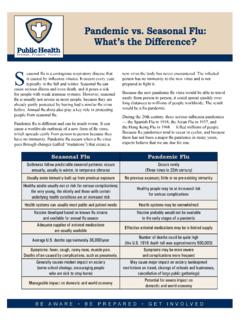
3 33 Important Numbers ..34 Local EMERGENCY Numbers ..35 EMERGENCY Management Offices ..36 Know the RisksCalling 9-1-1 ..2 NOAA All-Hazards Weather Radios ..3 Tornadoes ..4 Severe Thunderstorms ..5 Flash Floods ..6 Earthquakes ..7 Excessive Heat ..8 Drought ..9 winter Weather ..10 Power Outages/Food Safety ..11 Generator Safety ..12 Carbon Monoxide Dangers ..13 Fire ..14 HazMat/Sheltering in Place ..15 Terrorism ..16 Transportation Safety ..17 Pandemic Flu ..18 First Aid ..19 Get of ContentsTable of ContentsCalling 9-1-1 Calling 9-1-1 Call 9-1-1 to stop a crime, to report a fire, to save a life or anytime an EMERGENCY response is required by law enforcement, fire or EMERGENCY personnel.
4 You should call 9-1-1 anytime you believe there is an actual EMERGENCY . If you are unsure, call 9-1-1 and the dispatcher will make the final determination. When you call 9-1-1 to report an EMERGENCY , the dispatcher will ask you five basic questions: Where is this happening? When did this happen? What is happening now? Why? Who is involved? Is anyone injured?Be prepared to tell the dispatcher the exact location of the EMERGENCY and give a clear description of what is don t call 9-1-1 to report that electricity or other utilities are off; to notify authorities of traffic jams; to inquire about government services; or for general information.
5 If you accidentally dial 9-1-1, stay on the line and explain to the dispatcher. Otherwise the dispatcher will have to call you All-Hazards RadiosNOAA All-Hazards RadiosNOAA (National Oceanic and Atmospheric Administration) all-hazards weather radios provide constant, up-to-date weather information. During severe weather, the National Weather service broadcasts a special tone that activates weather radios in affected areas. You can program your radio to sound warnings for specific sounding alarms inside homes, schools and businesses, all-hazards weather radios can alert people who are indoors and save lives.
6 Project Community Alert is a community-wide effort to distribute all-hazards weather radios in the Greater Kansas City area. The Metropolitan EMERGENCY Managers Committee partners with local Price Chopper grocery stores to sell the radios at a low cost. While these radios are primarily used for severe weather alerts, authorities can also use them to issue warnings about other types of emergencies, such as chemical spills or biological more information about Project Community Alert, visit are capable of tremendous destruction. Be alert for watches and warnings in your area.
7 Tornado safety tips Take your EMERGENCY kit with you to the lowest level possible in a structure. Put as many walls between you and the outside as you can. Avoid windows and glass. In a basement, stay under a center support beam, a stairwell or heavy piece of furniture. If you have no basement, go to a small interior room (bathroom or closet) away from outside walls and windows. If a tornado is visible when driving, you may be able to drive out of its path by moving at right angles to the tornado. Otherwise, stay in your car with your seat belt on and head below window glass.
8 Avoid seeking shelter under bridges or overpasses. Mobile homes offer no protection from tornadoes. Get to a safe shelter if Warning: A tornado has been sighted or indicated by weather Watch: Tornadoes are possible in your area. Remain alert. Find out what counties are in the watch area by listening to your NOAA all-hazards radio or local ThunderstormsSevere ThunderstormsNot all thunderstorms are classified as severe, but all are dangerous. Thunderstorms may include strong winds, lightning, hail, heavy rain, flooding, downbursts and tornadoes. Although they are most likely in spring and summer, they can occur year round.
9 Thunderstorm safety tips If you can hear thunder, go indoors. Avoid using electrical appliances and stay off the phone except in emergencies. Do not take a bath or a shower during a thunderstorm. If you are caught outdoors, find a low spot away from trees, fences and poles. If you are boating or swimming, get to land and find shelter immediately!During a thunderstorm, each flash of cloud-to-ground lightning is a potential killer. If you feel your skin tingle or your hair stand on end, squat low on the balls of your feet, with your hands on your knees and your head between them.
10 The 30-30 rule: If there s 30 seconds or less between a flash of lightning and the sound of thunder, seek shelter immediately. Wait at least 30 minutes after the last clap of thunder before leaving shelter. floods can occur within minutes or hours of excessive rainfall. Whether you are driving or walking, if you come to a flooded road, the National Weather Service advises you to Turn Around Don t Drown. Even six inches of fast-moving floodwater can knock you off your feet, and a depth of two feet will float your car. Flood Safety Tips Monitor your NOAA all-hazards weather radio or local television and radio stations for weather-related information.