Chapter 13 Microbiological Criteria
environmental contamination. Generic E.coli (EC) A group of bacteria that live in the intestines and are shed in the faeces of man and food producing animals. ... Microbiological criteria should be used in validation and verification of procedures based on
Download Chapter 13 Microbiological Criteria

Information
Domain:
Source:
Link to this page:
Documents from same domain
FINAL REPORT Risk Modelling Of Food Fraud …
www.food.gov.ukfood fraud from activities such as ... was asked to suggest a mechanism to risk assess broad areas of vulnerability to fraud in a ... Identify any other fraud risk ...
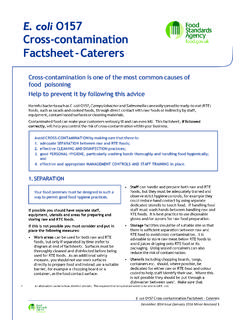
E. coli O157 Cross-contamination - food.gov.uk
www.food.gov.ukCross-contamination is one of the most common causes of food poisoning Help to prevent it by following this advice ... standards: BS EN 1276 or BS EN 13697; or other standards that meet the same conditions and requirements. E. coli O157 Cross-contamination Factsheet - Caterers

Chapter 1 Introduction - food.gov.uk
www.food.gov.ukMeat Industry Guide Page 3 | Chapter 1 – Introduction April 2018 • Legal requirement – relevant extracts from Food Standard legislation with which FBOs must comply. This information is displayed in green boxes. • Compliance – actions which must be completed by FBOs in order to comply with the relevant legislation. This information is identified by an orange heading.
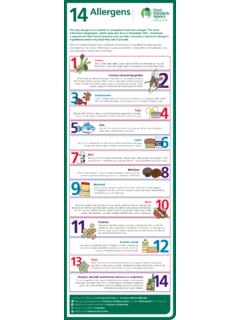
Eggs 5 - food.gov.uk
www.food.gov.ukingredients used in any food they sell or provide. There are 14 major allergens which need to be mentioned (either on a label or through provided information such as menus) when they are used as ingredients in a food.
ROF Assurance Framework and National Inspection Strategies
www.food.gov.ukof the Regulating Our Future (ROF) Programme and describes the impact for the FSA of introducing new assurance frameworks into the delivery model and the opportunity this presents to align activities.
Chapter 13 Microbiological Criteria - food.gov.uk
www.food.gov.ukThe Microbiological Criteria Regulation 2073/2005 establishes microbiological criteria for certain micro-organisms and provides rules to be complied with by food business operators when implementing the general and specific hygiene measures referred to in Article 4 of Regulation
Food Information Regulations 2014: Summary guidance for ...
www.food.gov.ukFood Information Regulations 2014: Summary guidance for food business operators and enforcement officers in Scotland, Wales and Northern Ireland.
Recording Forms & Additional Resources
www.food.gov.ukRECORDING FORMS & ADDITIONAL RESOURCES / 5 . ISSUE 7 $35,/ 2019. SC4 – Hot Hold/Display Records (For food to be held hot for more than 2 hours) SIGNED CTION OMMENTS/A C ORE TEMP* er 6 hrs. C. aft on display . ORE . s. C TEMP* after 4 hr on display . ORE . s. C TEMP* after 2 hr on display . O TIME INT HOT HOLD FOOD TE DA. NOTE: *Keep …
Advice to businesses selling food online (final)
www.food.gov.ukAdvice to businesses selling food online 1 December 2016 Advice to businesses selling food online This factsheet aims to help businesses who sell food online understand their obligations under food law – including the need to register as a food business . Registering as a food business . If you are selling food online it is a legal requirement to
SAFE METHOD: REHEATING - Food Standards Agency
www.food.gov.ukFood will take longer to reheat if you use equipment before it has preheated. This means . that recommended reheating times in recipes or manufacturer’s instructions might not be long enough. If you are reheating food in a microwave, follow the product . manufacturer’s instructions, including advice on standing and stirring.
Related documents
Guidelines for Assessing the Microbiological Safety of ...
assets.publishing.service.gov.uk5.1 Microbiological methodology 15 5.2 Environmental samples 16 Section 6 Tables 16 Table 1 Guidance on the interpretation of results for detection of bacterial pathogens (the hazard) in ready-to-eat foods placed on the market 17 Table 2 Guidance on the interpretation of results for enumeration of bacterial pathogens (the hazard)

Environmental Monitoring and FSMA Compliance
safefoodalliance.comenvironmental pathogen or for an appropriate indicator organism, if contamination of a ready-to-eat food with an environmental pathogen is a significant hazard, by collecting and testing environmental samples”. ... Microbiological ...
Fundamentals of an Environmental Monitoring Program
store.pda.orgThis document was created to aid in the establishment of an environmental control and monitoring . program that is meaningful, manageable, and defendable. This revision updates microbiological and particulate control concepts and principles as they relate to facilities involved in the manufacture of
Accreditation for Microbiological Laboratories
www.eurachem.orgenvironmental microbiological testing, the general principles may be ap plied to other areas. Furthermore, it may also be of use in medical laboratories where ISO 15189[2] applies, as well as in R&D laboratories. ISO/IEC 17025 remains the authoritative document and, in cases of dispute, accreditation bodies will adjudicate on unresolved

Third edition - WHO
www.who.int2. Microbiological risk assessment 7 Specimens for which there is limited information 8 Risk assessment and genetically modified microorganisms 8 3. Basic laboratories – Biosafety Levels 1 and 2 9 Code of practice 9 Laboratory design and facilities 12 Laboratory equipment 14 Health and medical surveillance 16 Training 16 Waste handling 17