
Chapter 16 – Structural Dynamics - Memphis
• To introduce procedures for numerical integration in time, including the central difference method, Newmark'smethod, and Wilson's method. • To describe how to determine the natural frequencies of bars by the finite element method. • To illustrate the finite element solution of a time-dependent bar problem. Chapter 16 – Structural Dynamics
Download Chapter 16 – Structural Dynamics - Memphis

Information
Domain:
Source:
Link to this page:
Documents from same domain
Chapter 11 SEISMIC DESIGN CRITERIA - Civil …
www.ce.memphis.eduP1: JsY ASCE003-11.tex ASCE003/SIE-v1.cls September 29, 2005 17:5 Chapter 11 SEISMIC DESIGN CRITERIA 11.1 GENERAL 11.1.1 Purpose. Chapter 11 presents criteria for the design and
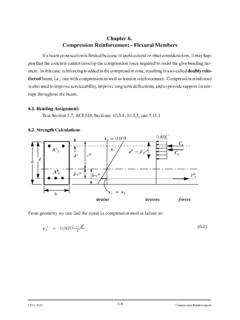
Chapter 6. Compression Reinforcement - Flexural …
www.ce.memphis.eduCIVL 4135 118 Compression Reinforcement Chapter 6. Compression Reinforcement - Flexural Members Ifabeamcrosssectionislimitedbecauseofarchitecturalorotherconsiderations,itmayhap-
Review of Engineering Fundamentals - University …
www.ce.memphis.eduReview of Engineering Fundamentals CIVL 4197. Course Format ... FE Chemical 853 77% FE Civil 4,874 70% FE Electrical & Computer 1,217 …

ASCE Requirements for Citations f13 - Civil …
www.ce.memphis.eduASCE Requirements for Citations Books Feld, J. and Carper, K. (1997). Construction Failure, 2nd Ed., Wiley, New York. Book references must include author, book title, publisher, and the publisher’s

2 - Aggregate Gradation and Sampling - Civil …
www.ce.memphis.eduCIVL 3137 3 Gradation Analysis percent coarser or percent retained percent finer or percent passing
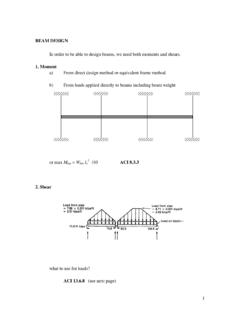
BEAM DESIGN - University of Memphis
www.ce.memphis.edu6 2. SHEAR DESIGN IN FLAT PLATES AND FLAT SLABS When two-way slabs are supported directly by columns, as in flat slabs and flat plates, or when slabs carry concentrated loads, as in footings, shear near the columns is of critical
Topic 14 - Foundation Design - Civil Engineering
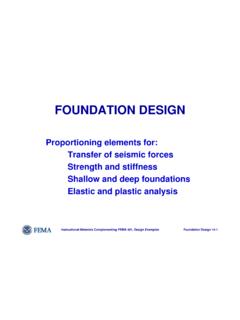
www.ce.memphis.eduInstructional Materials Complementing FEMA 451, Design Examples Foundation Design 14-7 Reinforced Concrete Footings: Basic Design Criteria (concentrically loaded) d/2 …
Curing Concrete, Chapter 12 - The University of …
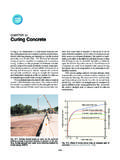
www.ce.memphis.edu221 Chapter 12 Curing Concrete 3. Methods that accelerate strength gain by supplying heat and additional moisture to the concrete. This is usually accomplished with live steam, heating coils,

AAA CE4135 ver2 - Civil Engineering
www.ce.memphis.eduCIVL 4135 Chapter 1. Introduction • 2 A problem unique to the design of reinforced concrete structures is the need to detail each member throughout.

Aggregates for Concrete - Department of Civil …
www.ce.memphis.eduT 27). The range of particle sizes in aggregate is illustrated in Fig. 5-4. The aggregate particle size is determined by using wire-mesh sieves with square openings.
Related documents

Gretl User's Guide
gretl.sourceforge.netGretl User’s Guide Gnu Regression, Econometrics and Time-series Library Allin Cottrell Department of Economics Wake Forest University Riccardo “Jack” Lucchetti

Numerical Methods for Partial Differential Equations
skim.math.msstate.eduNumerical Methods for Partial Differential Equations Seongjai Kim ... In the approximation of derivatives, we consider the Taylor series expansion and the curve-fitting as two of most popular tools. This chapter begins with ... case that the solution must be represented as a continuous function rather

Differential Equations for Engineers
www.math.hkust.edu.hkEuler method, which is a simple numerical method for solving an ode. Not all first-order differential equations have an analytical solution, so it is useful to understand a basic numerical method. Then the analytical solution methods for separable and linear equations are explained. We follow the dis-cussion of each theory with some simple ...
Numerical Methods for Engineers
wp.kntu.ac.ir29.2 Solution Technique 854 29.3 Boundary Conditions 860 29.4 The Control-Volume Approach 866 29.5 Software to Solve Elliptic Equations 869 Problems 870 CHAPTER 30 Finite Difference: Parabolic Equations 873 30.1 The Heat-Conduction Equation 873 30.2 Explicit Methods 874 30.3 A Simple Implicit Method 878 30.4 The Crank-Nicolson Method 882
LECTURES IN BASIC COMPUTATIONAL NUMERICAL ANALYSIS
web.engr.uky.edunumerical linear algebra; e.g., solution of systems of ordinary differential equation initial value problems by implicit methods, solution of boundary value problems for ordinary and partial dif- ferential equations by any discrete approximation method, construction of splines, and solution of

Chapter 2 Errors in Numerical Methods
www.engr.mun.caAnalytical solution: an exact answer in the form of a mathematical expression in terms of the variables associated with the problem. 2) Numerical solution: an approximate numerical value (a number) for the solution. For a problem to be solved numerically, you may choose several numerical methods which differ in accuracy, time of calculation.

UNCONSTRAINED MULTIVARIABLE OPTIMIZATION
www.ou.eduthis may require more computer time than finite differencing to get derivatives. For nonsrnooth functions, a function-values-only method may. be more successful than using a derivative-based method. We first describe some simple nonderivative methods and then present a series of methods that use derivative information. We