Chapter 8 Foundation Design
The overall process for geotechnical design is addressed in Chapters 1 and 23. For design of structure foundations, the overall WSDOT design process, including both the geotechnical and structural design functions, is as illustrated in Figure 8-1. WSDOT Geotechnical Design Manual M 46-03.09 Page 8-1 December 2013
Download Chapter 8 Foundation Design

Information
Domain:
Source:
Link to this page:
Documents from same domain
Chapter 6 Seismic Design
www.wsdot.wa.govChapter 6 Seismic Design 6.1 Seismic Design Responsibility and Policy 6.1.1 Responsibility of the Geotechnical Designer The geotechnical designer is responsible for providing geotechnical/seismic input

Project Management Manual - wsdot.wa.gov
www.wsdot.wa.govCommunication Management Plan [Output/Input] The document that describes: the communications needs and expectations for the project; how and in what format information will be
Project Risk Management Guide
www.wsdot.wa.govProject Management Online Guide in the Risk Management Plan spreadsheet. Larger, more complex projects may wish to use more robust analysis techniques via Monte Carlo simulation models.
Chapter 6 Storm Drains - Washington State …
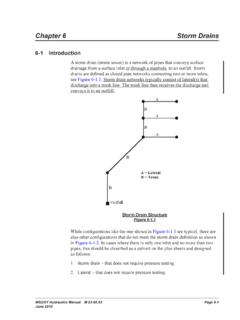
www.wsdot.wa.govWSDOT Hydraulics Manual M 23-03.03 Page 6-1 June 2010 Chapter 6 Storm Drains 6-1 Introduction A storm drain (storm sewer) is a network of pipes that conveys surface

Cost Estimating Manual for Projects
www.wsdot.wa.govWSDOT Cost Estimating Manual for Projects M 3034.03 Page i April 2015 Foreword WSDOT’s vision is to be the best at providing a sustainable and
Maintenance Manual - Washington State …
www.wsdot.wa.govForeword Reliable, well-maintained highway transportation facilities are essential to the well being of the state, its citizens, and its commerce.
Chapter 4 Soil and Rock Classification and Logging
www.wsdot.wa.govChapter 4 Soil and Rock Classification and Logging 4.1 Overview The detailed description and classification of soil and rock are an essential part of the
Chapter 1310 Intersections
www.wsdot.wa.govIntersections Chapter 1310 Page 1310-2 WSDOT Design Manual M 22-01.14 July 2017 1310.02 Design Considerations Consider all potential …
Chapter 25 Right of Way - Washington State …
www.wsdot.wa.govRight of Way Chapter 25 Page 25-2 WSDOT Local Agency Guidelines M 36-63.36 June 2018.11 WSDOT Services – At the earliest possible date, the local agency should notify
Chapter 1510 Pedestrian Facilities
www.wsdot.wa.govWSDOT Design Manual M 22-01.10 Page 1510-1 July 2013 Chapter 1510 Pedestrian Facilities 1510.01 General. 1510.02 References. 1510.03 Definitions
Related documents
Geotechnical Manual (GEO)
onlinemanuals.txdot.govThe purpose of this manual is to guide districts in geotechnical investigati on and design for project development. Recommendations, background information, and examples for geotechnical designs ... require more borings or geophysical survey. Grade Separations. If the structure borings indicate soft surface soils (fewer than 10 blows per
Geotechnical & Geoenvironmental Site Investigation
www.bajr.orgGeotechnical Siteworks :: October 2006 Geotechnical and Geoenvironmental Site Investigation – A Short Guide 4 Phase 2 – Intrusive Ground Investigation The selection of ground investigation methods depends firstly on the characteristics of the ground, the objectives, and the technical requirements, but may be influenced by the

2017 Geotechnical Engineering Manual Geotechnical ...
dot.state.mn.usGeotechnical Manual. 2017 Geotechnical Manual

Geophysical and Geotechnical Investigation Methodology ...
www.boem.govgeophysical and geotechnical equipment and employing a series of standardized methodologies. Offshore renewable energy includes, but is not limited to, wind, wave, ocean current, solar, and hydrogen production energy. The Atlantic OCS is considered by BOEM to be a “Frontier Region” where little ...
Earthquake geotechnical engineering practice
www.building.govt.nzEarthquake geotechnical engineering is a highly specialised field. As such the investigations for this need to be developed and carried out by an appropriately qualified and experienced geotechnical engineer or engineering geologist (referred to herein as the geotechnical professional). For the purposes of this document ‘geotechnical

Earthquake Hazards in India and Mitigation Methods
www.caneus.org20 Earthquake Hazards in India India has a long history of earthquake occurrences. About 65% of the total area of the country is vulnerable to seismic damage of buildings in varying degrees. Most vulnerable areas - the Himalayan and sub-Himalayan regions, Kutch and the Andaman and Nicobar Islands. Seismic regions: 1. Kashmir and Western Himalayas - Covers the

Chapter 9 Embankments - Washington State Department of ...
www.wsdot.wa.govThe key geotechnical issues for design and construction of embankments include stability and settlement of the underlying soils, the impact of the stability and ... geophysical testing • moisture-density relationship • • • liquefaction delineation of soft soil deposits potential for subsidence (karst, • • •