
Chemical Engineering Thermodynamics II - CPP
6.4Calculation of Equilibrium Constant from Data 6-11 Example 6.4-1: Equilibrium constant for methanol reaction 6-11 Example 6.4-2: Equilibrium constant for nitrogen oxide 6-12 6.5Variation of Equilibrium Co nstant with Temperature 6-14 Example 6.5-1: Methanol reaction at 60oC 6-17 Example 6.5-2: Pyrolysis of methanol 6-18
Download Chemical Engineering Thermodynamics II - CPP

Information
Domain:
Source:
Link to this page:
Documents from same domain
1 Lecture 2 Simple Molecular Orbitals - Sigma and …
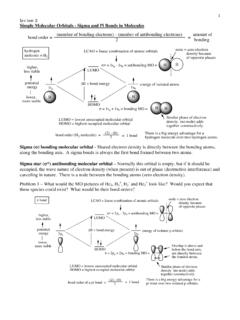
www.cpp.edu1 Lecture 2 Simple Molecular Orbitals - Sigma and Pi Bonds in Molecules bond order = (number of bonding electrons) - (number of antibonding elect rons)
COLLEGE OF EDUCATION & INTEGRATIVE STUDIES …
www.cpp.eduCOLLEGE OF EDUCATION & INTEGRATIVE STUDIES CREDENTIAL SERVICES OFFICE 3801 West Temple Avenue, Pomona, CA …

Packing Checklist - California State Polytechnic ...
www.cpp.eduTraveler’s Name Departure Date Destination Days Local Weather travel essentials toiletries Clothes men women Basics Dressy Casual Outerwear & Accessories
The Chinese Cultural Revolution: A …
www.cpp.edu1 The Chinese Cultural Revolution: A Historiographical Study In 1965, Mao Zedong believed that his socialist campaign was being threatened by Liu
Chem 201/Beauchamp Topic 1: …
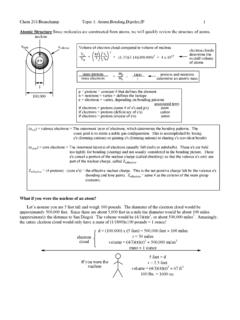
www.cpp.eduChem 201/Beauchamp Topic 1: Atoms,Bonding,Dipoles,IP 2 Effective nuclear charge - Zeffective is the net positive charge felt by the valence electrons (bonding and lone pair electrons). It can be estimated by subtracting the number of …
Drawing in MicroStation - California State …
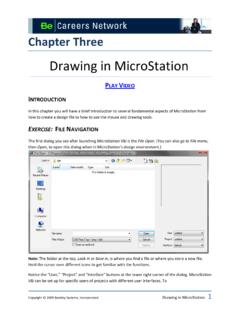
www.cpp.eduon grid points (every inch) or to a keypoint on an object . To snap to a keypoint, the reset and data buttons are pressed simultaneously. A large cursor will appear
Suggestions for success in college - Cal Poly Pomona
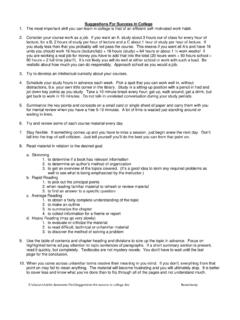
www.cpp.eduZ:\classes\Adobe document files\Suggestions for success in college.doc Beauchamp e. Review your notes carefully within one day. f. You might leave 1/3 (vertical) of each note page blank to fill in later with any extra details you want to add.
Chapter 1 Lecture Notes Significant Figures and …
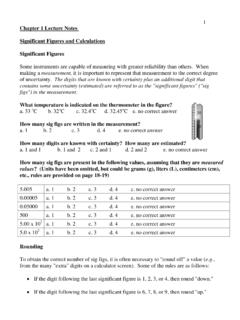
www.cpp.edu2 • If the digit following the last significant figure is a 5 (with no other non-zero digits after the 5), round down if the last sig fig is even and round up if the last sig fig is odd. The rule about "5’s" is necessary to avoid statistical bias in your calculations. Statistically
Bio-Organic Mechanism Game - Cal Poly Pomona
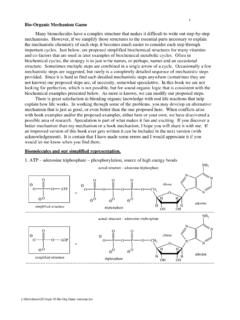
www.cpp.edu1 y:\files\classes\201\topic 10 Bio-Org Game reactions.doc Bio-Organic Mechanism Game Many biomolecules have a complex structure that makes it …
spice - Cal Poly Pomona
www.cpp.edu220-spice-notes.tex Page 3 The Circuit Description A circuit description in spice, which is frequently called a netlist, consists of a statement defining each circuit element. Connections are described by naming nodes.
Related documents
Reaction Kinetics - University of Oxford
vallance.chem.ox.ac.uk4. The units of the rate constant A point which often seems to cause endless confusion is the fact that the units of the rate constant depend on the form of the rate law in which it appears i.e. a rate constant appearing in a first order rate law will have different units from a rate constant appearing in a second order or third order rate law.

Problem Set #12, Chem 340, Fall 2013
www2.chem.uic.eduChloroacetic acid has a dissociation constant of K a = 1.38 10–3. (a) Calculate the degree of dissociation for a 0.0825 m solution of this acid using the Debye–Hückel limiting law. (b) Calculate the degree of dissociation for a 0.0825 m solution of this acid that is also 0.022 m in KCl using the Debye–Hückel
CHAPTER 14 Acids and Bases - Tamkang University
www2.tku.edu.tw4. For the stepwise dissociation of aqueous H3PO4, which of the following is not a conjugate acid–base pair? a) HPO42– and PO43– b) H3PO4 and H2PO4– c) H2PO4– and HPO42– d) H2PO4– and PO43– e) H3O+ and H2O ANS: d) H2PO4– and PO 4 3– PAGE: 14.1,7 5. What is the equilibrium constant for the following reaction? N3– + H3O+ HN3 ...

Heat Capacity of Gases at Constant Pressure: Cp
chemistry.montana.eduHeat Capacity of Gases at Constant Pressure: C p What happens if we heat the gas while . 1 atm. keeping p = p. ext = constant = 1 bar? p = 1 atm. q. But, expansion does some. work, which has a . cooling effect. ∆T is smaller C = q/∆T, so C is larger. Heating make the molecules. move faster, making the . pressure increase, which . causes ...
Wet Etching - University of Washington
labs.ece.uw.edu– Acetic acid has a lower dielectric constant than water • 6.15 for CH 3 COOH versus 81 for H 2 O • This produces less dissociation of the HNO 3 and yields a higher oxidation power for the etch. – Acetic acid is less polar than water and can help in achieving proper wetting of slightly hydrophobic Si wafers.

Sample Exercise 17.1 Calculating the pH When a Common Ion ...
www.austincc.educonstant expression: (The dissociation constant for. CH 3 COOH at 25 ºC is from Appendix D; addition of CH 3 COONa does not. change the value of this constant.) Substituting the equilibrium -constant. concentrations from our table into. the equilibrium expression gives

Common Equations Used in Chemistry - St. Cloud Technical ...
www.sctcc.eduLaw of Mass Action - General expression of equilibrium constant: K = [C]c[D]d [A]a[B]b Relationship between Kp and Kc: Kp = Kc(0.0821*T)∆ n The equilibrium constant for the overall reaction is given by the product of the equilibrium constants for the individual reactions: Kc = K’cK”c Ion-product constant of water: Kw = [H+][OH-]