
Clinical Opiate Withdrawl Scale
Clinical Opiate Withdrawal Scale Introduction The Clinical Opiate Withdrawal Scale (COWS) is an 11-item scale designed to be administered by a clinician. This tool can be used in both inpatient and outpatient settings to reproducibly rate common signs and symptoms of opiate withdrawal and monitor these symptoms over time. The summed
Download Clinical Opiate Withdrawl Scale

Information
Domain:
Source:
Link to this page:
Documents from same domain
Understanding Drug Abuse and Addiction
nida.nih.govdisruptive effects. Research shows that combining addiction treatment medications with behavioral therapy is the best way to ensure success for most patients. Treatment ... influences the reward circuit and the ability to learn. When the optimal concentration of glutamate is altered by drug abuse, the
Alcohol Use Disorders Identification Test (AUDIT)
nida.nih.govscreening tool developed by the World Health Organization (WHO) to assess alcohol consumption, drinking behaviors, and alcohol-related problems. Both a clinician-administered version (page 1) and a self-report version of the AUDIT (page 2) are provided. Patients should be encouraged to answer the AUDIT questions in terms of standard drinks. A chart
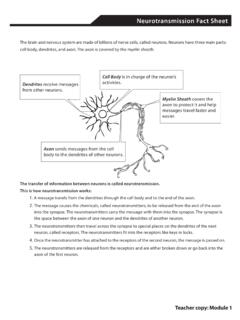
Neurotransmission Fact Sheet
nida.nih.govCorpus callosum connects the two hemispheres Hemispheres of the cerebral cortex: Lobes of the cerebral cortex: Module 1 Located below the crown of the head Processes sensory information from the whole body (information about pain, touch, and pressure) Located behind the temples and just above the ears In charge of making sense of the
Sample Patient Agreement Forms - nida.nih.gov
nida.nih.govPatient Agreement Form. Patient Name: Medical Record Number: Addressograph Stamp: AGREEMENT FOR LONG TERM CONTROLLED SUBSTANCE PRESCRIPTIONS The use of (print names . of medication(s)) may cause addiction and is only one part of the treatment . for: (print name of condition—e.g., pain, anxiety, etc.). The goals of this medicine are:

Commonly Abused Drugs Chart
nida.nih.govencourage and support HIV screening and inform patients that highly active antiretroviral therapy (HAART) has proven effective in combating HIV, including among drug-abusing Prescription Medications This chart may be reprinted. Citation of the source is appreciated.
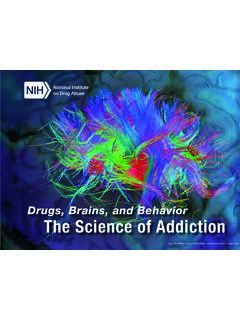
Drugs, Brains, and Behavior The Science of Addiction
nida.nih.govdrug abuse takes on individuals, families, and communities. Despite these advances, many people today do not understand why people become addicted to drugs or how drugs change the brain to foster compulsive drug use. This booklet aims to fill that knowledge gap by providing scientific information about the disease of drug
Preventing Drug Use Among Children and Adolescents …
nida.nih.govincluding the underage use of legal drugs (e.g., tobacco or alcohol); the use of illegal drugs (e.g., marijuana or heroin); and the inappropriate use of legally obtained substances (e.g., inhalants), prescription medications, or over-the-counter drugs (Johnston et al. 2002). Prevention programs should address the type of drug abuse problem in the
Instituto Nacional sobre el Abuso de Drogas Cómo Prevenir ...
nida.nih.govInstituto Nacional sobre el Abuso de Drogas 3 tales como la edad, el sexo, y la cultura, para mejorar la eficacia del programa.21 Planificación de la Prevención Programas para la familia Los programas de prevención para las familias deben

National Institute on Drug Abuse Principles of Drug Abuse ...
nida.nih.govTreatment for Criminal Justice Populations | A Research-Based Guide National Institute on Drug Abuse. 3. 1 1. Drug addiction is a brain disease that affects behavior. Drug addiction has well-recognized cognitive, behavioral, and physiological characteristics that contribute to …
Medicines and Drugs: What's Helpful, What's Harmful - …
nida.nih.gov• One option is to read the riddles to the class and have them solve the riddles as a group. • Another is to divide the class into teams, read the riddles, and then give a point to whichever team comes up with the correct answer first. • You could also divide the students into groups of three and have each student
Related documents

The Guide to Clinical Preventive Services 2014
www.ahrq.govClinical Considerations section of each USPSTF recommendation statement helps clinicians by offering practical information so they can tailor these recommendations to individual patients. We strongly encourage clinicians to visit the USPSTF Web site and read the complete recommendation statements for services relevant to their patients. Additional
ICH HARMONISED GUIDELINE
database.ich.orgThe affirmative decision of the IRB that the clinical trial has been reviewed and may be conducted at the institution site within the constraints set forth by the IRB, the institution, Good Clinical Practice (GCP), and the applicable regulatory requirements. 1.6 Audit
2020 Clinical Fellowship Skills Inventory
www.asha.orgClinical Fellowship Skills Inventory (CFSI) Prior to completing the CFSI below, CF mentors and Clinical Fellows must verify that their CF Mentor’s CCC-SLP is current and that s/he has met the requirements to be eligible to supervise in accordance with the 2020 Standards, and must read the Guide to the ASHA Clinical Fellowship. CF mentors and CFs

Completing the ASHA Clinical Fellowship Experience
www.asha.orgclinical fellow! The CF experience is a minimum of 36 weeks of full-time clinical work, totaling no less than 1,260 hours. • Confi rm your mentor will complete the minimum hours of direct and indirect observation. • Participate in feedback sessions with your mentor at the end of each segment of the CF. • Earn a rating of “2” or better in
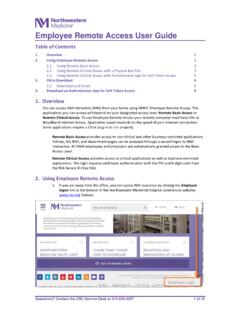
Employee Remote Access User Guide
www.nm.orgRemote Clinical Access provides access to clinical applications as well as business-restricted applications. The login requires additional authentication with the PIN and 6-digit code from the RSA Secure ID (Key fob). 2. Using Employee Remote Access 1. If you are away from the office, you can access NM resources by clicking the Employee
Clinical Guidance on COVID-19 Vaccines for people with ...
www.bccdc.caClinical Guidance on COVID-19 Vaccines for people with hematological malignancy at any stage of treatment and/or who have undergone hematopoietic stem cell transplant or CAR-T cell therapy in the past 6 months This guidance is intended for healthcare providers and is based on known evidence as of December 4, 2021.