DSM-5 UPDATE
Bipolar I Disorder, Current or most recent episode hypomanic [effective October 1, 2015] In partial remission . In full remission . Depressive Disorders .....3 7 . Disruptive Mood Dysregulation Disorder [effective October 1, 2016]
Download DSM-5 UPDATE

Information
Domain:
Source:
Link to this page:
Documents from same domain
DSM-5 UPDATE
dsm.psychiatryonline.orgupdate supplement to diagnostic and statistical manual of mental disorders, fifth edition dsm-5 ® august 2015
DSM-5 Coding Update - Psychiatry
dsm.psychiatryonline.orgThis supplement and the digital versions of DSM-5 ® (including the DSM-5 Diagnostic Criteria Mobile App, DSM-5® ®eBook, and DSM-5 on PsychiatryOnline.org) are updated periodically to reflect any coding updates, changes, or corrections, and any other information necessary for compensation in mental health practice.
now used for coding purposes in the United ... - DSM Library
dsm.psychiatryonline.orgneurocognitive disorders should be coded in the same way as their respective probable major neurocognitive disorders, as noted below. For excerpts of the DSM-5 sections with these changes, see pp. 10–22 of this
QUINTA EDICIÓN - Psychiatry
dsm.psychiatryonline.orgTrastorno Código original a utilizar hasta el 30 de septiembre de 2016 Nuevo código a utilizar a partir del 1 de octubre de 2016 Trastorno de comunicación social (pragmático) F80.89 F80.82 Trastorno de desregulación disruptiva del estado de ánimo F34.8 F34.81 Trastorno disfórico premenstrual N94.3 F32.81 Otro trastorno depresivo especificado F32.8 F32.89
Related documents

Persistent Depressive Disorder (Dysthymia) 300.4 (F34.1)
images.pearsonclinical.comWith persistent major depressive episode: Full criteria for a major depressive episode have been met throughout the preceding 2-year period. With intermittent major depressive episodes, with current episode: Full criteria for a major depressive episode are currently met, but there have been periods of at least 8 weeks in at least the

Regulations and Documentation Templates Guidance
www.omh.ny.gov821 Major Depressive Disorders & Other Psychoses 822 Disorders of Personality & Impulse Control 823 Bipolar Disorders 824 Depression Except Major Depressive Disorder ... episode of illness, or within 365 days of the last provided service. Notes: …

MAJOR DEPRESSIVE DISORDER: TREATMENT PLAN
smarthwc.comall depressive symptoms under control as quickly as possible. Achieving only partial improvement is associated with a higher incident of relapse, poorer quality of life, and adverse health outcomes. Most patients will need a comprehensive treatment plan to achieve remission (the resolution of all or most symptoms) of their depressive episode.
Management of Major Depressive Disorder
www.bop.govdeveloped major depressive disorder can evolve subacutely over days to weeks, or more slowly after a prodromal period of anxiety and mild depression that lasts for weeks to months. Between 50–85% of persons with a single episode of major depressive disorder will suffer another episode during their lifetime.
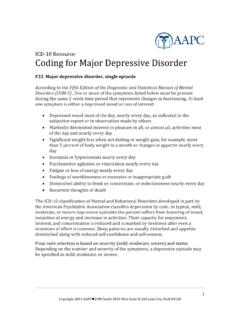
ICD‐10 Resource: Coding for Major Depressive Disorder
www.hamiltonhealth.comF32.4 Major depressive disorder, single episode, in partial remission F32.5 Major depressive disorder, single episode, in full remission F33 Major depressive disorder, recurrent A recurrent depressive disorder is characterized by repeated episodes of depression without any history of independent episodes of mood elevation and increased energy ...
VA/DoD Major Depressive Disorder Clinical Practice …
www.healthquality.va.gov7% of the population —had at least one major depressive episode in the past year. Women are 70% more likely than men to experience depression, and young adults aged 18–25 are 60% more likely to have depression than people aged 50 or older.[3] Depressive disorders often start at a young age; they
Statistical - Postpartum
www.postpartum.netattempts. To count toward a Major Depressive Episode symptoms must either be newly present or must have clearly worsened compared with the person’s pre-episode status. The symptoms must persist for most of the day nearly every day for at least 2 consecutive weeks. The episode must be accompanied by clinically