
Establishing Native Grasses - USDA
Native grasses, either alone or in combination with native forbs or wildflowers, can be planted to reduce soil erosion and sedimentation, improve water quality, and provide wildlife habitat. Stiff-stemmed native warm-season grasses can serve as a barrier to erosion and can trap sediment carried by water and wind.
Download Establishing Native Grasses - USDA

Information
Domain:
Source:
Link to this page:
Documents from same domain
Planting Guide - USDA
www.nrcs.usda.govPlanting Guide Plant Materials <http://plant-materials.nrcs.usda.gov/> ... The Quicksand, Kentucky Plant Materials Center has relocated to Alderson, ...
[Federal Register: August 31, 2007 (Volume 72, …
www.nrcs.usda.gov[Federal Register: August 31, 2007 (Volume 72, Number 169)] ... From the Federal Register Online via GPO Access ... DEPARTMENT OF AGRICULTURE .
Urban Hydrology for Small Watersheds - Home | …
www.nrcs.usda.govNatural Resources Conservation Service Conservation Engineering Division Technical Release 55 June 1986 Urban Hydrology for Small Watersheds TR-55

NATIONAL ENGINEERING HANDBOOK 210-VI …
www.nrcs.usda.govNATIONAL ENGINEERING HANDBOOK 210-VI STRUCTURAL ENGINEERING PART 636 AMENDMENT WY-1 SUBJECT: ENG – CHAPTER 52, “STRUCTURAL DESIGN OF FLEXIBLE CONDUITS” Purpose: To provide all field offices a copy of Chapter 52 and supplemental information
Community Garden Guide - USDA
www.nrcs.usda.gov(You will need a planting guide to determine recommended spacing, depth etc. Contact your extension office if you need a guide.) If you’ve made adjustments to the per person needs in column 2, you can estimate the amount to plant using column 4.
Tillage Equipment - USDA
www.nrcs.usda.govAbout this guide... The purpose of the guide is to help you identify commonly used farm equipment. Its color photos and line drawings will facilitate communication between NRCS and our clients by
Dealing with Difficult People - USDA
www.nrcs.usda.govDifficult People Defined and Explained The Hostile Aggressive The bully that always needs to be right. They tend to be abusive, abrupt, accusatory, intimidating,
Soil Data Viewer 6.2 User Guide - USDA
www.nrcs.usda.govSOIL DATA VIEWER OUTPUT ... relieving the user from the burden of querying the soil database, processing the data and then linking the ... After downloading this ...
November 2008 Multi-story Cropping - USDA
www.nrcs.usda.govNovember 2008 The diagram above identifies the effects expected to occur when this practice is applied according to NRCS practice standards and specifications.
hop bush Plant Fact Sheet - USDA
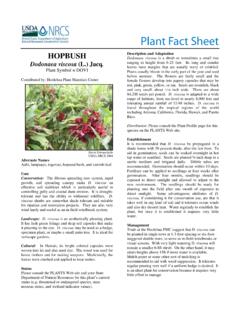
www.nrcs.usda.govbefore summer. The flowers are fairly small and the female flowers develop into papery capsules that may be red, pink, green, yellow, or tan. Seeds are roundish, black and very small; about 1/16 inch wide. There are about 84,200 seeds per pound. D. viscosa is adapted to a wide range of habitats, from sea-level to nearly 8,000 feet and
Related documents
A Native History Of Kentucky
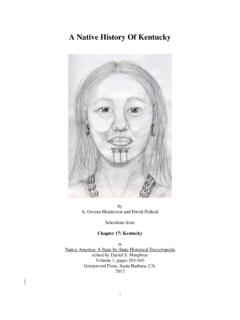
heritage.ky.govplants like sunflower and goosefoot, the latter two were among several local plants domesticated by native gardening groups. Later, the plants native farming groups grew, like corn and beans, were mainly cultigens that had been domesticated in the tropics earlier. Throughout much of this period, native groups were organized tribally.
Medicinal Plants of North America
vetmed.tamu.eduLong history of use as a medicinal plants by many Native Americans including the Blackfeet, Menominee, Ojibwa, Winnebago and others. Used for skin infections and minor wounds infections caused by dental caries and gingivitis excessive flatulence

Native Plants for Coastal Dune Restoration
www.nrcs.usda.govNative Plants for Coastal Dune Restoration: What, When, and How for Florida . ii. Acknowledgements: Special thanks to those people who reviewed the initial drafts of this publication, particularly Erin Myers, Biologist, and Rosalind Moore, Wetlands Specialist, USDA, NRCS Ecological Sciences
Native plant recommendations - Tennessee
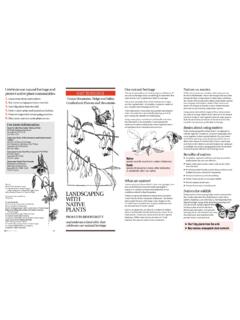
www.tn.govNative plants have many inherent qualities and adaptive traits that make them aesthetically pleasing, practical, and ecologically valuable for landscaping. Using native plants contributes to the health and often the restoration of an ecosystem. Landscaping with natives in an urban setting helps restore regional charac-
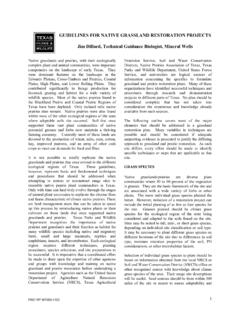
Guidelines for Native Grassland Restoration Projects
tpwd.texas.govForbs or broadleaf herbaceous plants represent a major component of native grasslands/prairies and may be seasonally co-dominant. Annual and perennial species are found in native prairies and are responsible for the majority of species diversity. Planning native grassland/prairie projects should also incorporate initial
NATIVE AMERICAN - Advocate Health Care
www.advocatehealth.comNative Americans whether they keep traditional (i.e. old customs and spiritual beliefs) or more modern (United Methodist, Baptist, Roman Catholic, etc.) do share the common belief that there is one Creator of the heavens and earth and that all parts of creation (plants,

Identification of Milkweeds in Texas
tpwd.texas.govNative and non-native milkweeds (Asclepias spp.) recorded from Texas. Non-native milkweeds are noted with an asterisk (*) next to the species name. Common Name Scientific Name Page Blunt-leaf milkweed Asclepias amplexicaulis 6 Sand milkweed Asclepias arenaria 7 Antelopehorns Asclepias asperula 8 Bract milkweed Asclepias brachystephana 9
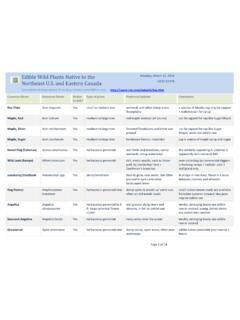
Edible Wild Plants Native to the Northeast U.S. and ...
massland.orgEdible Wild Plants Native to the Northeast U.S. and Eastern Canada Monday, March 12, 2018 ... Pawpaw Asimina triloba No* small tree (to 20 ft.) understory tree in rich woods non-native to MA - Native to Zone 7+, but will grow in sheltered microclimates to Zone 5 Orache Atriplex spp. Yes* annual herb Grows at/just above the "wrack"