
Experiment 6 — Thin-Layer Chromatography
Thin-layer chromatography (TLC) is an extremely valuable analytical technique in the organic lab. It provides a rapid separation of compounds, and thereby gives an indication of the number and nature of the components of a mixture. TLC can also be used to identify compounds
Download Experiment 6 — Thin-Layer Chromatography

Information
Domain:
Source:
Link to this page:
Documents from same domain
Math 17: Intro Stats Final Exam - amherst.edu
www.amherst.eduFinal Exam December 19, 2010 ... When describing center and spread, which set of summary statistics should we use? Mean and standard deviation, or median and IQR?
Economic, social, and environmental sustainability …
www.amherst.eduEconomic, social, and environmental sustainability in development theory and urban planning practice A. D. BASIAGO* ... impact on the environment can be embodied in

Special Section: Global Environmental History - …
www.amherst.eduSpecial Section: Global Environmental History Beginning in the Belly, ... An Environmental History of Africa, 1800-1990 (Portsmouth, NH: Heinemann, 1999).
2008 Vertebrate Organ Systems - Amherst College
www.amherst.eduLab 9 - Vertebrate Organ Systems Objectives: ... An overview of how to approach your dissection of the fetal pig is on the next two pages.
creation of the “queer” Butler‟s Gender Trouble ...
www.amherst.eduof race, class, the environment and the nation. Texts include feminist philosopher Judith Butler‟s Gender Trouble , anthropologist Kamala Visweswaran‟s Fictions of Feminist
The Fundamental Laws of Electromagnetism - amherst.edu
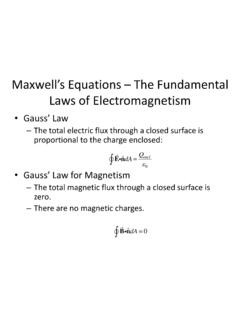
www.amherst.eduMaxwell’s Equations –The Fundamental Laws of Electromagnetism •Faraday’s Law –When the magnetic flux through some loop (C) changes, it induces an emf around the loop proportional to the rate at which the flux changes. –If loop has N turns, the emf is N times larger.
Localization in Epilepsy - amherst.edu
www.amherst.eduLocalization in Epilepsy DimitrisG.Placantonakis,MD, PhD, TheodoreH.Schwartz,MD* Pharmacologic therapy represents the first line of treatment of epilepsy and is effec-tive in most patients.
![[Fill-in-the-blank] tests measure and multiple choice ...](/cache/preview/5/e/e/9/b/f/1/7/thumb-5ee9bf17e1539b3a63fea89d05cad259.jpg)
[Fill-in-the-blank] tests measure and multiple choice ...
www.amherst.eduThe self-reference effect refers to improved memory for information when: A) someone told the person directly B) the person saw the event first-hand C) that information holds personal meaning D) the person has been directly accused of something
Making Sense of Olive Oil: Simple Experiments To Connect ...
www.amherst.eduexperience oils: color, aroma, bitterness, and pungency. We also describe experiments to explore some of the characteristics of olive oil related to its status as a new health food.
Peanuts - Amherst College
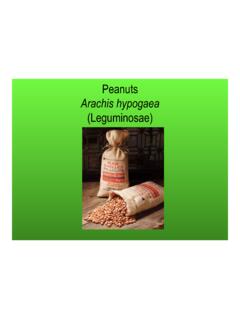
www.amherst.edu• Peanuts were spread to Africa, Europe, and Asia primarily by Portuguese traders • Peanuts were very likely spread to the United States through slave trade Origination
Related documents

Gas Chromatography-Mass Spectroscopy
cires1.colorado.eduGas chromatography-mass spectroscopy (GC-MS) is one of the so-called hyphenated analytical techniques. As the name implies, it is actually two techniques that are combined to form a single method of analyzing mixtures of chemicals. Gas chromatography separates the components of a mixture and

SEPARATION TECHNIQUES - Sepali's Chemistry Guide
chemguide.net• Mixtures that are suitable for separation by chromatography include inks, dyes and colouring agents in food. Method 1. Simple chromatography is carried out on paper. 2. A spot of the mixture is placed near the bottom of a piece of chromatography paper and the paper is then placed upright in a suitable solvent, eg water. 3.
Flash Column Chromatography Guide - MIT OpenCourseWare
ocw.mit.edu- Flash Column Chromatography Guide Overview: Flash column chromatography is a quick and (usually) easy way to separate complex mixtures of compounds. We will be performing relatively large scale separations in 5.301, around 1.0 g of compound. Columns are often smaller in scale than this and some of you will
Thin layer chromatography TLC
people.chem.umass.eduThin Layer Chromatography. Thin layer chromatography, or TLC, is a method for analyzing mixtures by separating the compounds in the mixture. TLC can be used to help determine the number of components in a mixture, the identity of compounds, and the purity of a compound.

Gel Permeation Chromatography (GPC) - Waters Corporation
www.waters.comChromatography (GPC) [ GPC Capabilities ] 2 In 1964 John C. Moore, of the Dow Chemical Company, published his work on the preparation of Gel Permeation Chromatography ... These innovations allow size-exclusion techniques to expand …

Thin Layer Chromatography (TLC) - Boston College
www.bc.eduboth paper and thin layer chromatography, you will work with a variety of developing solvents, and you will use several different techniques to visualize the spots of a chromatogram. Paper chromatography, which will be used to separate amino acids, is a form of partition chromatography (see LTOC page 253). Water, a component of the developing

Thin Layer Chromatography (TLC) Guide
ocw.mit.edu– Thin Layer Chromatography (TLC) Guide Overview: Thin Layer Chromatography (TLC) is an extremely useful technique for monitoring reactions. It is also used to determine the proper solvent system for performing separations using column chromatography. TLC uses a stationary phase, usually alumina or silica, that is highly

Paper Chromatography of Pigments in a Spinach Leaf
weissman.baruch.cuny.eduthe simplest of chromatography techniques called paper chromatography. Chromatography is an analytical method permitting the separation of a mixture into its molecular components. In this technique, a concentrated spot of the pigment mixture is deposited at one end of a …
Affinity Chromatography Principles and Methods Handbook
b3p.it.helsinki.fiAffinity chromatography in brief Affinity chromatography separates proteins on the basis of a reversible interaction between a protein (or group of proteins) and a specific ligand coupled to a chromatography matrix. The technique is ideal for a capture or intermediate step in a purification protocol and can be used