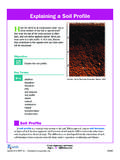
Explaining a Soil Profile
A soil profile is usually studied to a depth of 3 to 5 feet. To see the soil profile, soil cores may be taken or holes dug to expose the pro-file.
Download Explaining a Soil Profile

Information
Domain:
Source:
Link to this page:
Documents from same domain

Understanding Soil Texture and Structure
www.senecahs.orgSilt is the mid-size soil particle. Silt has good water-holding ability and good fertility char-acteristics. It feels like flour when dry and smooth like velvet when moist.
Plant Classification - Seneca High School
www.senecahs.orgCultivar Cultivars have distinguishing characteristics from the other plants in the species, but cultivars do not transfer those characteristics to offspring
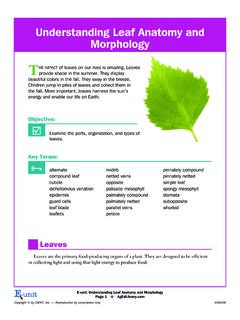
Understanding Leaf Anatomy and Morphology
www.senecahs.orgare responsible for most of the photosynthesis in the leaf and are called the palisade mesophyll. Located under the palisade mesophyll are loosely packed cells called the spongy mesophyll.

STHS Random Drug Testing Program Frequently Asked …
www.senecahs.orgFrequently Asked Questions Q: Why is this drug testing policy being put into place? A: Participation in extracurricular activities is a privilege, and participants need to be exemplars. The District also wants to foster health, safety, and the welfare of its students.
Plant Classification - Seneca High School
www.senecahs.orgPlant Divisions Tracheophyta or Spermophyta – Seed Producing plants that bear flowers – Pterodophyta - a class of Tracheophyta that does not produce seeds (Ferns, reproducing with spores) Thallophyta – Fungi and bacteria
Explaining a Soil Profile - senecahs.org
www.senecahs.orgA soil profile is a vertical cross section of the soil. The differences are developed from the interaction of such soil-forming factors as parent material, slope, native vegetation, weathering, and climate. As a soil ages, horizontal layers develop and changes result. The causes of these

Understanding Horticulture
www.senecahs.orgapples, and pears. Small fruits include strawberries, raspberries, and blueberries. Almonds, pecans, and walnuts are popular nut crops. OLERICULTURE The area of horticulture that involves the production of vegetable food crops is olericulture. Olericulture includes the planting, harvesting, storing, processing, and marketing of vegeta-ble crops.
Understanding Soil Texture and Structure
www.senecahs.orgSoil Structure Sand, silt, clay, and organic-matter particles in a soil combine with one another to form larger particles of various shapes and sizes. These larger particles, or clusters, are often referred to as aggregates. The arrangement of the soil particles into aggregates of various sizes and shapes is soil structure.

SPANISH I CURRICULUM GUIDE
www.senecahs.orgCurriculum Guide: SPANISH I Course of Study : Spanish Core Standard: Connections And Communities Level: 1 Standards for 21st Century Enduring Understandings Essential Questions 3.1 3.2 5.1, 5.2 ISBE 30A and 30B The study of language applies to many different content areas. In what ways are the other subject areas in the curriculum affected by
Understanding Leaf Anatomy and Morphology
www.senecahs.orgAxillary bud Stipule Stem Petiole Blade FIGURE 1. The major parts of a leaf. Dicots have leaves with veins that connect and branch from each other. Veins in a branch-ing pattern are called netted veins. A leaf with netted veins sometimes has several smaller
Related documents
Soil, Water and Forage Testing Laboratory D-494 Department ...
soiltesting.tamu.eduName _____ Establishment Grazing and Hay Soil, Water and Forage Testing Laboratory Department of Soil and Crop Sciences Texas AgriLife Extension Service
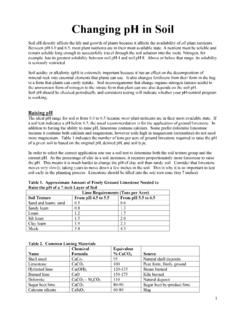
Changing pH in Soil
vric.ucdavis.edu1 Changing pH in Soil Soil pH directly affects the life and growth of plants because it affects the availability of all plant nutrients. Between pH 6.0 and 6.5, most plant …
COLLECTION OF SOIL SAMPLES - Crime Scene Investigator …
www.crime-scene-investigator.netBFS 23 1 PEB 13 (Rev. 8/89) COLLECTION OF SOIL SAMPLES INTRODUCTION: Naturally occurring soil is a complex and changing mixture of living organisms, decaying organic matter,
Soil pH and Nutrient Availability - Horiba
www.horiba.comIntroduction. Soil pH is a measure of the acidity or alkalinity in soils. In the pH scale, pH 7.0 is neutral. Below 7.0 is acidic and above 7.0 is basic or alkaline.
Soil Bulk Density as related to Soil Texture, Organic ...
www.ijsrp.orgInternational Journal of Scientific and Research Publications, Volume 3, Issue 2, February 2013 1 ISSN 2250-3153 www.ijsrp.org Soil Bulk Density as related to Soil Texture, Organic

STANDARD OPERATING PROCEDURE – BER-01
www.kdheks.govstandard operating procedure – ber-37. collection of soil vapor samples for analysis of volatile organic compounds . effective date: january 1, 2011

2 Soil Fertility Management - Organic Africa - Home
www.organic-africa.netAfrican Organic Agriculture Training Manual Module 02 Soil Fertility Management 3 2. Soils 2.1. What is soil? ‘Soil’ is the mantle (or layer) on the land surface that acts as a medium for plant