
Food traceability - Quick reference guide
KEY STEPS IN DEVELOPING A FOOD TRACEABILITY SYSTEM 1. THE SYSTEM You must be able to trace food/ingredients purchased from suppliers and then supplied to business customers (excluding food supplied to final consumer). 2. DEFINING BATCHES OF FOOD This will help to ensure good traceability and can limit the amount of food to be withdrawn/recalled. 3.
Download Food traceability - Quick reference guide

Information
Domain:
Source:
Link to this page:
Documents from same domain
FINAL REPORT Risk Modelling Of Food Fraud …
www.food.gov.ukfood fraud from activities such as ... was asked to suggest a mechanism to risk assess broad areas of vulnerability to fraud in a ... Identify any other fraud risk ...
E. coli O157 Cross-contamination - food.gov.uk
www.food.gov.ukCross-contamination is one of the most common causes of food poisoning Help to prevent it by following this advice ... standards: BS EN 1276 or BS EN 13697; or other standards that meet the same conditions and requirements. E. coli O157 Cross-contamination Factsheet - Caterers

Chapter 1 Introduction - food.gov.uk
www.food.gov.ukMeat Industry Guide Page 3 | Chapter 1 – Introduction April 2018 • Legal requirement – relevant extracts from Food Standard legislation with which FBOs must comply. This information is displayed in green boxes. • Compliance – actions which must be completed by FBOs in order to comply with the relevant legislation. This information is identified by an orange heading.
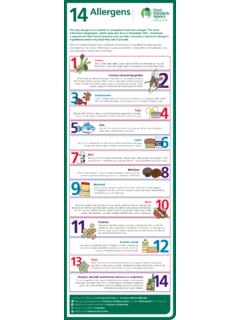
Eggs 5 - food.gov.uk
www.food.gov.ukingredients used in any food they sell or provide. There are 14 major allergens which need to be mentioned (either on a label or through provided information such as menus) when they are used as ingredients in a food.
ROF Assurance Framework and National Inspection Strategies
www.food.gov.ukof the Regulating Our Future (ROF) Programme and describes the impact for the FSA of introducing new assurance frameworks into the delivery model and the opportunity this presents to align activities.
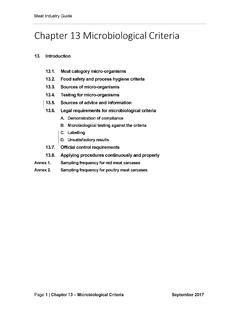
Chapter 13 Microbiological Criteria - food.gov.uk
www.food.gov.ukMeat Industry Guide Page 2 | Chapter 13 – Microbiological Criteria September 2017 13. Introduction The aim of the hygiene legislation is to ensure that food is produced safely.
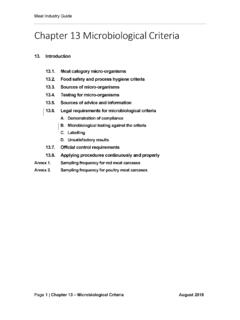
Chapter 13 Microbiological Criteria - food.gov.uk
www.food.gov.ukThe Microbiological Criteria Regulation 2073/2005 establishes microbiological criteria for certain micro-organisms and provides rules to be complied with by food business operators when implementing the general and specific hygiene measures referred to in Article 4 of Regulation
Food Information Regulations 2014: Summary guidance for ...
www.food.gov.ukFood Information Regulations 2014: Summary guidance for food business operators and enforcement officers in Scotland, Wales and Northern Ireland.
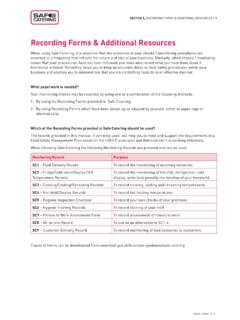
Recording Forms & Additional Resources
www.food.gov.ukRECORDING FORMS & ADDITIONAL RESOURCES / 5 . ISSUE 7 $35,/ 2019. SC4 – Hot Hold/Display Records (For food to be held hot for more than 2 hours) SIGNED CTION OMMENTS/A C ORE TEMP* er 6 hrs. C. aft on display . ORE . s. C TEMP* after 4 hr on display . ORE . s. C TEMP* after 2 hr on display . O TIME INT HOT HOLD FOOD TE DA. NOTE: *Keep …
Advice to businesses selling food online (final)
www.food.gov.ukAdvice to businesses selling food online 1 December 2016 Advice to businesses selling food online This factsheet aims to help businesses who sell food online understand their obligations under food law – including the need to register as a food business . Registering as a food business . If you are selling food online it is a legal requirement to
Related documents
Halal Assurance System
www.halal.gov.my2.8 Traceability The ability to verify the history, location or application of an item by means of documented recorded identification. The elements of traceability include of product, process and customer traceability. 2.9 Halal Critical Point (HCP) Critical points in the whole halal supply chain which if identified, controlled
Food Supplements Europe Guide to Good Manufacturing ...
foodsupplementseurope.orgAll businesses along the food supplement supply chain should ensure that the relevant sections are complied with. For example, distributors should undertake audits on the manufacturers to ensure compliance with good manufacturing practice. Manufacturers and distributors of food supplements should comply with all relevant EU and specific national

Lessons learnt from presence of N-nitrosamine impurities ...
www.ema.europa.eumanufacturers; and improve supply chain traceability of APIs in finished products. 5) Review requirements in the EU variations guideline for conditions/documentation for variations associated with adding or changing API manufacturers and manufacturing processes (including those documented in ASMFs and CEPs).
![[Geef de tekst op] [Geef de tekst op] [Geef ... - FSSC 22000](/cache/preview/f/c/0/f/f/d/b/c/thumb-fc0ffdbc6dff1e233697f45ae13000a5.jpg)
[Geef de tekst op] [Geef de tekst op] [Geef ... - FSSC 22000
www.fssc22000.comFood, feed, animal food and packaging transported and stored within the food chain 3.10 distribution 3.11 FEFO 3.12 FIFO 3.13 Food contact equipment 3.14 Food defense 3.17 integrity 3.18 label 3.21 Materials 3.22 Pre-packed goods 3.24 specification 3.27 traceability 3.30 vehicle

Version 4 - porkcdn.com
www.porkcdn.comProviding safe, wholesome food is the producer’s most important responsibility. Ensuring food safety is a complex undertaking that requires awareness of the role that everyone plays in the food chain. On the farm, many factors can affect the safety of pork, which is why today’s farming operations employ a wide variety

New Models for Sustainable Procurement - BSR
www.bsr.orgSupply chain transparency can contribute to a range of reputational and operational benefits for companies. The accepted theory is that transparency and disclosure enable companies to generate positive changes within their supply chains by making more information about the supply chain public and