
Food traceability - Quick reference guide
to determine if the food is unsafe and a course of action. The decision tree below outlines the process to follow. In some cases, you may be able to easily identify that a food is unsafe. However, not all hazards that might be found in food are specified in food safety regulations and therefore you may be required to carry out a risk assessment.
Download Food traceability - Quick reference guide

Information
Domain:
Source:
Link to this page:
Documents from same domain
FINAL REPORT Risk Modelling Of Food Fraud …
www.food.gov.ukfood fraud from activities such as ... was asked to suggest a mechanism to risk assess broad areas of vulnerability to fraud in a ... Identify any other fraud risk ...
E. coli O157 Cross-contamination - food.gov.uk
www.food.gov.ukCross-contamination is one of the most common causes of food poisoning Help to prevent it by following this advice ... standards: BS EN 1276 or BS EN 13697; or other standards that meet the same conditions and requirements. E. coli O157 Cross-contamination Factsheet - Caterers

Chapter 1 Introduction - food.gov.uk
www.food.gov.ukMeat Industry Guide Page 3 | Chapter 1 – Introduction April 2018 • Legal requirement – relevant extracts from Food Standard legislation with which FBOs must comply. This information is displayed in green boxes. • Compliance – actions which must be completed by FBOs in order to comply with the relevant legislation. This information is identified by an orange heading.
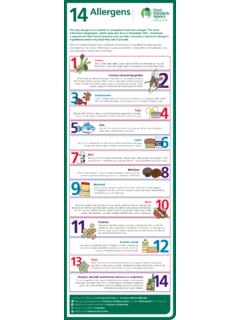
Eggs 5 - food.gov.uk
www.food.gov.ukingredients used in any food they sell or provide. There are 14 major allergens which need to be mentioned (either on a label or through provided information such as menus) when they are used as ingredients in a food.
ROF Assurance Framework and National Inspection Strategies
www.food.gov.ukof the Regulating Our Future (ROF) Programme and describes the impact for the FSA of introducing new assurance frameworks into the delivery model and the opportunity this presents to align activities.
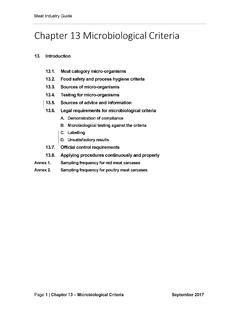
Chapter 13 Microbiological Criteria - food.gov.uk
www.food.gov.ukMeat Industry Guide Page 2 | Chapter 13 – Microbiological Criteria September 2017 13. Introduction The aim of the hygiene legislation is to ensure that food is produced safely.
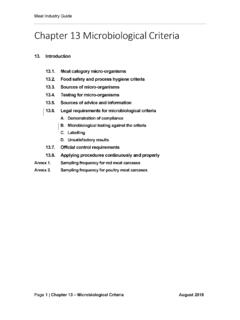
Chapter 13 Microbiological Criteria - food.gov.uk
www.food.gov.ukThe Microbiological Criteria Regulation 2073/2005 establishes microbiological criteria for certain micro-organisms and provides rules to be complied with by food business operators when implementing the general and specific hygiene measures referred to in Article 4 of Regulation
Food Information Regulations 2014: Summary guidance for ...
www.food.gov.ukFood Information Regulations 2014: Summary guidance for food business operators and enforcement officers in Scotland, Wales and Northern Ireland.
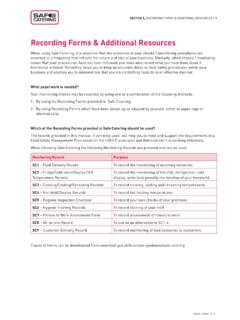
Recording Forms & Additional Resources
www.food.gov.ukRECORDING FORMS & ADDITIONAL RESOURCES / 5 . ISSUE 7 $35,/ 2019. SC4 – Hot Hold/Display Records (For food to be held hot for more than 2 hours) SIGNED CTION OMMENTS/A C ORE TEMP* er 6 hrs. C. aft on display . ORE . s. C TEMP* after 4 hr on display . ORE . s. C TEMP* after 2 hr on display . O TIME INT HOT HOLD FOOD TE DA. NOTE: *Keep …
Advice to businesses selling food online (final)
www.food.gov.ukAdvice to businesses selling food online 1 December 2016 Advice to businesses selling food online This factsheet aims to help businesses who sell food online understand their obligations under food law – including the need to register as a food business . Registering as a food business . If you are selling food online it is a legal requirement to
Related documents

January 2021 FOOD SAFETY CULTURE
food.okstate.eduproblem. How will food safety culture be communicated? • Conduct daily or weekly meetings to ask for experiences and best practices that can be shared between employees. • Communicate food safety program updates in regular man-agement meetings. January 2021. TECH. TALK.

Guide to Developing a Food Defense Plan for Food ...
meathaccp.wisc.eduA Food Defense Plan helps you identify steps you can take to minimize the risk that food products in your establishment will be intentionally contaminated or altered. A plan increases preparedness. Although the plan should be in place at all times, it may be particularly helpful during emergencies.

PLANNING SUCCESSFUL COMMUNITY-BASED FOOD …
nesfp.nutrition.tufts.educommunity food security and local food systems in a comprehensive fashion. For example, the ... CFP RFA itself cites problem proposals as those “with little evidence of strategic planning and ... This guide is designed to help you and partners develop a well-planned initiative – not just to

More reporting formats .3 Writing effectively
www.fao.orgFood Security Communications Toolkit 144 What should a policy brief do? A policy brief should: Provide enough background for the reader to understand the problem. Convince the reader that the problem must be addressed urgently. Provide information about alternatives (in an objective brief). Provide evidence to support one alternative (in an advocacy brief).
Global food losses and food waste - Food and Agriculture ...
www.fao.orgpower and prices of food) than a supply problem. Improving the efficiency of the food supply chain could help to bring down the cost of food to the consumer and thus increase access. Given the magnitude of food losses, making profitable investments in reducing losses could be one way of reducing the cost of food.