Gram Stain Protocols
that Typhoid bacilli were easily decolorized after the treatment with crystal violet and iodine, when ethanol was added. We now know that those organisms that stained blue/violet with Gram’s stain are gram-positive bacteria and include Streptococcus pneumoniae (found in the lungs of those with pneumonia) and Streptococcus pyogenes (from
Download Gram Stain Protocols

Information
Domain:
Source:
Link to this page:
Documents from same domain
Catalase Test Protocol - American Society for Microbiology
asm.orgThe catalase test is also valuable in differentiating aerobic and obligate anaerobic bacteria, as anaerobes are generally known to lack the enzyme (8, 9). In this context, the catalase test is valuable in differentiating aerotolerant strains of Clostridium, which are catalase negative, fromBacillus, which are catalase positive (8). Theory
Luria Broth (LB) and Luria Agar (LA) Media and Their Uses ...
asm.orgDownloaded from www.asmscience.org by IP: 71.127.236.37 On: Mon, 12 Aug 2019 20:18:49 American Society for Microbiology © 2016 1 Luria Broth (LB) and Luria Agar (LA ...
Indole Test Protocol
asm.orgDissolve components and store solution at room temperature in a brown glass bottle. To test for indole production, inoculate a 4 -ml tryptone broth tube with one loopful of culture. After 24 to 48 hours of incubation, add to the culture 1.0 ml of either ether or xylene. Mix well and then allow organic solvent to rise to the top of the medium.
Blood Agar Plates and Hemolysis Protocols
asm.org"Blood Agar" is not a consistently defined medium. The term "blood agar" generally refers to an enriched base medium to which defibrinated mammalian blood has been added. In the US "blood agar" is usually prepared from Tryptic Soy Agar or Columbia Agar base with 5% Sheep blood. Rabbit or horse blood may be
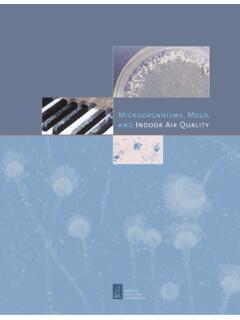
Microorganisms, Mold, and Indoor Air Quality
asm.orgings with poor indoor air quality anywhere in this or other countries. 2 Water stained ceiling tile from an office building with chronic roof leakage. Culture of Trichoderma showing fluffy,spreading growth on the agar surface. Visible mold growing on a floor joistin the crawl space under a residence with chronic water seepage.
Kirby-Bauer Disk Diffusion Susceptibility Test Protocol
asm.orgInstitute Performance Standards for Antimicrobial Disk Susceptibility Tests: Approved Standards 9th Edition (3). RECIPE Sterile saline in 2-ml tubes 0.5 McFarland standard Wickerham card Mueller-Hinton agar plates, 100 mm or 150 mm Caliper or ruler Antibiotic disksb Forceps Antibiotic disk dispenser (optional) 18- to 24-ho Vortex
Urease Test Protocol
asm.orgPeptone 1 g Dextrose 1 g Sodium chloride 5 g Potassium phosphate, monobasic 2 g Urea 20 g Phenol red 0.012 g Agar 15 to 20 g To prepare the urea base, dissolve the first six ingredients in 100 ml of distilled water and filter sterilize (0.45-mm pore size). Suspend the agar
Oxidase Test Protocol - American Society for Microbiology
asm.orgFIG. 3. On the left is oxidase-positive Pseudomonas aeruginosa and on the right is oxidase-negative Escherichia coli. Both organisms were rubbed on a dry filter that was then treated with one drop of Kovács oxidase reagent. Direct Plate Method (7, 10) (Fig. 4) 1. Grow a fresh culture (18 to 24 hours) of bacteria on nutrient agar
Related documents

API & ID 32
www.biomerieux-diagnostics.comGRAM BACILLI ORIENTATION TESTS COCCI Anaerobes Sporulated bacilli Small bacilli of characteristic shape Partial discoloring (granulation) Short bacilli with rounded ends Mobile at 20 - 25°C Immobile at 37°C Large sporulated bacilli Very tapered bacilli Clostridium 20 A RapiD ID 32 A Coryne Listeria CHB Corynebacterium Listeria Bacillus 50 CHL ...

Diagnosis of Tuberculosis Disease
www.cdc.govThe presence of acid-fast-bacilli (AFB) on a . sputum smear. or other specimen often indicates TB disease. Acid-fast microscopy is easy and quick, but it does not confirm a diagnosis of TB because some acid-fast-bacilli are not . M. tuberculosis. Therefore, a . culture. is done on all initial samples to confirm the diagnosis. (However, a ...

Bacillus cereus - Food Standards
www.foodstandards.gov.au1 Bacillus cereus Bacillus cereus is a spore forming bacterium that produces toxins that cause vomiting or diarrhoea. Symptoms are generally mild and short-lived (up to 24 hours). B. cereus is commonly found in the environment (e.g. soil) as well as a variety of foods.
Identifying Cultured Bacteria - TeachEngineering
www.teachengineering.orgfilamentous = bacilli that occur in long threads vibrios = short, slightly curved rods fusiform = bacilli with tapered ends * Prokaryote arrangement of cells *Bacteria sometimes occur in groups, rather than singly, and the single cell’s shape influences the cell arrangements that they form as the bacterial cells divide.
Leprosy and Armadillos - Centers for Disease Control and ...
www2c.cdc.govantibiotic treatment kills all the bacilli in the host within only a couple of weeks of therapy. The regimen itself takes 6 months to 2 years to complete, and the bacilli are only slowly cleared from the body. Since a preferred site of infection is the peripheral nerve, these residual bacilli can