Indole Test Protocol
Agar 2.0 g Bromcresol purple 0.02 g Bring to 1 liter with distilled water. Heat mixture to boiling to dissolve agar. Cool to 50°C. Dispense in 4.0 to 5.0 ml aliquots in 16-mm test tubes. Cap tubes and autoclave at 121°C under 15 psi pressure for 15 minutes. After autoclaving, allow tubes to cool in an upright position to form the agar deep.
Download Indole Test Protocol

Information
Domain:
Source:
Link to this page:
Documents from same domain
Catalase Test Protocol - American Society for Microbiology
asm.orgThe catalase test is also valuable in differentiating aerobic and obligate anaerobic bacteria, as anaerobes are generally known to lack the enzyme (8, 9). In this context, the catalase test is valuable in differentiating aerotolerant strains of Clostridium, which are catalase negative, fromBacillus, which are catalase positive (8). Theory
Luria Broth (LB) and Luria Agar (LA) Media and Their Uses ...
asm.orgDownloaded from www.asmscience.org by IP: 71.127.236.37 On: Mon, 12 Aug 2019 20:18:49 American Society for Microbiology © 2016 1 Luria Broth (LB) and Luria Agar (LA ...
Blood Agar Plates and Hemolysis Protocols
asm.org"Blood Agar" is not a consistently defined medium. The term "blood agar" generally refers to an enriched base medium to which defibrinated mammalian blood has been added. In the US "blood agar" is usually prepared from Tryptic Soy Agar or Columbia Agar base with 5% Sheep blood. Rabbit or horse blood may be
Gram Stain Protocols
asm.org7. Wash slide in a gentile and indirect stream of tap w ater until no color appears in the effluent and then blot dry with absorbent paper. 8. Observe the results of the staining procedure under oil immersion using a Brightfield microscope. At the completion of the Gram Stain, gram-negative bacteria will stain pink/red and gram-positive ...
Microorganisms, Mold, and Indoor Air Quality
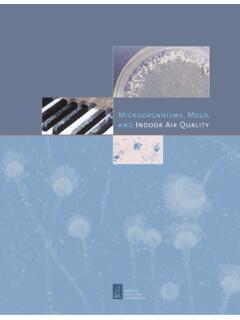
asm.orgings with poor indoor air quality anywhere in this or other countries. 2 Water stained ceiling tile from an office building with chronic roof leakage. Culture of Trichoderma showing fluffy,spreading growth on the agar surface. Visible mold growing on a floor joistin the crawl space under a residence with chronic water seepage.
Kirby-Bauer Disk Diffusion Susceptibility Test Protocol
asm.orgInstitute Performance Standards for Antimicrobial Disk Susceptibility Tests: Approved Standards 9th Edition (3). RECIPE Sterile saline in 2-ml tubes 0.5 McFarland standard Wickerham card Mueller-Hinton agar plates, 100 mm or 150 mm Caliper or ruler Antibiotic disksb Forceps Antibiotic disk dispenser (optional) 18- to 24-ho Vortex
Urease Test Protocol
asm.orgPeptone 1 g Dextrose 1 g Sodium chloride 5 g Potassium phosphate, monobasic 2 g Urea 20 g Phenol red 0.012 g Agar 15 to 20 g To prepare the urea base, dissolve the first six ingredients in 100 ml of distilled water and filter sterilize (0.45-mm pore size). Suspend the agar
Oxidase Test Protocol - American Society for Microbiology
asm.orgFIG. 3. On the left is oxidase-positive Pseudomonas aeruginosa and on the right is oxidase-negative Escherichia coli. Both organisms were rubbed on a dry filter that was then treated with one drop of Kovács oxidase reagent. Direct Plate Method (7, 10) (Fig. 4) 1. Grow a fresh culture (18 to 24 hours) of bacteria on nutrient agar
Related documents

THE IDENTIFICATION OF TWO UNKNOWN BACTERIA
openlab.citytech.cuny.edu• Blood Agar (BA) to determine the hemolytic properties of both unknown bacteria • MacConkey Agar (MAC) that will select for the gram-negative bacterium and also determine whether or not it is a lactose fermenter. Colonies produced on this plate will also be used for biochemical testing to determine its identification.
Lactobacilli MRS Agar • Lactobacilli MRS Broth
legacy.bd.comLactobacilli MRS Agar and Lactobacilli MRS Broth are based on the formulations of deMan, Rogosa and Sharpe.1 These media were shown by the authors to support luxuriant growth of all lactobacilli from oral, fecal, dairy and other sources. Principles of the Procedure Lactobacilli MRS Agar and Lactobacilli MRS Broth contain peptone and dextrose.

BD TCBS Agar
legacy.bd.comBD TCBS Agar, preparado según la fórmula de Kobayashi et al, es una modificación del medio selectivo de Nakanishi4,5. Todas las especies de Vibrio patógenas para los seres humanos, excepto V. hollisae, crecen en este medio. Este medio se recomienda para el aislamiento de las
Isolation &Characterization of Bacteria
www.gbiosciences.comthe LB agar plate. Gentle press the swab on to the LB agar plate neat one edge. Add 10 l sterile water or PBS to the area where the swab was placed and then streak the plate as described in step 5. 3. Leave the tube at room temperature for 1 minute. 4. Write your group name on the bottom of the agar plate.
Kirby-Bauer Disk Diffusion Susceptibility Test Protocol
asm.orgagar for 100-mm plates and 60 ml of liquid agar for 150-mm plates, but in any case to a measured depth of 4 mm). Plates that are too shallow will produce false susceptible results as the antimicrobial compound will diffuse further than it should, creating larger zones of .
MacConkey Agar - himedialabs.com
www.himedialabs.comMacConkey Agar is the earliest selective and differential medium for cultivation of coliform organisms (1, 2). Subsequently MacConkey Agar and Broth have been recommended for use in microbiological examination of foodstuffs (3) and for direct plating / inoculation of water samples for coliform counts (4).

Preparation of culture media, agar plates, antibiotics and ...
2015.igem.orgWith 200 ml LB-agar you can make 8 plates (1 l for ~40 plates). • For 200 ml LB-agar, the correct amounts are: 1 g yeast extract 2 g NaCl 2 g peptone 3 g bacto-agar • Collect them in in a bottle and add 200 ml of H. 2. O. • Autoclave the LB-agar at 121 °C for 20 minutes (sterilisation). 2.2 . Pouring the plates