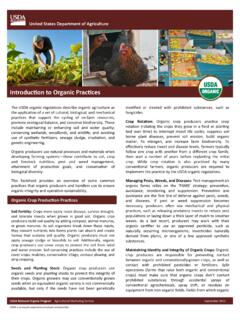
Introduction to Organic Practices
organic seeds and planting stocks to protect the integrity of their crops. Organic growers may use conventionally grown seeds when an equivalent organic variety is not commercially available, but only if the seeds have not been genetically modified or treated with prohibited substances, such as fungicides.
Download Introduction to Organic Practices

Information
Domain:
Source:
Link to this page:
Documents from same domain
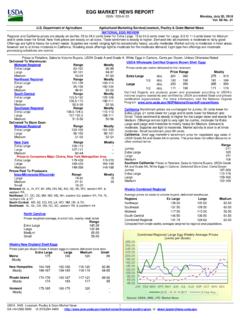
EGG MARKET NEWS REPORT - Agricultural …
www.ams.usda.govEGG MARKET NEWS REPORT ISSN 1520-6122 Monday, July 30, 2018 Vol. 65 No. 31 U.S. Department of Agriculture Agricultural Marketing ServiceLivestock, Poultry & Grain Market …
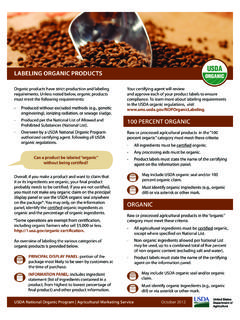
LABELING ORGANIC PRODUCTS
www.ams.usda.govOrganic products have strict production and labeling requirements. Unless noted below, organic products must meet the following requirements: - Produced without excluded methods (e.g., genetic
United States Department of Agriculture …
www.ams.usda.govUnited States Department of Agriculture Agricultural Marketing Service, Science & Technology Pesticide Data Programs SOP NO.: PDP-ADMIN Page 2 of 36
United States Department of Agriculture Directive
www.ams.usda.govUnited States Department of Agriculture . Agricultural Marketing Service . Directive . 4120.2 11/29/2016 . TRAINING AND DEVELOPMENT POLICY FOR AMS SUPERVISORS, MANAGERS,
Organization for Economic Cooperation and …
www.ams.usda.govOrganization for Economic Cooperation and ... The Organization for Economic Cooperation and Development (OECD) ... variety for increase in the United States. The OECD ...
Agricultural Marketing Service Understanding …
www.ams.usda.govAgricultural Marketing Service Understanding Food Quality Labels. Continuous Inspection Grades. ... USDA is recognized for assuring that eggs meet the U.S. grade standards for quality and sanitary processing. Eggs are categorized into one of three consumer grades: • Grade AA – The freshest and highest quality eggs will receive a Grade AA…
U.S. Standards for Grades of Butter
www.ams.usda.govUnited States Standards for Grades of Butter ... U.S. Grade AA. (b) U.S. Grade A. (c) U.S. Grade B. ... Flavor is the basic quality factor in grading butter and is determined organoleptically by taste and smell. The flavor characteristic is identified and together with its relative intensity is rated according to the. 2
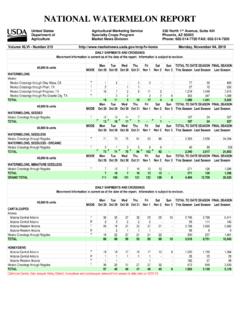
WATERMELONS, MINIATURE SEEDLESS - ORGANIC …
www.ams.usda.govUnited States Agricultural Marketing Service 2202 Monterey St. Suite 104-F Department of Specialty Crops Program Fresno, ... Mon Tue Wed Thu Fri Sat Sun FINAL SEASON
Regulatory Harmonized Food Safety Standard
www.ams.usda.govaffect food safety. Operation develops or completes a Food Safety Plan for all locations of ... procedures, standard operating procedures (SOPs) and policies shall
Excipients - Agricultural Marketing Service
www.ams.usda.govExcipients Livestock ... the CRC Handbook of Food, Drug, and 57 Cosmetic Excipients ... 81 the active pharmaceutical ingredient dose is dispersed evenly across all ...
Related documents

STANDARD - Department of Agriculture
organic.da.gov.ph3.20 Genetically engineered/modified organisms (GEO/GMO’s) organisms made with techniques that alter the molecular or cell biology of an organism by means that are not possible under natural conditions or processes.

Genetically Modified (GM) Crops: Techniques and Applications
extension.colostate.edugenetically modified organism (GMO), genetically engineered (GE), bioengineered, and transgenic. ‘Genetically modified’ is an imprecise term and a potentially confusing one, in that virtually everything we eat has been by P. Byrne* modified genetically through domestication from wild species and many generations
Impacts of Genetically-Modified Crops and Seeds on Farmers
pennstatelaw.psu.eduGenetically-modified (GM) seeds are a significant step forward in the production of agricultural crops. GM seeds are seeds that have been modified to contain specific ... non-GM crops or organic crops. There is evidence that such cross-pollination is already occurring.27 Plants with GM characteristics have
In-Conversion to Organic Cotton: The Basics
textileexchange.orgis genetically modified. Whatever the reason, it is clear the demand for organic cotton is there, but sufficient incentives to convert, or transition, to organic production may not be. To help ensure a brand’s journey to their organic cotton targets are smooth and secure, we

SUBSTANCES FOR ORGANIC CROP + LIVESTOCK PRODUCTION
www.ams.usda.govOrganic certification verifies that products meet all ... (genetically modified organisms or GMOs) are prohibited. Certifying agents use a variety of tools to verify that organic farmers and processors aren’t using prohibited ... Crops Synthetic substances are prohibited unless

Monsanto vs. U.S. Farmers - Center for Food Safety
www.centerforfoodsafety.orgGenetically Engineering America’s Staple Crops Monsanto’s research led to the development of the two main types of genetically engineered crops used in the world today: herbicide-tolerant and insect-resistant. Monsanto’s herbicide-tolerant plants are engineered to withstand applications of Roundup, Monsanto’s most popular herbicide.
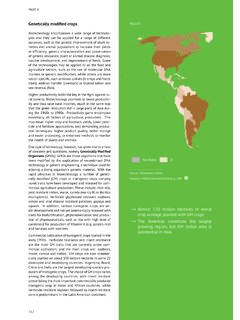
Genetically modified crops
www.fao.orgGENETICALLY MODIFIED CROPS No Data 0 0.01 - 1 1 - 3 3 - 9 > 9 Area under GM crops (million ha, 2010) Chart 118: Genetically modified crops also becoming important in developing countries Area under GM crops (1996-2010) ha 10 20 30 40 50 60 70 1996 1998 2000 2002 2004 2006 2008 2010 IndustrialDeveloping Source: Clive James, ISAAA

Playing with genes: The good, the bad and the ugly
www.un.orgAdoption of genetically modified crops has been rapid, espe-cially in the United States (Figure 2) where GMO crops account for more than 80% of …