Kirby-Bauer Disk Diffusion Susceptibility Test Protocol
are Staphylococcus aureus ATCC 25923 (Biosafety level (BSL) 2), Escherichia coli ATCC 25922 (BSL 1), and Pseudomonas aeruginosa ATCC 27853 (BSL 2) (www.atcc.org), as the zone of inhibition for these organisms is known. Because the zone sizes are known for these organisms, they are recommended for use in the educational
Download Kirby-Bauer Disk Diffusion Susceptibility Test Protocol

Information
Domain:
Source:
Link to this page:
Documents from same domain
Catalase Test Protocol - American Society for Microbiology
asm.orgThe catalase test is also valuable in differentiating aerobic and obligate anaerobic bacteria, as anaerobes are generally known to lack the enzyme (8, 9). In this context, the catalase test is valuable in differentiating aerotolerant strains of Clostridium, which are catalase negative, fromBacillus, which are catalase positive (8). Theory
Luria Broth (LB) and Luria Agar (LA) Media and Their Uses ...
asm.orgDownloaded from www.asmscience.org by IP: 71.127.236.37 On: Mon, 12 Aug 2019 20:18:49 American Society for Microbiology © 2016 1 Luria Broth (LB) and Luria Agar (LA ...
Indole Test Protocol
asm.orgDissolve components and store solution at room temperature in a brown glass bottle. To test for indole production, inoculate a 4 -ml tryptone broth tube with one loopful of culture. After 24 to 48 hours of incubation, add to the culture 1.0 ml of either ether or xylene. Mix well and then allow organic solvent to rise to the top of the medium.
Blood Agar Plates and Hemolysis Protocols
asm.org"Blood Agar" is not a consistently defined medium. The term "blood agar" generally refers to an enriched base medium to which defibrinated mammalian blood has been added. In the US "blood agar" is usually prepared from Tryptic Soy Agar or Columbia Agar base with 5% Sheep blood. Rabbit or horse blood may be
Gram Stain Protocols
asm.org7. Wash slide in a gentile and indirect stream of tap w ater until no color appears in the effluent and then blot dry with absorbent paper. 8. Observe the results of the staining procedure under oil immersion using a Brightfield microscope. At the completion of the Gram Stain, gram-negative bacteria will stain pink/red and gram-positive ...
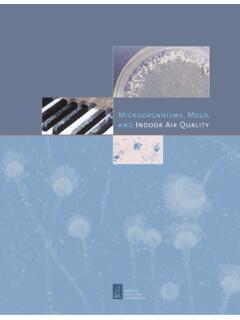
Microorganisms, Mold, and Indoor Air Quality
asm.orgings with poor indoor air quality anywhere in this or other countries. 2 Water stained ceiling tile from an office building with chronic roof leakage. Culture of Trichoderma showing fluffy,spreading growth on the agar surface. Visible mold growing on a floor joistin the crawl space under a residence with chronic water seepage.
Urease Test Protocol
asm.orgPeptone 1 g Dextrose 1 g Sodium chloride 5 g Potassium phosphate, monobasic 2 g Urea 20 g Phenol red 0.012 g Agar 15 to 20 g To prepare the urea base, dissolve the first six ingredients in 100 ml of distilled water and filter sterilize (0.45-mm pore size). Suspend the agar
Oxidase Test Protocol - American Society for Microbiology
asm.orgFIG. 3. On the left is oxidase-positive Pseudomonas aeruginosa and on the right is oxidase-negative Escherichia coli. Both organisms were rubbed on a dry filter that was then treated with one drop of Kovács oxidase reagent. Direct Plate Method (7, 10) (Fig. 4) 1. Grow a fresh culture (18 to 24 hours) of bacteria on nutrient agar
Related documents
Chapter 2: Hazards - Biological, Chemical and Physical
seafoodhaccp.cornell.edu• Staphylococcus aureus — enterotoxin ... borne infections are caused by swallowing live pathogens that grow within the body, usually in the intestinal tract. They differ from food-borne intoxication, which is a condition caused by swallowing preformed toxins ... • Pathogenic Escherichia coli (e.g., E. coli 0157:H7)
Urinary Tract Infections - Columbia University
www.columbia.eduMID 11 pathogenicity. Among Gram positive organisms, in contrast, Staphylococcus aureus uncommonly causes cystitis and ascending pyelonephritis, whereas Staphylococcus saprophyticus, which adheres significantly better to uroepithelium than do Staphylococcus aureus or Staphylococcus epidermidis, is a frequent cause of lower urinary tract infections.

National Infection Service
assets.publishing.service.gov.ukaureus antibodies (antistaphylolysin and anti- nuclease) services withdrawn Oct 2015. Various 6 November 2016 5, 8, 31, 49, Update Key personnel, medicolegal, summary of contacts, service table and appendixes for TATs, BIDS, Escherichia, Listeria, Neisseria Shigella, Streptococcus and Cronobacter. Add Abiotrophia, Aerococcus, Actinomycetes,
SELECTIVE AND DIFFERENTIAL MEDIA
fire.biol.wwu.eduCultures of: Staphylococcus aureus Staphylococcus epidermidis Escherichia coli Enterobacter aerogenes Salmonella enteritidis 2. Petri dishes of Mannitol Salt agar, EMB agar, MacConkey’s agar and nutrient agar Procedure: (work in pairs) 1. Divide each plate of MSA and MacConkey’s agar into two sections. Divide the EMB agar plate into three ...
Surgical Site Infection (SSI)
www.cdc.govescherichia coli amk s i r n amp s i r n ampsul/amxclv s i r n azt s i r n cefaz s i r n ceftaz s i r n cefot/ceftrx s i r n cefep s i/s-dd r n ceftavi s r n ceftotaz s i r n cipro/levo/moxi † s i r n col/pb i r n dori/imi/mero s i r n doxy/mino/tetra s i r n erta s i r n gent s i r n imirel s i r n mervab s i r n piptaz s i r n tig s i r n ...
14 Hospital hygiene and infection control
www.who.intnella or Shigella spp., Escherichia coli O157:H7, or other pathogens may be present in the food and cause an outbreak of disease just as they can in a community outside the hospital. If the water distribution system ... A typical example is Staphylococcus aureus, which may be carried in the nasal passages of 30—60% of personnel.