
LANT INGDOM - NCERT
A few of the marine forms such as kelps, form massive plant bodies. The algae reproduce by vegetative, asexual and sexual methods. Vegetative reproduction is by fragmentation. Each fragment develops into a thallus. Asexual reproduction is by the production of different types of spores, the most common being the zoospores. They are flagellated
Download LANT INGDOM - NCERT

Information
Domain:
Source:
Link to this page:
Documents from same domain

ntse exam notification - National Council Of …
ncert.nic.inExamination: The tentative pattern of written examination will be as follows: Stage-I & Il : examination at the State/UT level will comprise of three papers i.e.
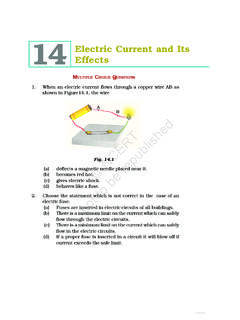
14 Effects Electric Current and Its - National …
ncert.nic.in76 EXEMPLAR PROBLEMS 3. Three bulbs A, B, C are connected in a circuit as shown in Figure 14.2. When the switch is ‘ON’ (a) bulb C will glow first. (b) bulb B and C will glow simulaneously and bulb A will

SEMICONDUCTOR AND SIMPLE CIRCUITSnot to be …
ncert.nic.in469 Semiconductor Electronics: Materials, Devices and Simple Circuits semiconductors. However , after 1990, a few semiconductor devices using organic semiconductors and semiconducting polymers have been
ENVIRONMENTAL CHEMISTRY - National Council …
ncert.nic.in400 CHEMISTRY (c) Hydrocarbons: Hydrocarbons are composed of hydrogen and carbon only and are formed by incomplete combustion of fuel …
LAWS OF MOTION
ncert.nic.inLAWS OF MOTION 91 In practice, the ball does come to a stop after moving a finite distance on the horizontal plane, because of the opposing force of friction which
DESIGN OF THE QUESTION PAPER Mathematics …
ncert.nic.inDESIGN OF THE QUESTION PAPER, SET-I 207 (A) 18 5 (B) 17 5 (C) 17 8 (D) 1 7. In the adjoining figure, PA and PB are tangents from a point P to a circle with centre O.
CHAPTER 10
ncert.nic.in(A) Main Concepts and Results Circle, radius, diameter , chord, segment, cyclic quadrilateral. • Equal chords of a circle (or of congruent circles) subtend equal angles at the
INDIA : CLIMATE, VEGETATION AND WILDLIFE
ncert.nic.inINDIA : CLIMATE, VEGETATION AND WILDLIFE 59 year. Therefore, they always appear gr een and are called evergreen forest as you may notice in Figure
Objectives Polymers - National Council of …
ncert.nic.in427 Polymers C:\Chemistry-12\Unit-15.pmd 28.02.07 Polymers can also be classified on the basis of mode of polymerisation into two sub groups.
TEXTBOOK IN GEOGRAPHY FOR CLASS IX
ncert.nic.inFOREWORD The National Curriculum Framework, (NCF) 2005, recommends that children’s life at school must be linked to their life outside the school. This principle
Related documents

Marijuana Facilities and the Building Code
media.iccsafe.orgPlant Growth Process •Osmosis –The plant takes up water and minerals from the soil through its roots and transfers it to the leaves through the stem and branches. •Photosynthesis –The plant uses absorbed light and air to transform water and minerals received through osmosis into plant tissue.
Focus On Life Science - glencoe.com
glencoe.comStudents know sexual reproduction produces offspring that inherit half their genes from each parent. c. Students know an inherited trait can be determined by one or more genes. d. Students know plant and animal cells contain many thousands of different genes and typically have two copies of every gene.
CLASS XI and XII (2021-22)
cbseacademic.nic.in1. Study and describe a locally available common flowering plant, from any one family: Solanaceae or Liliaceae (Poaceae, Asteraceae or Brassicaceae can be substituted in case of particular geographical location) including dissection and display of floral whorls,

PLANT REPRODUCTION
www.xtec.catplants fall into two basic categories. Flowering plants produce true flowers. The non-flowering plants include “primitive” plants, such as algae, mosses, and ferns. Horsetails, and liverworts, and the “gymnosperms” a group of plants which includes the conifers. There are about 3000,000 species of flowering plant in the world today,
Sexual and Asexual Reproduction - Infobase
fod.infobase.comlearn that flowering plants and most animals reproduce sexually, often using complex strategies that have evolved over millions of years. The advantages and disadvantages of sexual and asexual reproduction and the reasons why both reproductive strategies still persist today are also explored. Timeline 00:00:00 Reproduction

Reproduction in Plants T not to be republished
ncert.nic.inmodes of reproduction in plants which we shall learn in this chapter. 12.1 MODES OF REPRODUCTION In Class VI you learnt about different parts of a flowering plant. Try to list the various parts of a plant and write the functions of each. Most plants have roots, stems and leaves. These are called the vegetative parts of a plant. After a
Edexcel International GCSE Biology
qualifications.pearson.comMar 07, 2012 · (iii) a flowering plant ... There are several different stages during the process of human reproduction. Some of these stages are shown in the box. ... and the species of water plant were kept the same. Name three other variables that need to …
Plant Classification
www.senecahs.orgPlant Classes Gymnosperms – Woody Plants that produce “naked seeds” – conifers Angiosperms – Flowering plants with seeds covered in an ovary. Plant Order Monocotyledon Dicotyledon Subclasses. Monocots vs. Dicots Monocots ... through sexual reproduction ...

Reproduction Study Guide Answers
www.spsd.k12.ms.usSexual and Asexual Reproduction Study Guide Asexual reproduction is a type of reproduction that requires only one parent. The resulting offspring are ... c. Flowering Plant d. Hydra 11. Circle one: Organisms produced asexually are (identical/similar) to parent organisms.