
Missing-data imputation
25.3, we discuss in Sections 25.4–25.5 our general approach of random imputation. Section 25.6 discusses situations where the missing-data process must be modeled (this can be done in Bugs) in order to perform imputations correctly. Missing data in R and Bugs In R, missing values are indicated by NA’s. For example, to see some of the data
Download Missing-data imputation

Information
Domain:
Source:
Link to this page:
Documents from same domain

Lecture 15 Introduction to Survival Analysis
www.stat.columbia.eduLecture 15 Introduction to Survival Analysis BIOST 515 February 26, 2004 BIOST 515, Lecture 15
Two-way ANOVA and ANCOVA
www.stat.columbia.eduTwo-way ANOVA and ANCOVA In this tutorial we discuss fitting two-way analysis of variance (ANOVA), as well as, analysis of covariance (ANCOVA) models in R.

Multiple Linear Regression - Columbia University
www.stat.columbia.eduMultiple Linear Regression A regression with two or more explanatory variables is called a multiple regression. Rather than modeling the …

Sample size and power calculations - Columbia …
www.stat.columbia.eduCHAPTER 20 Sample size and power calculations 20.1 Choices in the design of data collection Multilevel modeling is typically motivated by features in …

One and Two-sample t-tests - Columbia University
www.stat.columbia.eduOne and Two-sample t-tests The R function t.test() can be used to perform both one and two sample t-tests on vectors of data. The function contains a variety of options and can be called as follows:

Statistics and Research Integrity - Columbia University
www.stat.columbia.eduEuropean Science Editing 13 February 2015; 41(1) Another important challenge was receiving fewer essays from Balkan authors than expected and convincing the referees

Linear Regression - Columbia University
www.stat.columbia.eduLinear Regression In this tutorial we will explore fitting linear regression models using STATA. We will also cover ways of re-expressing variables in a …

The Twentieth-Century Reversal: How Did the …
www.stat.columbia.eduGelman: The Twentieth-Century Reversal: How Did the Republican States Switch to the Democrats and Vice Versa? 3 of, and more …

Abandon Statistical Signi cance - Department of …
www.stat.columbia.eduAbandon Statistical Signi cance Blakeley B. McShane1, David Gal2, Andrew Gelman3, Christian Robert4, and Jennifer L. Tackett1 1Northwestern University, 2University of …

Colors in R - Columbia University
www.stat.columbia.educolor name color name gray8 gray9 gray10 gray11 gray12 gray13 gray14 gray15 gray16 gray17 gray18 gray19 gray20 gray21 gray22 gray23 gray24 gray25 gray26 gray27 gray28
Related documents

A Multilevel Approach to the Study of Motor Control and ...
catalogue.pearsoned.co.ukA Multilevel Approach to the Study of Motor Control and Learning Second Edition Debra J. Rose California State University, Fullerton Robert W. Christina
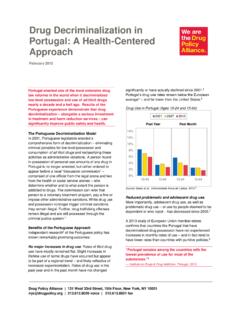
Drug Decriminalization in Portugal: A Health-Centered …
drugpolicy.orgA 2013 study of European Union member-states ... A Health-Centered Approach These positive outcomes are not solely attributable to decriminalization but also to a major expansion of ... Multilevel Analysis of the European Union," Drug and Alcohol Dependence 131, no. 1 …

Bystanders are the Key to Stopping Bullying
files.eric.ed.govA recent study by Jeffrey [16] found peers present in 85% of bullying episodes, but intervened in only 10%. Therefore, mobilizing bystander reaction is an important approach to preventing bullying. Suggestions for preventing bullying are discussed at the end of this article. Youths classified as bullies were more likely to attribute

A General Approach to Causal Mediation Analysis
imai.fas.harvard.eduapproach to the panel data settings (e.g., Cole & Maxwell, 2003; MacKinnon, 2008, Chapter 8), and multiple (e.g., MacKinnon, 2000; Preacher & Hayes, 2008) and multilevel (e.g., Krull & MacKinnon, 1999) mediators, all of which are beyond the scope of the current article. A Running Example: The Job Search Intervention Study (JOBS II)
NIH Rigor and Reproducibility Training Module 3 ...
www.nigms.nih.govas the original research study. 1 ... • Within an individual experiment, what do you think is the best approach to determine the ... Aarts, E et al. A solution to dependency: using multilevel analysis to accommodate nested data. Nature Neuroscience. 2014 April; 17(4): 491-496.
Personality Disorders - psychiatry.org
www.psychiatry.orgmethod by which individuals with these disorders are diagnosed. Based on feedback from a multilevel review of proposed revisions, the American Psychiatric Association Board of Trustees ultimately decid-ed to retain the DSM-IV categorical approach with the same 10 personality disorders.
Section III - American Psychiatric Association
www.psychiatry.orga multilevel review of proposed revisions, the APA ultimately retained the current categorical approach with the same 10 personality disorders. But one of those alternative methods—a hybrid dimensional-categorical model—was included in Sec-tion III to prompt continued research. This model calls for evaluation of impairments in personality

MULTILEVEL ANALYSIS
www.stats.ox.ac.uk2. Multilevel data and multilevel analysis 11{12 Multilevel analysis is a suitable approach to take into account the social contexts as well as the individual respondents or subjects. The hierarchical linear model is a type of regression analysis for multilevel data where the dependent variable is at the lowest level.

Sampling Design in Mixed Research (MR)
www.ualberta.ca•Concurrent approach: independent relationship between the data collection and analysis per strand, and integration occurs at the study’s conclusion •Sequential approach: Dependent relationship between the data collection and or analysis. Analysis of data in strand 1 informs decisions regarding data collected in strand 2. Data