
Neural Ordinary Differential Equations
Software To solve ODE initial value problems numerically, we use the implicit Adams method implemented in LSODE and VODE and interfaced through the package. Being an implicit method, it has better guarantees than explicit methods such as Runge-Kutta but requires solving a nonlinear optimization problem at every step.
Download Neural Ordinary Differential Equations

Information
Domain:
Source:
Link to this page:
Documents from same domain
Generative Adversarial Imitation Learning
proceedings.neurips.ccnetworks [8], a technique from the deep learning community that has led to recent successes in modeling distributions of natural images: our algorithm harnesses generative adversarial training to fit distributions of states and actions defining expert behavior. We test our algorithm in Section 6, where
Prototypical Networks for Few-shot Learning
proceedings.neurips.cc˚: RD!RMwith learnable parameters ˚. Each prototype is the mean vector of the embedded support points belonging to its class: c k= 1 jS kj X (x i;y i)2S k f ˚(x i) (1) Given a distance function d: R M R 
Inductive Representation Learning on Large Graphs
proceedings.neurips.ccnode classification, clustering, and link prediction [11, 28, 35]. ... (e.g., citation data with text attributes, biological data with functional/molecular markers), our approach can also make use of structural features that are present in all graphs (e.g., node degrees). ... through theoretical analysis, that GraphSAGE is capable of learning ...
Bootstrap Your Own Latent A New Approach to Self ...
proceedings.neurips.ccmining strategies [14, 15] to retrieve the nega-tive pairs. In addition, their performance criti-cally depends on the choice of image augmenta- ... to prevent collapsing while preserving high performance. To prevent collapse, a straightforward solution …
Spatial Transformer Networks - NeurIPS
proceedings.neurips.ccConvolutional Neural Networks define an exceptionally powerful class of models, ... localisation, semantic segmentation, and action recognition tasks, amongst others. ... can take any form, such as a fully-connected network or a convolutional network, but should include a final regression layer to produce the transformation ...
Semi-supervised Learning with Deep Generative Models
proceedings.neurips.ccapproximately invariant to local perturbations along the manifold. The idea of manifold learning ... We show for the first time how variational inference can be brought to bear upon the prob- ... probabilities are formed by a non-linear transformation, with parameters , of a set of latent vari-ables z. This non-linear transformation is ...
Unsupervised Learning of Visual Features by Contrasting ...
proceedings.neurips.ccpseudo-labels to learn visual representations. This method scales to large uncurated dataset and can be used for pre-training of supervised networks [7]. However, their formulation is not principled and recently, Asano et al. [2] show how to cast the pseudo-label assignment problem as an instance of the optimal transport problem.

PyTorch: An Imperative Style, High-Performance Deep ...
proceedings.neurips.ccFacebook AI Research benoitsteiner@fb.com Lu Fang Facebook lufang@fb.com Junjie Bai Facebook jbai@fb.com Soumith Chintala Facebook AI Research soumith@gmail.com Abstract Deep learning frameworks have often focused on either usability or speed, but not both. PyTorch is a machine learning library that shows that these two goals

Visualizing the Loss Landscape of Neural Nets
proceedings.neurips.cctask that is hard in theory, but sometimes easy in practice. Despite the NP-hardness of training general neural loss functions [3], simple gradient methods often find global minimizers (parameter configurations with zero or near-zero training loss), even when data and labels are randomized before training [43].
InfoGAN: Interpretable Representation Learning by ...
proceedings.neurips.ccof the digit (0-9), and chose to have two additional continuous variables that represent the digit’s angle and thickness of the digit’s stroke. It would be useful if we could recover these concepts without any supervision, by simply specifying that an MNIST digit is generated by an 1-of-10 variable and two continuous variables.
Related documents
HUMAN CENTERED DESIGN (HCD) DISCOVERY STAGE FIELD …
www.gsa.govHuman-Centered Design (HCD) is a problem-solving framework that helps make systems and products more responsive to the people, or the customers, who use those systems and products. It requires rigorous qualitative research and it directs that research towards the goal of deeply understanding the needs, insights, and emotions of customers.
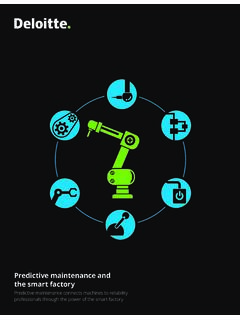
Predictive maintenance and the smart factory - Deloitte
www2.deloitte.combetter performance. In contrast, traditional preventative maintenance (PM) programs often require very time-consuming, manual data crunching and analysis to gain any real insights from the data being collected. While many have had some success with these strategies, they typically rely heavily on “tribal knowledge” estimates or require

SKILLS FOR SUCCESSFUL MENTORING - my.lerner
my.lerner.udel.edunext steps. To demonstrate this mentoring skill: • know what’s important to you, what you value and desire most; • recognize areas in which you’re able to perform well, very concrete examples of behaviors you can perform at the good-to-excellent level; • identify specific weaknesses or growth areas observed in yourself and ones noted ...

The LEGO Group Annual Report 2019
www.lego.comskills like problem solving, communication, and collaboration, which are more critical than ever. A study by the World Economic Forum esti-mates that given the pace of change 65% of kindergarten children will hold jobs that have not yet been invented. The only way we can prepare children is to give them skills that can be applied universally.

2 2 Unpack the black (BK) ink bottle. Hold the ink bottle ...
files.support.epson.comoptimal print quality and performance. 1 With the scanner unit raised, open the ink tank cover, then open the cap for the black (BK) ink tank. Note: Refer to the color-coded sticker to identify the color of each tank. 2 Unpack the black (BK) ink bottle. Hold the ink bottle upright and slowly turn the bottle cap to remove it.

Application Programming, Introduction and Design - ABB
library.e.abb.comperformance is satisfactory and there is sufficient margin for further development later on. See Performance Issues on page 31. † There are also certain limitations to the number of controllers, applications, programs and tasks that can co-exist in a single controller. See …

MPLAB PM3 Device Programmer User's Guide for MPLAB X IDE
ww1.microchip.comMar 25, 2014 · Troubleshooting – provides information on solving common problems. • Chapter 7. Troubleshooting First Steps – discusses the first things to try if you are having issues with operation of the programmer. • Chapter 8. Frequently Asked Questions (FAQs) – provides list of frequently asked questions that are useful for troubleshooting ...