Probability, Statistics, and Stochastic Processes
1.2 Sample Spaces and Events 3 1.3 The Axioms of Probability 7 1.4 Finite Sample Spaces and Combinatorics 16 1.4.1 Combinatorics 18 1.5 Conditional Probability and Independence 29 1.5.1 Independent Events 35 1.6 The Law of Total Probability and Bayes’ Formula 43 1.6.1 Bayes’ Formula 49 1.6.2 Genetics and Probability 56 1.6.3 Recursive ...
Download Probability, Statistics, and Stochastic Processes

Information
Domain:
Source:
Link to this page:
Documents from same domain
ELEMENTARY DIFFERENTIAL EQUATIONS - Trinity …
ramanujan.math.trinity.eduELEMENTARY DIFFERENTIAL EQUATIONS William F. Trench Andrew G. Cowles Distinguished Professor Emeritus Department of Mathematics Trinity University
THE METHOD OF LAGRANGE MULTIPLIERS - Trinity …
ramanujan.math.trinity.eduTHE METHOD OF LAGRANGE MULTIPLIERS William F. Trench Andrew G. Cowles Distinguished Professor Emeritus Department of Mathematics Trinity University
INTRODUCTION TO REAL ANALYSIS - Trinity …
ramanujan.math.trinity.eduINTRODUCTION TO REAL ANALYSIS William F. Trench AndrewG. Cowles Distinguished Professor Emeritus Departmentof Mathematics Trinity University San Antonio, Texas, USA
Improper Integrals - Trinity University
ramanujan.math.trinity.eduThat’s the easy implication. For the converse, now suppose the stated Cauchy criterion holds. For natural numbers n alet a n = Z n a f(x)dx: Let …
STUDENT SOLUTIONS MANUAL FOR …
ramanujan.math.trinity.eduSTUDENT SOLUTIONS MANUAL FOR ELEMENTARY DIFFERENTIAL EQUATIONS AND ELEMENTARY DIFFERENTIAL EQUATIONS WITH BOUNDARY VALUE PROBLEMS William F. Trench Andrew G. Cowles Distinguished Professor Emeritus Department of Mathematics Trinity University San Antonio, Texas, USA
ELEMENTARY DIFFERENTIAL EQUATIONS
ramanujan.math.trinity.eduPreface Elementary Differential Equations with Boundary Value Problems is written for students in science, en-gineering,and mathematics whohave completed calculus throughpartialdifferentiation.
The one dimensional heat equation: Neumann and …
ramanujan.math.trinity.eduNeumann Boundary Conditions Robin Boundary Conditions Remarks At any given time, the average temperature in the bar is u(t) = 1 L Z L 0 u(x,t)dx. In the case of Neumann boundary conditions, one has u(t) = a 0 = f. That is, the average temperature is constant and is equal to the initial average temperature.
The two dimensional wave equation - Trinity University
ramanujan.math.trinity.eduThe 2D wave equation Separation of variables Superposition Examples Representability The question of whether or not a given function is equal to a double Fourier series is partially answered by the following result. Theorem If f(x,y) is a C2 function on the rectangle [0,a] ×[0,b], then
Introduction to Sturm-Liouville Theory - Trinity University
ramanujan.math.trinity.eduOrthogonality Sturm-Liouville problems Eigenvalues and eigenfunctions Inner products with weight functions Suppose that w(x) is a nonnegative function on [a,b].
The Chinese Remainder Theorem - ramanujan.math.trinity.edu
ramanujan.math.trinity.eduThe Chinese remainder theorem (CRT) asserts that there is a unique class a+ NZ so that xsolves the system (2) if and only if x2a+ NZ, i.e. x a(mod N). Thus the system (2) is equivalent to a single congruence modulo N. Although we only proved one implication, one can actually show that the …
Related documents

Probability Theory and Statistics
web.math.ku.dkto describe the uncertainty; a fair, classical dice has probability 1/6 for each side to turn up. Elementary probability computations can to some extent be handled based on intuition, common sense and high school mathematics. In the popular dice game Yahtzee the probability of getting a Yahtzee (five of a kind) in a single throw is for ...

Notes on Probability
www.maths.qmul.ac.ukBasic notions of probability. Sample spaces, events, relative frequency, probability axioms. 2. Finite sample spaces. ... • Mathematical Statistics and Data Analysis by John A. Rice, published by Wadsworth, Chapters 1–4. ... body has a really good answer to this question. We take a mathematical approach,

Missing-data imputation - Department of Statistics
www.stat.columbia.eduTwo problems arise with complete-case analysis: 1. If the units with missing values differ systematically from the completely ob-served cases, this could bias the complete-case analysis. 2. If many variables are included in a model, there may be very few complete cases, so that most of the data would be discarded for the sake of a simple analysis.
G*Power 3: A flexible statistical power analysis program ...
link.springer.comsize(s) of the sample(s) used for the test, and (3) an effect size parameter defining H 1 and thus indexing the degree of deviation from H 0 in the underlying population. De-pending on the available resources, the actual phase of the research process, and the specific research question, five different types of power analysis can be reasonable (cf.
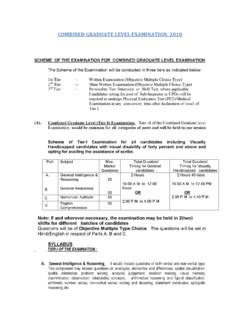
COMBINED GRADUATE LEVEL EXAMINATION, 2010
ssc.nic.indiagram, correlation coefficient, rank correlation coefficient and linear regression analysis ( for two or more variables ) excluding partial correlation coefficients. Concept of Population, random sample, parameters, statistics, sampling distribution of x properties of estimators and estimation of confidence intervals.

ORGANIZING AND ANALYZING YOUR DATA - Wilder …
www.wilder.orgbeginning your analysis. Leave enough time and money for analysis. Identify the appropriate statistics for each key question – get consultation if needed. Tips for analysis Do not use the word “significant” to describe your findings unless it has been tested and found to be true either statistically or clinically. Keep the analysis simple.