
Technical Guidelines for
hazardous waste in order to neutralize such waste or to render such waste non-hazardous, amenable for recovery, amenable for storage, or reduced in ... incineration (e.g., cement kiln; rotary or fluidized bed ... M505 POPs wastes Thermal Evaporation Treatment of hazardous wastes by heating to vaporize the
Download Technical Guidelines for

Information
Domain:
Source:
Link to this page:
Documents from same domain
REPUBLIC ACT 9275 AN ACT PROVIDING FOR A …
emb.gov.phUse of water for irrigation - means the utilization of water for producing agricultural crops; 4. ... regulation and minimization of pollution, clean production, waste management, environmental law and policy, environmental education and information, study and mitigation of the

DENR Administrative Order No. 2001 - 34 December 20, 2001 ...
emb.gov.phutilization of valuable resources and encourage resources ... volume reduction through source reduction and waste. 237 minimization measures, including composting, recycling, re-use, recovery, green charcoal process, and others, before ... waste management with local government units while

1. Air quality
emb.gov.phLTFRB LTO inspects motor vehicle emissions as per RA 8749. Compliance to standards is the requirement for new and renewal of registration while penalties are imposed to those who exceed the limit. To reduce vehicular emissions, non-motorized transport (bicycle use) is being promoted as well as the use of ‘cleaner fuels’ such as liquefied
3. Solid Wastes
emb.gov.ph3.2 Solid waste impacts on health and the environment Improper solid waste management practices can have a number of environmental and health impacts. The adverse impacts and their causes are shown in Figure 3-4. As discussed earlier, municipal solid wastes come from residential, institutional, commercial, and industrial sources.
&a
emb.gov.phthe Use ofthe Procedural Manual.", the Procedural Manual for Hazardous Waste Management is hereby revised. Section I. Basic Policy It is the policy of the State to regulate, restrict or phibit the importation, manufacture, processing, sale, distribution, use and disposal of chemical substances and mixtures that present

National Solid Waste Management Status Report [ î ì8
emb.gov.ph2. Solid waste impacts on health and the environment 4 3. Ecological Solid Waste Management: status of implementation of Republic Act 9003 6 3.1 Avoidance, reduction and reuse 6 3.2 Segregation at source 8 3.3 Segregated collection 9

LIST OF accredited TREATMENT/STORAGE/DISPOSAL (tsd ...
emb.gov.ph#45 Brgy. Diliman I, San Rafael, Bulacan 09267412763 May Ann Estavillo Waste electrical and Electronic Equipment [WEEE] (M506) 23-Jan-16 Province: Pampanga Earthwell Medwaste Treatment Systems, Inc. 368 Manibaug Pasig, Porac, Pampanga 0949-8294719; 0919-8439501 Alex C. Laguisma Miscellaneous wastes [pathological or infectious wastes] (M501) 15 ...

Water Quality Guidelines and General Effluent Standards
emb.gov.phtitle: dao-2016-08 author: ramon j.p paje subject: water quality guidelines and general effluent standards of 2016 keywords: water quality guidelines and general effluent standards of 2016
PRESIDENTIAL DECREE No. 1586 Subject: ESTABLISHING AN ...
emb.gov.phEnvironmental Revolving Fund. - Proceeds from the penalties prescribed in the preceding Section 9 and other penalties imposed by the National Pollution Control Commission as authorized in P.D. 984 shall be automatically appropriated into an Environment Revolving Fund hereby created as an exemption to P.D. 711 and P.D. 1234.

REPUBLIC ACT No. 6969 Subject: AN ACT TO CONTROL …
emb.gov.ph-This Act shall be known as the "Toxic Substances and Hazardous and Nuclear Wastes Control Act of 1990." Section 2. Declaration of Policy. - It is the policy of the State to regulate, restrict or prohibit the importation, manufacture, processing, sale, distribution, use and disposal of chemical
Related documents
Environmental Issues And Challenges Malaysian Scenario
nehapmalaysia.moh.gov.myHazardous waste management Rural water supply and sanitation Recreational water Safe drinking water ... POPs are toxic and accumulate in fatty tissue of living organisms, humans and wildlife ... Incineration Plant, Landfills, ...
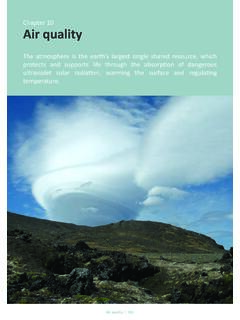
Chapter 10 Air quality - Department of Environment ...
www.dffe.gov.zaburning and waste incineration. 10.3.1 Vehicle emissions. Vehicle emissions contribute to the deterioration in air quality, especially in urban areas. There is an increase in . the number of privately owned vehicles in South Africa. The increase in the number of vehicles has, as expected, resulted in an increase in fuel consumption (Figure 10.1 ...
Procedural Manual Title III of DAO 92-29 “Hazardous Waste ...
www.env.go.jpmanage municipal wastes (solid and liquid), sanitary landfill and incineration, and disposal sites in the Philippines. In 1990, the Philippine Congress enacted the Toxic Substances, Hazardous and Nuclear ... and technical requirements of hazardous waste management (HWM). ... (POPs) are chemical substances that persist in the environment ...

Waste Classification - EPA
www.epa.iewaste does not display any of the hazardous properties HP1–HP15 (Appendix 2, step 3.1 and step 3.2) and/or Persistent Organic Pollutant’s (POPS), it may be considered as non-hazardous waste in accordance with the provisions of Article 7(3) of Directive 2008/98/EC. The Member
Waste Gasification & Pyrolysis: High Risk, Low Yield ...
www.no-burn.orgWaste Gasification and Pyrolysis Technology Risk Assessment 3 A 2008 U.S. study[6] for a government agency surveyed a large range of gasification and plasma technologies and found these processes are unproven on a commercial scale for treating MSW in the U.S.

Human Health and the Environment - OECD
www.oecd.org• Air pollution and exposure to hazardous chemicals are important causes of the environment-related burden of dis-ease in OECD countries. The transport and energy sectors are major contributors to air pollution, while important sources of chemical pollution are agriculture, industry, and waste disposal and incineration.