
Understanding soil pH
7.5, calcium can tie up phosphorus, making it less available to plants. Additionally, alkaline soils cause zinc and cobalt deficiencies that lead to stunted plants, poor growth and reduced yields in some crops and pastures. Soil pH trends over time Monitoring pH changes over time is an important management tool. By comparing past and present
Download Understanding soil pH

Information
Domain:
Source:
Link to this page:
Documents from same domain

KEY PERFORMANCE INDICATORS 6 - Department …
www.dpi.nsw.gov.auDairyCHECK – Farm Business Management Analysis 1 Foreword 2 WHAT is DairyCHECK? 3 Farm Business Management Manual 4 Introduction 5 KEY PERFORMANCE INDICATORS 6
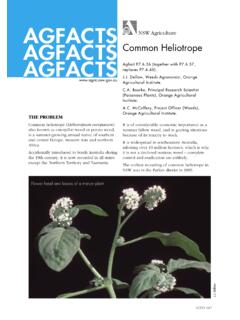
AGFACTS Common Heliotrope AGFACTS Agfact …
www.dpi.nsw.gov.au2 3 DISTRIBUTION In NSW, common heliotrope occurs west of the Great Dividing Range mainly within the 300 to 500 mm winter-dominant rainfall zone.
AGFACTS - Department of Primary Industries
www.dpi.nsw.gov.au2 Fences that contain crossbred ewes and lambs will, with some attention to detail, be suitable for goats. However, one type of prefabricated fencing—often
Clostridial diseases in cattle - Department of …
www.dpi.nsw.gov.auPreventing clostridial diseases apart from botulism 5 in 1 vaccine 5 in 1 is a vaccine containing antigens of C. perfringens type D, C. tetani, C. septicum, C. novyi and C. chauvoei.It protects against the five more
Fact sheet 1: Types of erosion
www.dpi.nsw.gov.auupslope as a result of the head of the gully being continually undercut and collapsing. However, collapse and slumping of sidewalls usually contribute a greater proportion of soil …
Prussic acid poisoning in livestock - NSW …
www.dpi.nsw.gov.auFEBRUARY 2007 PRIMEFACT 417 (REPLACES AGFACT A0.9.66) Prussic acid poisoning in livestock Dr Sarah Robson Regional Animal Health Leader, Animal & Plant
Irrigation water quality - Department of Primary Industries
www.dpi.nsw.gov.auIrrigation water quality . Virginia Brunton, Ourimbah . Farm water comes from a number of different sources and so its quality varies. Water sources ... The generally accepted pH for irrigation water is between 5.5 and 7.5, but some problems can occur within this range.
Common diseases of strawberries - NSW Department of ...
www.dpi.nsw.gov.auSEPTEMBER 2009 PRIMEFACT 892 . Common diseases of strawberries. L Ullio . Cleanfresh Project, Intensive Horticulture, Sydney Markets . Leaf scorch
Dressing percentages for cattle - NSW Department of ...
www.dpi.nsw.gov.auJANUARY 2007 PRIMEFACT 340 (REPLACES AGFACT A2.7.17) Dressing percentages for cattle Bill McKiernan Research Leader Animal Production, Production
Water for livestock: interpreting water quality tests
www.dpi.nsw.gov.auWater for livestock: interpreting water quality tests 2 NSW Department of Primary Industries, May 2014 3. Chloride Chloride has a number of functions in the body.
Related documents
SOIL FERTILITY AND NUTRIENT MANAGEMENT
nmsp.cals.cornell.eduOct 26, 2016 · plant. This is the major process for uptake of nitrogen, calcium and magnesium. o Diffusion is the movement of a nutrient from an area of high concentration to one of lower concentration. Typically the nutrient will move from the soil solution (high concentration) to the root surface (low concentration).

How do plants get their nutrients?
www.asec.purdue.edu• Calcium deficiency appears first on younger or upper leaves. Buds and young leaves die back. • Copper appears first on younger or upper leaves that are pale and wilted with brown tips. • Iron deficiency appears first on younger or upper leaves as interveinal chlorosis. Growth is stunted. • Manganese deficiency appears first on
Essential Nutrients for Plant Growth: Nutrient Functions ...
www.ctahr.hawaii.edu• Ca deficiency is not often observed in plants be-cause secondary effects of high acidity resulting from soil calcium deficiency usually limit growth, precluding expressions of Ca deficiency symp-toms. • Without adequate Ca, which in the form of cal-cium pectate is needed to form rigid cell walls, newly emerging leaves may stick together ...

Nutrients Plants Require for Growth
www.extension.uidaho.eduCalcium—A typical plant contains 0.5 percent Ca on a dry weight basis (table 1). However, woody plants may contain up to 5.0 percent Ca. Plants take up calcium as Ca2+. Calcium is required for cell division, cell elongation, and cell structure (table 2). Since Ca is not mobile in plants, calcium deficiency symptoms appear at their growing tips.

NUTRIENT DEFICIENCY SYMPTOMS - mgofmc.org
www.mgofmc.orgdifferentiate between calcium deficiency and magnesium toxicity. Calcium is necessary for cell elongation and division, protein synthesis, root and leaf development, and plant vigor. It influences intake of other nutrients and increases calcium content of plants. Important in cell wall structure and as an enzyme activator.

Treatment of Vitamin D Deficiency in Adults
www.panmerseyapc.nhs.ukTreatment of Vitamin D Deficiency in Adults SUPPORTING INFORMATION Page 2 of 4 Note * Secondary care specialist may recommend a treatment dose (off-label) of colecalciferol 20,000units per day for 15 days (total 300,000units) and then 20,000units per month as maintenance with GP to recheck levels after 6 months. † Review all patients dietary intake of …